
Review · WALKING TOURS
Dubrovnik By Night Walking Tour
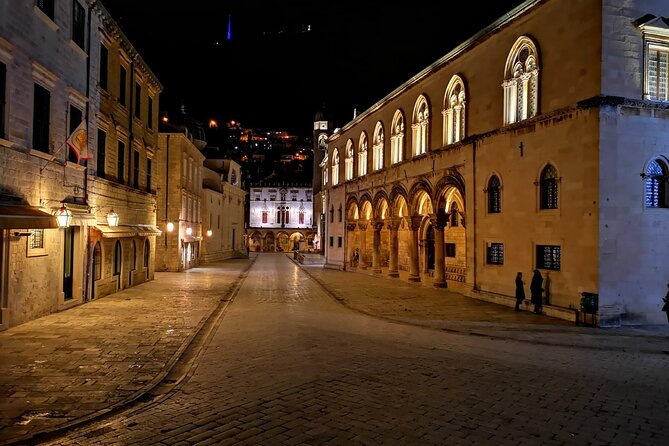
Dubrovnik sounds calmer after dark. This Dubrovnik By Night Walking Tour takes you through the Old Town’s biggest sights in a cooler, quieter way, and your guide ties the buildings to real stories you can picture in your head. I love how it gives me an instant sense of direction for the warren of streets, and I also love seeing iconic places glowing at night instead of fighting daytime crowds.
I like that the route is practical: you hit the core landmarks people usually spread across multiple day plans, so you get a strong overview without feeling like you’re speed-running. A licensed local guide leads the walk in English, and the pace is easy enough for most visitors. One thing to consider, though, is that this is primarily a walking tour, so it is not built around lots of inside-the-building time.
If you want a stop-and-stare photo tour plus a solid orientation, it’s a great match. If you are expecting deep museum visits, you may find it more like a moving lecture with plenty of exterior views. Bring comfortable shoes, because even at a relaxed pace you will walk.
In This Review
- Key things to know before you go
- Why Dubrovnik by Night feels so much easier to enjoy
- Meeting by Amerling Fontana near Pile Square
- Pile Gate and the city map lesson that saves time
- Franciscan Church area, Onofrio fountain stories, then Stradun
- Luza Square: the city’s living center
- Rector’s Palace and the Cathedral stop for big-sight continuity
- Poet Ivan Gundulic, Jezuits stairs, then the Prijeko street maze
- What you learn beyond sights, including war-era context
- Pace and group size: what a small tour really changes
- Price and value: what $24.19 buys you in real terms
- Who this tour fits best in your Dubrovnik plan
- Should you book Dubrovnik by Night?
- FAQ
- How long is the Dubrovnik by Night walking tour?
- How much does the tour cost?
- What language is the tour offered in?
- Where do you meet, and what is the meeting point like?
- Where does the tour end?
- What major stops are included on the walk?
- What is included in the price?
- Is hotel pickup or drop-off included?
- What is the group size limit?
- Is the tour dependent on weather?
Key things to know before you go
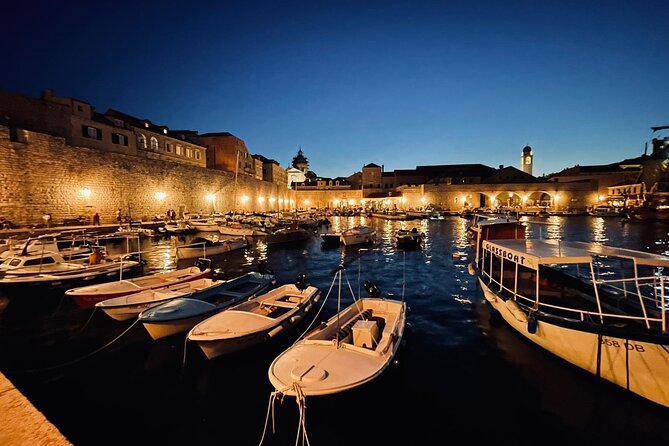
- An Old Town “orientation tour” at night so you can navigate back on your own afterward
- Stops that cover Dubrovnik’s main landmarks from Pile Gate to Luza Square and Rector’s Palace
- English tour with a licensed local guide, plus a mobile ticket for a smoother meet-up
- Small group size (maximum 20), which helps you hear the guide and keep the flow
- Built for comfort (most people can participate, service animals allowed), but you still need to be ready to walk
Why Dubrovnik by Night feels so much easier to enjoy
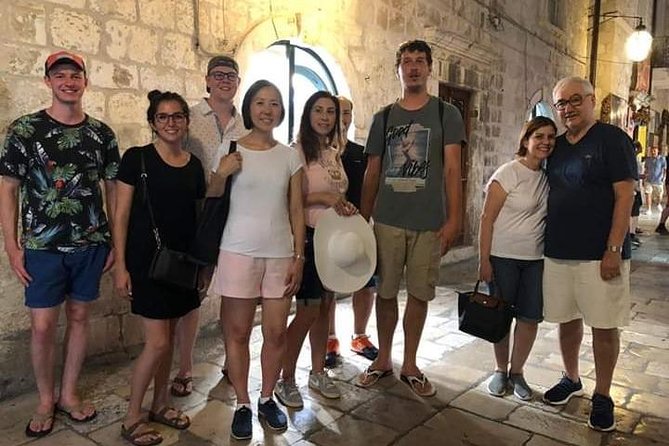
Daytime Dubrovnik can feel like you are trying to read a book while someone turns the pages for you. At night, the atmosphere changes. You see the same streets and landmarks, but you get more breathing room, and the walk feels more like exploring than rushing.
This tour is a smart fix if your schedule is tight. In about 1 hour 30 minutes, you cover the spine of the Old Town and the key squares, so you finish with a mental map. That matters because Dubrovnik is all stone lanes and stairways. Once you know where things are, the city gets easier fast.
The biggest bonus is how the guide helps you “decode” what you see. When someone explains the structure of the city early on, later landmarks make more sense. You start noticing why streets curve, why squares feel like gathering points, and how the main thoroughfares connect.
More Walking Tours in Dubrovnik
- Dubrovnik: Old Town Walking Tour
★ 4.8 · 5,174 reviews - Dubrovnik Discovery Old Town Walking Tour
★ 5.0 · 4,458 reviews - Dubrovnik: Game of Thrones Walking Tour
★ 5.0 · 1,732 reviews
Meeting by Amerling Fontana near Pile Square
Your start point is outside the walls around Pile Square, at the Amerling Fontana area. The guide waits there with a blue umbrella, and the meet-up is near Dubravka gift shop.
Why I think this is a good set-up: Pile Square is one of the most useful reference points in Dubrovnik. If you are staying anywhere near the entrance areas, you can easily regroup afterward or continue on your own. Also, meeting near the outside edge of the Old Town usually makes the first minutes less confusing than starting deep inside narrow lanes.
Give yourself a bit of buffer at night. Even with a clear meeting point, you will be arriving in the dark, and Dubrovnik’s streets can look similar when you first step in. Once you spot the blue umbrella, the rest of the evening tends to move smoothly.
Pile Gate and the city map lesson that saves time
The first major landmark stop is Pile Gate, with a short introduction to the city’s structure. You also pause at a city map so the guide can explain how Dubrovnik’s layout works and how the Old Town connects from point to point.
This part is more than “background.” It helps you understand what you are walking through. Dubrovnik’s geometry can feel random until someone gives you a framework. After this, Stradun and the central squares stop being random destinations and start feeling like parts of a bigger plan.
At this stage, I’d treat the stop like a quick orientation class. If you ask a question, this is the best time, because the group is still fresh, and the guide can point you toward what comes next. The tour keeps it moving, so you do not want to miss the map moment.
Franciscan Church area, Onofrio fountain stories, then Stradun
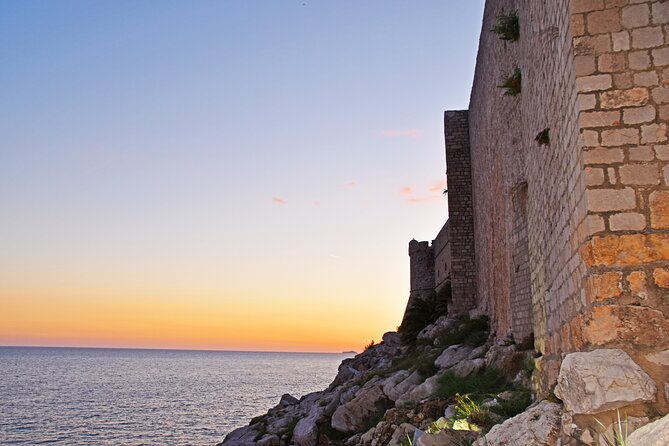
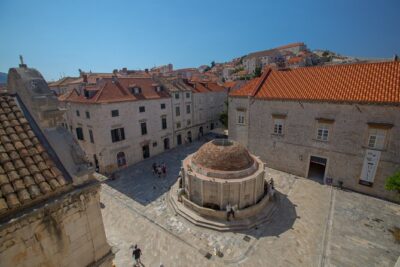
Next you move toward the Franciscan Church and Monastery area. After entering the main street Stradun, you hear about old water history and the first water supply linked to Onofrio Fountain, plus stories involving an old pharmacy.
Even if you have seen Dubrovnik photos before, this stop often makes the city feel real. Water systems and daily life are what turn a pretty street into a place with purpose. It’s also a reminder that Dubrovnik was built to function, not just to impress.
Then you get Stradun, Dubrovnik’s most famous main street. This is where the city’s style is easiest to read: the attractive facades, the sense of a central corridor, and the shopping energy. At night, Stradun feels less like a crowded parade route and more like a stage set.
Potential drawback here: if you are hoping to stop frequently for dramatic viewpoints, you will not get long, linger-outside breaks. The tour is timed, so Stradun is more about seeing the street and learning the story than about a slow stroll and long photos at every corner.
Same coastline, a different sort of day:
- Blue Cave Small-Group Boat Tour from Dubrovnik
★ 5.0 · 9,360 reviews - Full-Day Dubrovnik Elaphite Islands Cruise with Lunch and Drinks
★ 5.0 · 8,823 reviews - Dubrovnik: Epic Game of Thrones Tour + Lokrum & Saver Option
★ 4.9 · 5,995 reviews - Dubrovnik: Elaphiti Islands Full-Day Cruise with Lunch
★ 5.0 · 5,938 reviews
Luza Square: the city’s living center
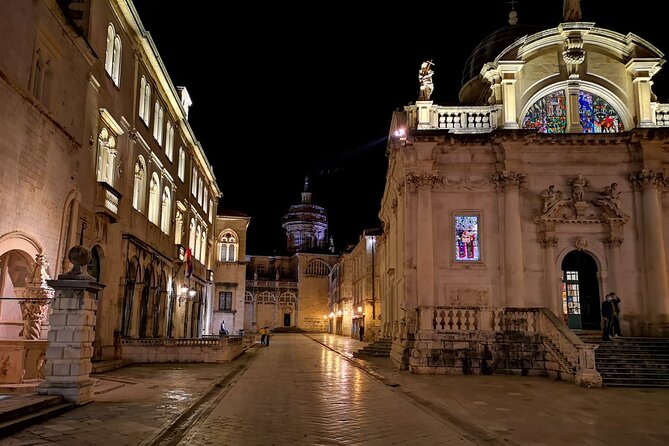
From Stradun, the walk brings you to Luza Square, Dubrovnik’s main square in the Old Town. This is an important anchor point, and the guide covers what you need to look for: the patron church in the middle, the bell tower, and Sponza Palace.
Luza Square is one of those places where a little context goes a long way. When you know what roles different buildings played, the space stops being just pretty architecture. It becomes a snapshot of power, faith, and administration.
At night, Luza Square is also a perfect “reality check” stop. You can feel the city’s scale. You start noticing how many streets feed into the square, which is exactly what you need to navigate later without getting turned around.
Rector’s Palace and the Cathedral stop for big-sight continuity
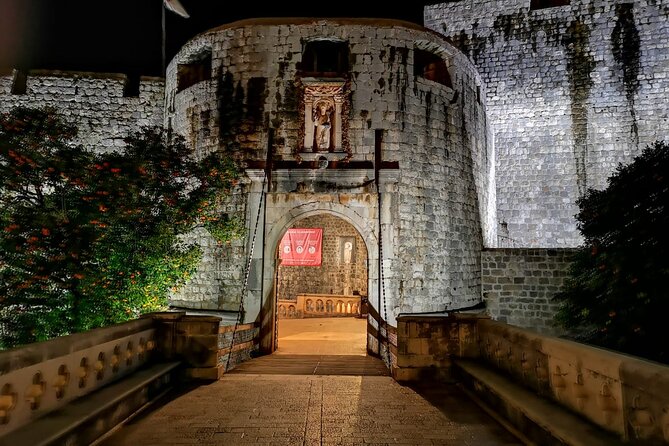
You then head to Rector’s Palace, described as the most beautiful building in the city. This stop usually works well because the guide can connect architecture to how Dubrovnik operated, both historically and in present-day use.
From there you reach the Cathedral of the Assumption of the Virgin Mary, Dubrovnik’s biggest church. The tour also points you toward the treasury connection, which is the kind of detail that can help you if you decide to return later for a closer look on your own.
Here’s the practical value: these two stops help you build continuity across the city center. You go from governance and civic identity at Rector’s Palace, to religious authority and major religious heritage at the cathedral. That flow makes Dubrovnik easier to understand as more than a list of famous buildings.
Trade-off: you are not going to leave this tour feeling like you toured every interior space. The focus is on seeing and learning your way around, not collecting museum tickets.
Poet Ivan Gundulic, Jezuits stairs, then the Prijeko street maze
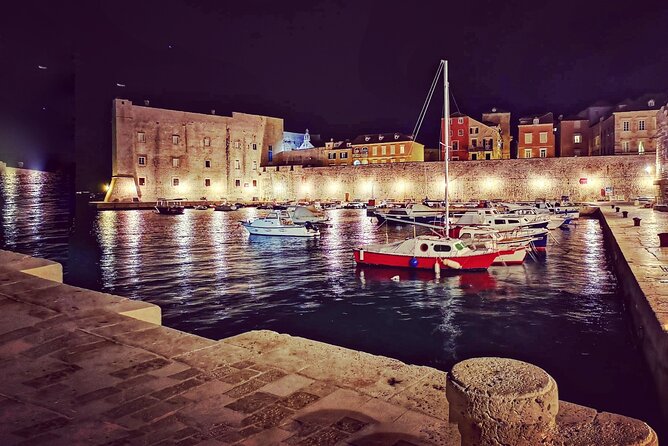
After the cathedral area, you stop at the Monument of Poet Ivan Gundulic, and you also move near the Jezuits stairs. This is a smaller, more “local texture” moment, and it helps break up the big-stare landmarks you just saw.
Then comes Prijeko street, where you stroll through narrow side streets. This is where Dubrovnik shifts from obvious tourist routes into a maze. You get the feeling of living inside the Old Town rather than just marching past it.
This segment is also where a good guide really earns their fee. If the guide’s storytelling is strong, these side lanes start to feel like scenes from the city’s timeline. If the guide is less engaging, you may simply feel like you walked a set of streets without enough payoff. That difference showed up in the variety of ratings.
What you learn beyond sights, including war-era context
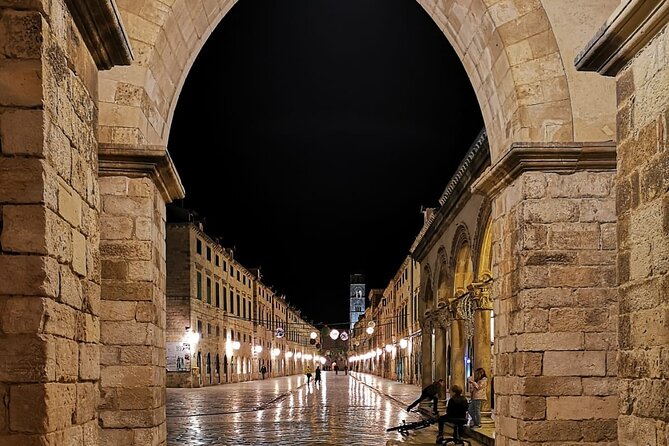
A theme in the guide feedback is that history here is not only about centuries-old empires. The better guides talk honestly about the 1990s war, including how the conflict affected the Old Town and the wider country. They also tend to share personal, human details that make the topic feel less abstract.
I like that approach because it matches how travelers actually experience Dubrovnik today. You are looking at a place that has been tested, repaired, and still functions as a community. When a guide acknowledges that reality, the city stops being just a postcard.
You might also hear stories that connect Dubrovnik to pop culture, and some guides are praised for weaving in topics like filming stories alongside classic city history. That mix can make the evening feel less like a lecture and more like a conversation with a local who knows what the city means.
Pace and group size: what a small tour really changes
This is a small group tour, with a maximum of 20 travelers. That size is big enough to feel social, but small enough that the guide can keep track of the group and maintain momentum.
Most reviews praise pacing and clarity, including the idea of taking the walk at a comfortable speed. Still, this is an active tour. Plan on wearing shoes that work well on uneven stone and on climbing the natural rise and fall of Old Town streets.
A second practical note: night tours depend on sound. If a lot of people gather close at certain corners, you can temporarily lose track of what the guide is saying. If you want to hear everything clearly, position yourself where you can see the guide’s face and listen directly rather than standing in the back of the crowd.
Price and value: what $24.19 buys you in real terms
At $24.19 per person, this tour sits in the “easy yes” range for Dubrovnik. You are paying for a licensed guide, local taxes, and a guided walking route that covers many key landmarks in one evening.
The value is not just the price. It is the time-savings. If you try to DIY this without context, you will likely spend extra time figuring out routes and then later you will still need to research history on your own. Here, the guide gives you both the map logic and the story thread while you are already moving through the streets.
Also, you avoid the worst daytime problems. Evening timing can help you beat the heat and see the city lit up, which means the walk feels more enjoyable and the photos look better without you burning out first.
If you are traveling with a tight schedule, this tour is a practical way to “get oriented and informed” before you choose which areas to revisit.
Who this tour fits best in your Dubrovnik plan
This is a strong choice if you:
- want an efficient first-night overview of Old Town
- care about history, but you do not want to spend hours in multiple museums
- prefer cooler walking conditions and fewer daytime crowds
- want a local perspective that helps you explore on your own right after
It’s also a good match for couples and solo travelers who would rather not spend their entire evening hunched over a map app.
If you are the type who loves long interior visits and detailed stops inside every major building, consider pairing this with one or two on-your-own museum or church visits later. The tour gives you the compass, not the full building ticket experience.
Should you book Dubrovnik by Night?
I think you should book it if your goal is simple and smart: learn the city’s layout fast, see the main highlights while they look their best at night, and get historical context that makes the Old Town feel less like scenery.
Choose a different option only if your top priority is extensive indoor time or if you are very sensitive to hearing the guide in larger combined groups. Night walking tours can occasionally get crowded at key corners, and a few experiences noted sound or group-size stress. You can reduce that risk by arriving early, staying close to the front, and choosing a day with good conditions.
If you do book, plan to walk afterward too. The real win is using what you learned to explore the streets you now recognize.
FAQ
How long is the Dubrovnik by Night walking tour?
The tour lasts about 1 hour 30 minutes.
How much does the tour cost?
The price is $24.19 per person.
What language is the tour offered in?
The tour is offered in English.
Where do you meet, and what is the meeting point like?
You meet at Brsalje ul. 2, Dubrovnik. The guide waits at Amerling Fontana with a blue umbrella, next to Dubravka gift shop outside the walls at Pile square.
Where does the tour end?
The tour ends at Luza Square (Luža ul., 20000, Dubrovnik).
What major stops are included on the walk?
You will pass through or stop at Amerling Fontana, Pile Gate, the Franciscan Church and Monastery area, Stradun, Luza Square, Rector’s Palace, the Cathedral area, the Monument of Poet Ivan Gundulic, Jezuits stairs, and Prijeko street.
What is included in the price?
Included are a local experienced licensed tour guide, local taxes, and the walking tour.
Is hotel pickup or drop-off included?
No. Hotel pickup and hotel drop-off are not included.
What is the group size limit?
The tour has a maximum of 20 travelers.
Is the tour dependent on weather?
Yes. The tour requires good weather. If it is canceled due to poor weather, you will be offered a different date or a full refund.
Newest Dubrovnik reviews on the site
- Krka National Park – Private Excursion from Dubrovnik with Mercedes Vehicle★ 5.0 · 4 reviews
- Montenegro Kotor Bay with Boat Ride to The Lady of the Rock★ 4.5 · 46 reviews
- Private Boat Tours Dubrovnik to island Korcula★ 5.0 · 4 reviews
- Korcula, Ston, Wine Tasting and Lunch – Tour from Dubrovnik★ 5.0 · 3 reviews
- Korčula & Ston: Island Charms, Pelješac Delights & Wine Tasting★ 4.0 · 6 reviews
- Korcula Private Tour★ 5.0 · 4 reviews
- Croatia Family Multi Activity Holiday package★ 4.0 · 91 reviews
- Korcula Private Tour from Dubrovnik★ 5.0 · 9 reviews
Walking Tours, compared.
Walking Tour of Split and Diocletian’s Palace
Read our review →
Krka Waterfalls tour with Trogir Walking tour and Krka panoramic boat cruise
Read our review →
City Walls Early Morning or Sunset Walking Tour
Read our review →Browse the lists this tour appears in