
Review · WALKING TOURS
Dubrovnik: Insider 90-Minute Walking Tour With a Local
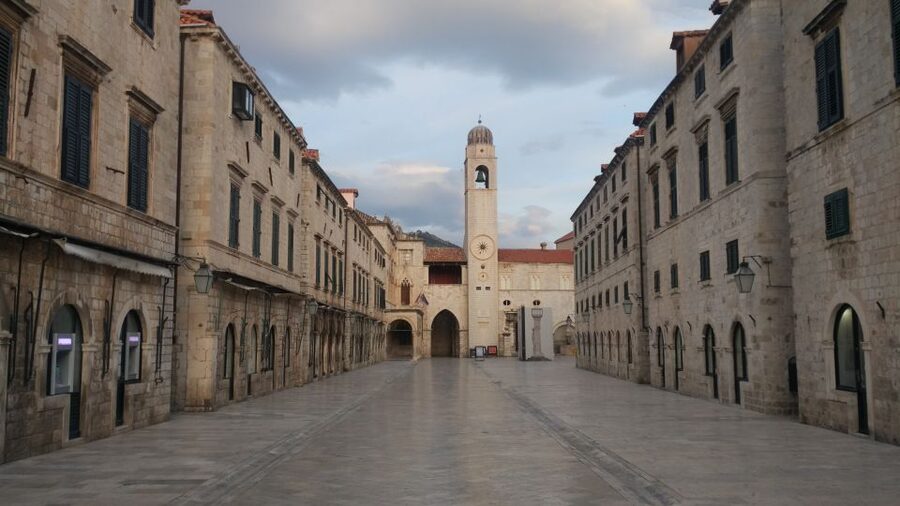
Dubrovnik makes sense on foot. This 90-minute, max 8-person walk turns the Old Town into a place you can read, with a born-and-bred guide explaining local context as you go.
I especially like how the route connects the big ideas to the buildings. You trace the Republic of Ragusa and its maritime trade from the Old Port, then you understand why landmarks like the Dubrovnik Cathedral still matter today.
One thing to consider: with a tight 90-minute pace, you’ll have to choose between lingering for photos and hearing the full set of stories at every stop. If you want long, uninterrupted explanations for each site, this format may feel a bit segmented.
In This Review
- Key things I’d bet you’ll enjoy
- Finding your bearings at Ploce Gate and Revelin Fort
- Ploce Gate and the Dominican Monastery, where stone starts telling stories
- The Old Port and Ragusa trade, why this city prospered
- Dubrovnik Cathedral and the St Blaise game that pulls you into the streets
- Gundulić Square, Ivan Gundulić, and the market stop that feels like real life
- Rector’s Palace, Sponza Palace, and the power-and-trade backbone
- Church of St Ignatius and the rhythm of quick stops
- Onofrio’s Fountain, the final photo magnet, and leaving with a clearer map
- Small group pacing and how to plan your photos
- Price and value: is $32 fair for 90 minutes in the Old Town?
- Who this Dubrovnik local walk suits best
- Should you book this tour?
- FAQ
- Where do I meet the guide?
- How long is the Dubrovnik Old Town walking tour?
- How big is the group?
- What language is the tour in?
- Which sights are included?
- How much does the tour cost?
- Can I cancel or pay later?
Key things I’d bet you’ll enjoy
- Small group, close conversation: max 8 people means you can ask questions and not get brushed past.
- A local-led Ragusa storyline: the tour links trade, government, and architecture into one walkable picture.
- Hands-on fun with St Blaise: you’ll play a game to spot St Blaise statues around town and even guess at the number of churches.
- Cathedral details, with real context: Baroque design plus the rebuilding story after earthquakes gives the building meaning.
- Practical local tips: you’ll get suggestions for lunch, dinner, snacks, and drinks in addition to the monuments.
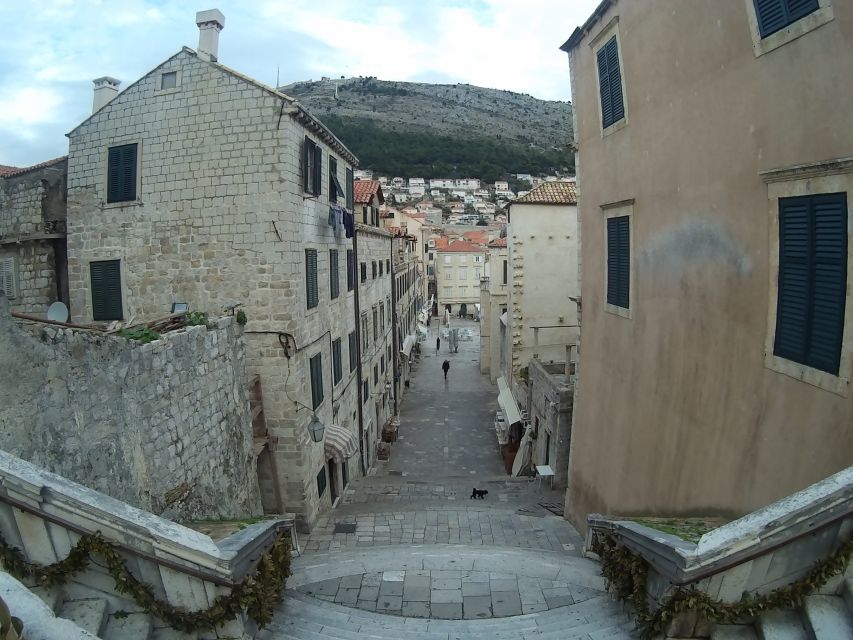
- Street-level Dubrovnik life: marketplaces and lesser-known streets help you see more than just postcard walls.
Finding your bearings at Ploce Gate and Revelin Fort
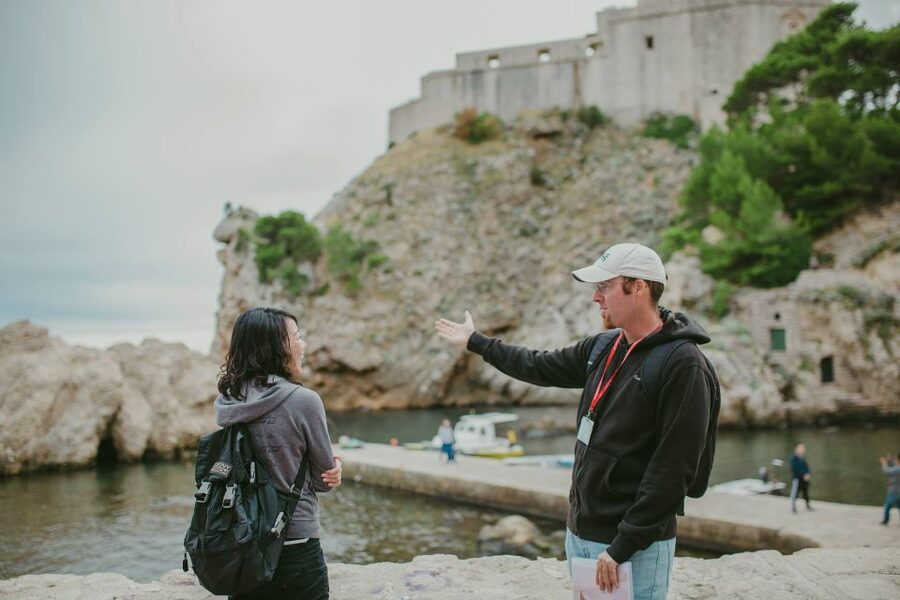
The tour starts just inside the Old Town at the Ploce Gate, the eastern entrance. You meet your guide near the corner of the square in front of Revelin fort, by the cannon, holding a red and white flag. If you arrive a few minutes early, you can watch the flow of people and get your bearings before the walking begins.
Before you even reach the more famous sights, I like that the guide uses the first minutes to orient you. When you understand where the city’s entrance sits and how the Old Town is laid out, the rest of the walk stops feeling like a random checklist. It becomes a route with cause and effect.
This is also a good moment to calibrate what you want from the tour. If you care most about medieval trade and politics, tell the guide early. If you’re more into architecture and art details, say so. In this group size, your focus can actually shape the Q and A.
More Walking Tours in Dubrovnik
- Dubrovnik: Old Town Walking Tour
★ 4.8 · 5,174 reviews - Dubrovnik Discovery Old Town Walking Tour
★ 5.0 · 4,458 reviews - Dubrovnik: Game of Thrones Walking Tour
★ 5.0 · 1,732 reviews
Ploce Gate and the Dominican Monastery, where stone starts telling stories
After the meet point, you quickly pass the Ploce Gate itself. Even a short stop here is useful, because gates are not just decoration. In Dubrovnik, they help you understand the walled city as a living system: controlled entry, defense, and a clear boundary between inside life and the outside world.
Next comes the Dominican Monastery and Museum. You don’t spend a long time here, but you do get guided time to notice architectural cues and place them in context. The value is not only seeing a landmark, but learning how to look: what details matter, what era they point to, and what kind of influence shaped the site.
If you’re the type who likes history told as a connected chain, this early sequence matters. The tour is designed to set up later stops, where the story shifts from religious space to civic power to trade.
The Old Port and Ragusa trade, why this city prospered
One of the most memorable parts of the walk is the Old Port area. Here the guide frames Dubrovnik as the old Republic of Ragusa, a maritime trading republic positioned at the crossroads between East and West. You’ll hear about its economic success and how it competed and interacted with major powers like Venice and the Ottoman Empire.
This matters because the Old Town walls and grand buildings can otherwise feel like pure scenery. With the Ragusa story explained while you’re standing near the harbor zone, you start to understand the city’s choices. You see the Old Town less as a backdrop and more as infrastructure for a trading identity.
Also, standing where ships once moved trade goods gives you a natural sense of scale. The guide talks about galleys setting sail with cargo, and you get a clearer picture of why maritime power shaped everything else, from wealth to politics.
Dubrovnik Cathedral and the St Blaise game that pulls you into the streets
Then you reach the Dubrovnik Cathedral, a Baroque masterpiece. You’re guided through what to look for, and you also learn why the building is resilient in a very literal sense: it was rebuilt after devastating earthquakes. That rebuilding story changes the way you read the façade and interior details, because you realize the architecture has been through real disruption.
St Blaise comes in as the city’s patron saint. This is where the tour gets interactive in a way that actually changes how you walk. Your guide turns the theme into a game: you’ll try to find statues of St Blaise scattered around town as you move from stop to stop.
I like this because it slows you down just enough to notice what you would miss on your own. When you’re scanning for a specific saint, you start reading niches, corners, and facades like an insider. It also keeps the group moving with purpose instead of drifting.
There’s also a fun guessing element tied to the Old Town, including a prompt about how many churches you’ll find inside the area. Even if you don’t land on the right answer, you’ll remember what your guide said because you’re hunting for clues as you go.
Same coastline, a different sort of day:
- Blue Cave Small-Group Boat Tour from Dubrovnik
★ 5.0 · 9,360 reviews - Full-Day Dubrovnik Elaphite Islands Cruise with Lunch and Drinks
★ 5.0 · 8,823 reviews - Dubrovnik: Epic Game of Thrones Tour + Lokrum & Saver Option
★ 4.9 · 5,995 reviews - Dubrovnik: Elaphiti Islands Full-Day Cruise with Lunch
★ 5.0 · 5,938 reviews
Gundulić Square, Ivan Gundulić, and the market stop that feels like real life
After the cathedral area, you head toward Gundulić Square. This is a marketplace where you can see local produce and souvenirs, which gives the walk a change of pace. Instead of only looking up at stone and statues, you’re now surrounded by everyday commerce.
Your guide also brings in Ivan Gundulić, described as the most famous poet and playwright of the old Dubrovnik. If you like when history includes language and personality, this is a smart addition. You don’t just hear dates, you get a cultural anchor.
And yes, there’s a tongue-twisting moment with Croatian pronunciation. It’s short, but it’s memorable because it makes you participate. If your brain tends to glaze over during lectures, this kind of mini exercise helps you stay with the tour.
Practical bonus: your guide will recommend places to eat and drink. That restaurant and snack guidance is one of those small things that can save you stress later, especially when you have limited time and you don’t want to waste it wandering for a meal.
Rector’s Palace, Sponza Palace, and the power-and-trade backbone
Next up is the Rector’s Palace. This is one of the key political landmarks of Dubrovnik’s old Republic of Ragusa era. You learn that it was the seat where the government met and where aristocrats handled political matters.
I love how this transforms what could be a quick photo stop into an understanding of governance. When the guide connects the building to decision-making, you start seeing the place as an engine of the city, not just a scenic courtyard.
And then you’ll notice the cats. The guide points out the “aristo-cats” around the palace, with the lazy, chubby cats that seem to have their own schedule. It sounds like a joke, but it works as a way to keep you present in the moment. You’re learning, then you’re looking, then you’re laughing, then you’re learning again.
Sponza Palace follows. The tour uses these civic and commercial landmarks to keep the theme steady: Dubrovnik wasn’t only religious and artistic. It was also practical, administrative, and commercial.
One important note for your expectations: stops here are short, so the guide will prioritize the big architectural and political takeaways over overly technical details. If you want a deeper architecture course, you might take notes during this walk and then follow up with your own time at whichever building pulled you in most.
Church of St Ignatius and the rhythm of quick stops
The tour includes Crkva sv. Ignacij, the Church of St Ignatius, with a brief guided look. This kind of stop is helpful because it keeps the walk from turning into a single-theme lecture. You get variety in architecture and setting, and the guide can compare styles and stories without it becoming overwhelming.
There are also a few short segments along nearby streets where your guide points out smaller aspects of daily life. You may hear about local experiences and what life is like in modern Dubrovnik, not only the medieval version.
From the reviews, I also picked up that some guides add context on more recent history. Lucija, known as Lucy, is mentioned as sharing insights about the homeland war and recent history. If that topic matters to you, you can ask directly, since the guide is local and likely knows how to tailor the explanation to what you want to understand.
Onofrio’s Fountain, the final photo magnet, and leaving with a clearer map
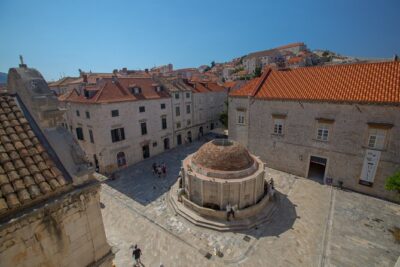
Later in the walk, you reach Large Onofrio’s Fountain. It’s one of those landmarks where the scale hits you once you’re standing close. The guide’s job here is to make you look beyond the obvious shot, connecting it to the city’s physical fabric rather than treating it like a standalone ornament.
By this point, you should feel like you’ve built a mental map. You’ll have moved from entrance (Ploce Gate) to religious landmarks (Dominican Monastery and Cathedral), to maritime power (Old Port), to governance and commerce (Rector’s Palace and Sponza), to the saint-centered streetscape (St Blaise theme and the hunt), then to civic detail (Onofrio’s Fountain).
That’s the real value of the 90-minute format. You don’t leave with every fact in your head. You leave with the framework that makes the rest of Old Town make sense.
Small group pacing and how to plan your photos
This tour is designed for small groups, max 8 people. That size is not just about comfort. It affects the experience, because the guide can respond to questions without repeating themselves to a large crowd.
In practice, the stops are short, with guided time at each site that keeps the walk moving. That means you should treat the guided time like the main event, and plan your deep photo time for after the tour. If you try to do everything during the walk, you’ll either rush the story or miss the details.
If you hate being dragged, this can still work because the interaction, like the St Blaise game and the Croatian pronunciation challenge, helps you move with momentum rather than feeling stuck in a long lecture.
Price and value: is $32 fair for 90 minutes in the Old Town?
At $32 per person for a 90-minute walking tour, the price feels reasonable when you look at what you get, not just what you see. You’re paying for a licensed English-speaking local guide, a tight route through the city’s key layers, and active learning moments like the St Blaise statue hunt.
If you’re the kind of traveler who gets more out of context than sightseeing, this is where the value lands. Dubrovnik is visually stunning, but the meanings behind the buildings can be hard to sort out on your own. This tour gives you a storyline anchored in Ragusa maritime trade, civic power, and the way the city’s patron saint shows up across the town.
Also, you’re not just walking past monuments. You’re getting practical suggestions for where to eat and what to notice next. That can easily turn this into a higher-value purchase than a museum-style ticket, because it impacts your whole day.
In short: for $32, you’re buying time with a local who knows how to connect architecture to daily life and city identity, and then hand you off with a better plan for the rest of your Dubrovnik day.
Who this Dubrovnik local walk suits best
This tour is ideal if you want a fast, organized start to Dubrovnik Old Town. It’s also great if you enjoy learning history through architecture and street-level details rather than relying on your phone for every stop.
It’s a strong match for:
- First-time visitors who want the main sights connected into one explanation
- Travelers who like interactive moments, like the St Blaise game and pronunciation play
- People who appreciate practical advice, including restaurant and snack recommendations
- Anyone who prefers a small-group pace where you can ask questions
It might not be your best fit if you want a slow, long-form, scene-by-scene deep narrative at each landmark. The structure is built around multiple quick stops, and one review notes that a guide’s presentation can sometimes feel more like memorized fun facts than a fully linked story. If you fall into that category, go in expecting a guided overview and be ready to ask your own follow-up questions.
Should you book this tour?
Yes, if you want Dubrovnik to click in the first part of your trip. The combination of small group size, Ragusa trade context, and the St Blaise interactive hunt gives you a guided walk that changes how you experience the Old Town.
Book it sooner rather than later. When you understand the civic and maritime storyline while you’re there, you’ll notice different details during your independent time. And if you care about modern context too, ask your guide about recent history, since local guides like Lucija and others are known for adding that kind of perspective.
If you already feel confident with your own reading of Dubrovnik and you prefer a totally self-paced route, you might skip this. But if you want a clean starting framework plus practical meal tips, this is a solid choice.
FAQ
Where do I meet the guide?
Meet your guide in the corner of the square in front of Revelin fort, just inside the Ploče gate, the eastern entrance to the Old Town. The guide will be waiting by the cannon, holding a red and white flag.
How long is the Dubrovnik Old Town walking tour?
The tour lasts 90 minutes.
How big is the group?
The group is limited to a maximum of 8 participants.
What language is the tour in?
The tour is in English, with a professional licensed English-speaking guide.
Which sights are included?
You’ll visit stops such as Ploče Gate, the Dominican Monastery and Museum, the Old Port, Dubrovnik Cathedral, Crkva sv. Ignacij, the Monument to Ivan Gundulić, Rector’s Palace, Sponza Palace, the Church of Saint Blaise, and Large Onofrio’s Fountain, plus some short street segments between landmarks.
How much does the tour cost?
The price is $32 per person.
Can I cancel or pay later?
The activity offers free cancellation up to 24 hours in advance for a full refund. It also offers reserve now & pay later, so you can book your spot and pay nothing today.
Newest Dubrovnik reviews on the site
- Krka National Park – Private Excursion from Dubrovnik with Mercedes Vehicle★ 5.0 · 4 reviews
- Montenegro Kotor Bay with Boat Ride to The Lady of the Rock★ 4.5 · 46 reviews
- Private Boat Tours Dubrovnik to island Korcula★ 5.0 · 4 reviews
- Korcula, Ston, Wine Tasting and Lunch – Tour from Dubrovnik★ 5.0 · 3 reviews
- Korčula & Ston: Island Charms, Pelješac Delights & Wine Tasting★ 4.0 · 6 reviews
- Korcula Private Tour★ 5.0 · 4 reviews
- Croatia Family Multi Activity Holiday package★ 4.0 · 91 reviews
- Korcula Private Tour from Dubrovnik★ 5.0 · 9 reviews
Walking Tours, compared.
Walking Tour of Split and Diocletian’s Palace
Read our review →
Krka Waterfalls tour with Trogir Walking tour and Krka panoramic boat cruise
Read our review →
City Walls Early Morning or Sunset Walking Tour
Read our review →Browse the lists this tour appears in