
Review · CROATIA
Meet and feel ancient town of Nin
Nin feels tiny, but its timeline is huge. This 90-minute walk through Nin’s Roman remains and early medieval town streets is packed with real places, not just photos, and it’s set on a heart-shaped island connected by two bridges. I love the Roman Aenona ruins you can actually pace through, and I like the small-church feel of medieval Nin, where the scale is intimate enough to notice details.
One thing to plan for: museum entry is not included, so if you want everything you might pay extra for tickets beyond the tour price.
In This Review
- Key things to know before you go
- Entering Nin: a heart-shaped town with Roman-to-medieval layers
- Aenona’s Roman remains: pacing the scale of an important town
- Early medieval Nin and the small-church pattern you can actually feel
- St. Cross and St. Anselmo: two landmarks that anchor the walk
- Roman and medieval stories made personal: Branimir and Gregory of Nin
- Museum time with a curator: why it feels worth the extra stop
- Meeting at the duke Branimir statue, then walking the lower bridge route
- Nin’s bay and sandy beach time, without stealing your history focus
- Price and value: $21 for 90 minutes, guide plus curator context
- Who this Nin tour suits best
- Should you book the Nin ancient town tour?
- FAQ
- How long is the Nin ancient town tour?
- How much does the tour cost?
- Where is the meeting point?
- What languages are available for the tour?
- What is included in the tour price?
- Are museum tickets included?
- Is the tour wheelchair accessible?
Key things to know before you go
- Heart-shaped Nin layout: Two bridges connect the old island to the mainland, which makes routes easy to follow.
- St. Cross and St. Anselmo stops: You’ll see two major religious landmarks in the same compact area.
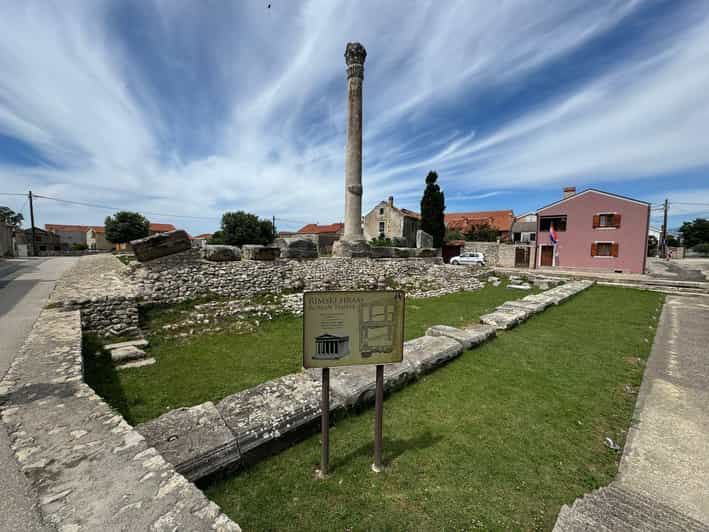
- Roman temple remains on the east Adriatic: Nin is linked to one of the grander Roman-era temple sites in this region.
- Curator-led museum context: A licensed guide plus a curator helps turn ruins into a story you can place.
- Historical sculptures worth the pause: You’ll learn what Duke Branimir and Archbishop Gregory of Nin represent.
- Quick 90-minute format: Great if you want highlights, but it is not the time for long beach lounging.
Entering Nin: a heart-shaped town with Roman-to-medieval layers
Nin is one of those places where the geography helps you understand history. The old town sits on a small island shaped like a heart, and it connects to the mainland by two bridges. That layout keeps the walking compact, and it also makes it easier to see how the town functioned as both a settlement and a harbor area.
What I like about this kind of guided pacing is how it prevents the usual confusion. Roman remains can feel random if you are reading only plaques. Here, you follow a route that moves you from early medieval Nin into the deeper Roman layer tied to Aenona, the ancient name people associate with this spot. You start to recognize the pattern: sacred buildings nearby, civic space around them, and grand structures that hint at wealth and importance.
Also, you do not have to be a church expert. The tour is set up so you can appreciate the early medieval small churches and the later church landmarks without needing background knowledge first. If you have kids with you, this matters, because the information stays grounded in what you are seeing, not just dates on a sign.
More of Croatia worth a morning:
- Split: Krka Waterfalls Trip with Boat Cruise and Swimming
★ 4.8 · 10,519 reviews - Blue Cave Small-Group Boat Tour from Dubrovnik
★ 5.0 · 9,360 reviews - From Split: Krka Waterfalls, Food & Wine Tasting Tour
★ 5.0 · 9,326 reviews
Aenona’s Roman remains: pacing the scale of an important town
The Roman portion is the part that makes Nin feel unexpectedly big. You will explore the remains of a once flourishing town called Aenona, and you do it in a way that lets you notice how Roman towns were organized.
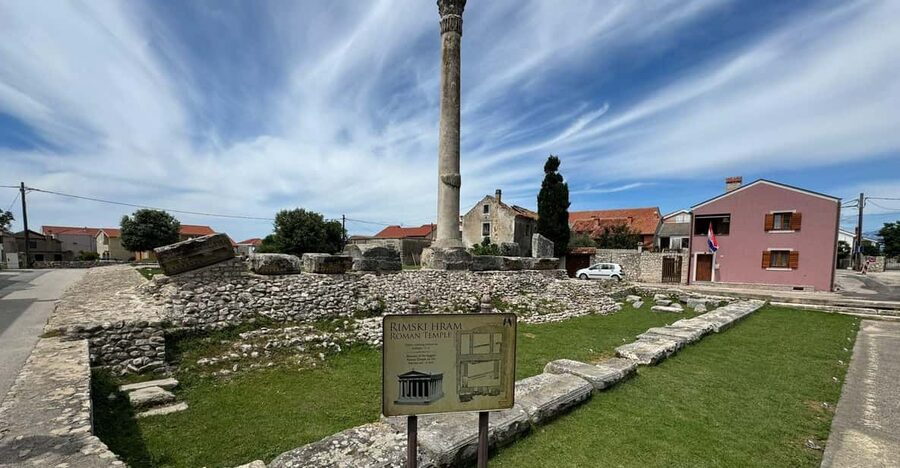
A key moment is the largest Roman temple remains connected with the east coast of the Adriatic. Even if you only see fragments, you can still get a sense of size and civic ambition. Roman temples were not just religious sites. They were statements. They signaled power, money, and order, and they showed visitors and locals that this place mattered.
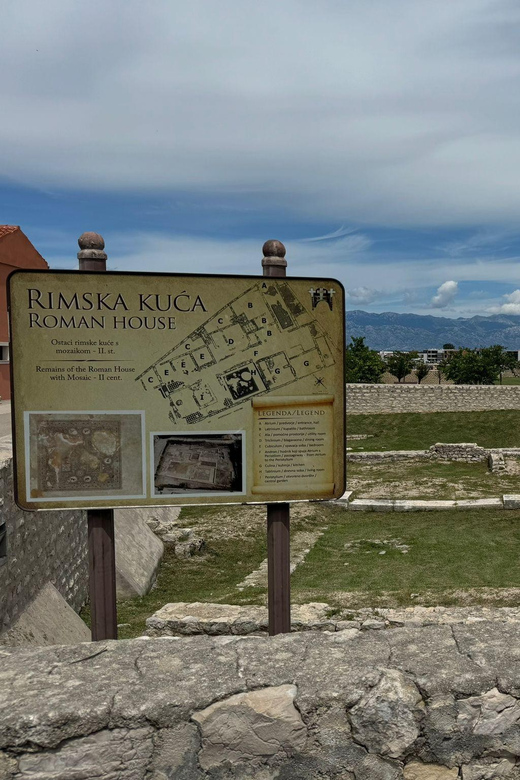
You also visit the remains of a house used in Roman times. That is a smart inclusion because it balances the grandness of temple ruins with a more human scale. Temples show you the city’s public face. A Roman house, even in ruins, helps you picture daily life, household space, and how people lived around the big monuments.
If you tend to move quickly when you see ruins, slow down here for one reason: Roman remains can look like scattered stones unless someone helps you connect orientation and purpose. A licensed guide does that job, and it makes the architecture easier to read even when the site is incomplete.
Early medieval Nin and the small-church pattern you can actually feel
After the Roman layer, you shift into early medieval Nin, and the atmosphere changes. The town becomes more intimate. Instead of one massive civic structure grabbing your attention, you start noticing smaller churches and their relationship to the surrounding streets and squares.
This is where Nin earns its reputation as an especially romantic small town in Croatia. Not because of one big postcard view, but because the town’s scale encourages lingering. Small churches tucked into a compact town layout create that sense of closeness. You do not need a grand viewpoint to feel the charm.
One practical benefit of having this as part of a guided route is that you avoid the common issue of medieval towns feeling repetitive if you are not sure what you are looking at. Here, you follow a sequence that helps you learn what the churches represent and why they cluster the way they do. You end up with more than a photo memory. You get a map in your head.
If you are the type who enjoys religious architecture but hates long lectures, this stop style is a good compromise. You walk, look, and then you get the story tied to what you are seeing right then.
St. Cross and St. Anselmo: two landmarks that anchor the walk
Two standout named stops anchor the tour in the historic center: the famous church of St. Cross and the local cathedral of St. Anselmo.
St. Cross is often the kind of place you want to see up close because it represents the kind of faith and continuity that stayed relevant even after the Roman era faded. When a guide points out key elements, you start noticing how early medieval churches carried forward building traditions while still reflecting the local era.
Then you move to the cathedral of St. Anselmo, which helps you broaden the picture. A cathedral usually signals a more formal religious role, one that organized the community beyond a single neighborhood. Together, St. Cross and St. Anselmo give you a mini framework for how Nin’s sacred life evolved over time.
This pairing is also useful for timing. Both sites are in the historic core, so you are not crossing the entire town to switch eras. Nin stays walkable, and your 90 minutes feels purposeful instead of rushed.
Same coastline, a different sort of day:
- Full-Day Dubrovnik Elaphite Islands Cruise with Lunch and Drinks
★ 5.0 · 8,823 reviews - From Dubrovnik: Mostar and Kravica Waterfall Day Trip
★ 4.7 · 7,228 reviews - Blue cave, Mamma Mia and Hvar, 5 islands speedboat tour
★ 5.0 · 7,150 reviews - From Split: Krka Waterfalls, Food & Wine Tasting Tour
★ 4.9 · 6,598 reviews
Roman and medieval stories made personal: Branimir and Gregory of Nin
One of the most memorable parts of this experience is hearing why Nin matters to specific historical figures. You will talk about famous sculptures connected to people like Duke Branimir and Archbishop Gregory of Nin, plus other historical sites.
Why do these names matter for you, practically? Because without them, statues can look like decorative street art. With context, they become reference points. Duke Branimir ties Nin to royal and political identity in the region’s medieval story. Archbishop Gregory of Nin connects Nin to broader religious leadership and influence.
The tour also helps you connect these names to the physical town. You will learn where they fit into Nin’s historic timeline and how the town’s identity got shaped. It is the difference between seeing a statue and understanding why a town chose to honor that person.
If you like history but dislike dry facts, this is the sweet spot. The guide’s job is to translate the names into a mental timeline, and that makes your walk feel like a guided conversation instead of a scrolling lecture.
Museum time with a curator: why it feels worth the extra stop
This tour includes a walking guided tour with a licensed tour guide, plus a curator in the local museum. That mix is a big part of the value.
Ruins outdoors are great, but you can only take in so much with your eyes alone. Museum context often answers the questions you start forming while you are staring at stones: What is this fragment? Where would it have fit? What kind of everyday life happened here?
A curator is especially helpful because they can explain what artifacts and exhibits mean without turning it into a history seminar. And since your tour includes that museum moment, you are not left guessing what you just saw. You get a clearer sense of what Roman Aenona became after the Roman era and how the medieval town carried forward the identity of Nin.
I also like that the experience is structured for real questions. In English or Croatian, your guide can answer what you notice as you walk. That matters because ruins are visual, and people naturally have follow-up questions like, How was this used, where did this connect, and why here?
Meeting at the duke Branimir statue, then walking the lower bridge route
Your meeting point is the statue of duke Branimir by the lower bridge. That is a smart start because it immediately anchors you to a central historic reference point and the town’s bridge layout.
From there, you walk through the area tied to key landmarks: the Roman remains linked to Aenona, the early medieval sites with small churches, and the named sacred buildings like St. Cross and St. Anselmo. The tour is designed so the stops feel close enough to keep momentum, but varied enough that you do not feel like you are repeating the same street.
Practical tip: wear comfortable shoes. Even though this is a short 90-minute experience, you are moving through historic ground where surfaces can be uneven and you will want stable footing while looking up at churches and scanning ruin areas.
Nin’s bay and sandy beach time, without stealing your history focus
Nin is known for its bay with sandy beaches and for fun possibilities beyond monuments. The tour itself centers on historical exploration, but you can use Nin’s setting to plan what comes after.
Since the tour is only 90 minutes, I recommend treating it like the history anchor. After that, if the weather is good, you can shift your day to the bay for a slower pace. That way you get both sides of Nin: the tight, charming old town feel and the more relaxed seaside mood.
If you are traveling with kids, this matters even more. Kids often do better with a clear “finish line.” You do your focused walk, then you get an easy transition to beach time or a low-key snack nearby.
Price and value: $21 for 90 minutes, guide plus curator context
At $21 per person for a 90-minute guided experience, this is priced like a value-forward cultural stop. You are not just paying for someone to walk with you. You are getting a licensed tour guide plus a curator in the local museum.
That combination is the reason the price feels fair. A lot of short town tours feel like they skim the surface. Here, the structure includes both outdoor ruins and museum interpretation, which helps you leave with more meaning and fewer unanswered questions.
One consideration to keep in mind is that museum tickets are not included. That does not make the tour a bad deal, but it does mean you should be ready for small extra costs if you want full museum entry during the included visit. If you are trying to keep spending tight, check what you plan to access and budget accordingly.
Food and drinks are also not included, so plan a simple pre or post-tour meal. Nin’s compact center makes it easy to keep your schedule light.
Who this Nin tour suits best
This is a great fit if you want a high-impact Nin orientation without committing to a half-day plan. The 90-minute length is ideal for a day already busy with other stops in Dalmatia.
It is also a strong choice for families. One review experience noted that the guide was especially good with children around ages 10 and 13, and that the tour adapted well for both kids and adults. That tells me the explanations likely stay practical and interactive, not overly dense.
Language options also help. You can go in English or Croatian, which means you can match comfort level. If you enjoy asking questions while walking, you will likely get good mileage out of a licensed guide.
If you are the type who wants only beach time, you may find a guided history walk slightly focused. But if you want Nin’s charm explained, with the Roman and medieval layers tied together, this tour format makes sense.
Should you book the Nin ancient town tour?
Book it if you want the fastest path to understanding Nin. The town’s setting, Roman Aenona remains, early medieval small churches, and named landmarks like St. Cross and St. Anselmo are exactly the kind of combo that pays off with a guide and a curator.
Skip it or consider alternatives if you are hoping for a longer, beach-centered outing. Nin’s bay is part of the broader appeal, but this experience prioritizes history within a 90-minute window.
My bottom-line take: for $21, you are buying clarity. You will walk away with a usable mental map of Nin’s Roman-to-medieval story, plus a few historical connections that make the statues and churches feel personal, not random.
FAQ
How long is the Nin ancient town tour?
The tour duration is 90 minutes.
How much does the tour cost?
The price is $21 per person.
Where is the meeting point?
You meet at the statue of duke Branimir by the lower bridge.
What languages are available for the tour?
The live tour guide is available in English and Croatian.
What is included in the tour price?
It includes a walking guided tour with a licensed tour guide and a curator in the local museum.
Are museum tickets included?
No, museum tickets are not included.
Is the tour wheelchair accessible?
Yes, the tour is wheelchair accessible.
Newest Croatia reviews on the site
- Krka National Park – Private Excursion from Dubrovnik with Mercedes Vehicle★ 5.0 · 4 reviews
- Private Boat Tours Dubrovnik to island Korcula★ 5.0 · 4 reviews
- Korcula, Ston, Wine Tasting and Lunch – Tour from Dubrovnik★ 5.0 · 3 reviews
- Montenegro Kotor Bay with Boat Ride to The Lady of the Rock★ 4.5 · 46 reviews
- Korčula & Ston: Island Charms, Pelješac Delights & Wine Tasting★ 4.0 · 6 reviews
- Korcula Private Tour★ 5.0 · 4 reviews
- Korcula & Peljesac Full Day Private Tour from Dubrovnik★ 5.0 · 15 reviews
- Croatia Family Multi Activity Holiday package★ 4.0 · 91 reviews