Review · TICKETS
Pula: Arena Entrance Ticket
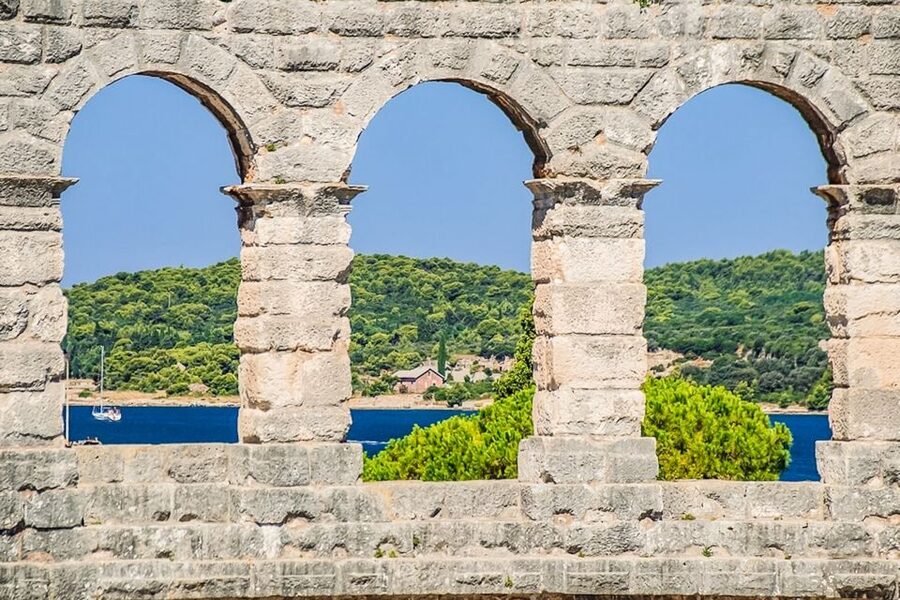
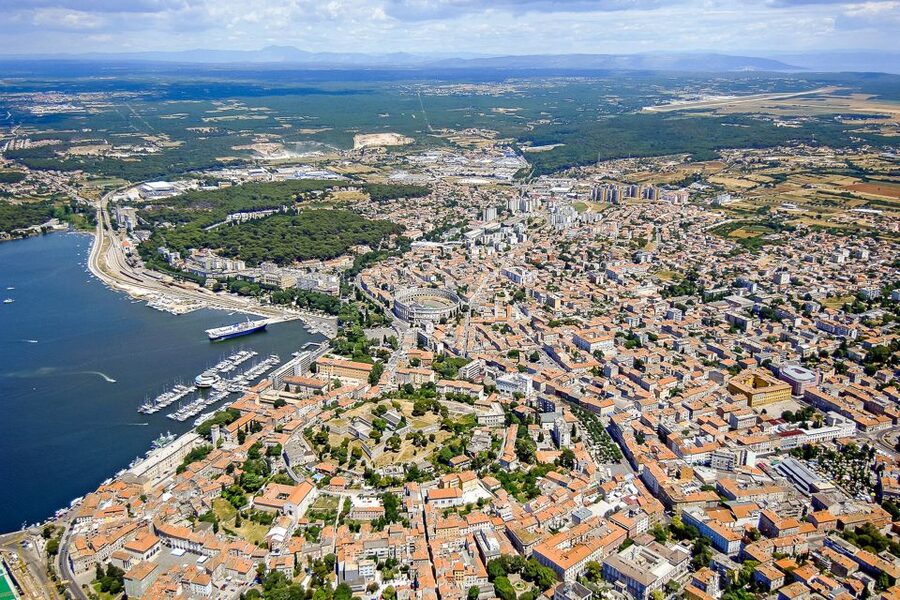
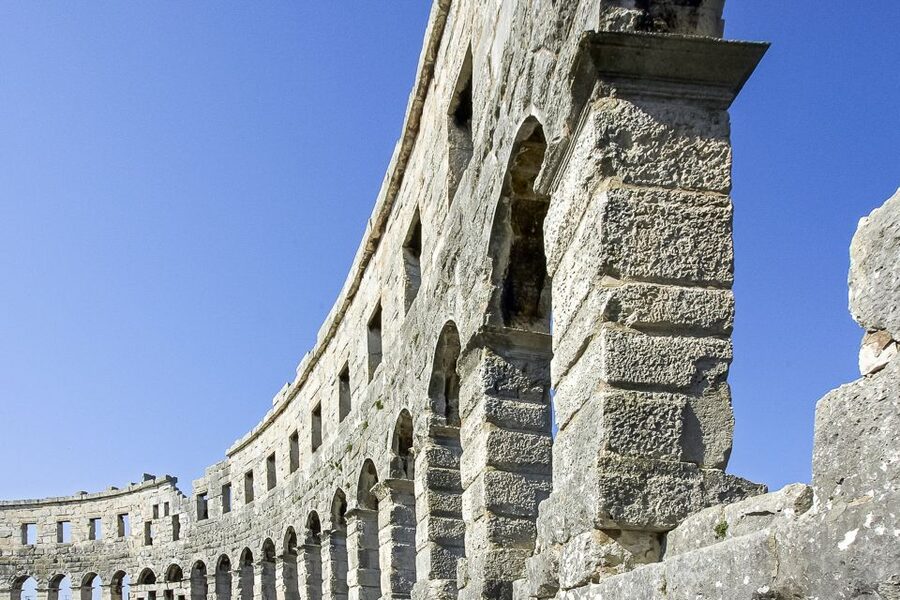
Pula Arena feels shockingly alive. With this Pula Arena entrance ticket, you get into one of Croatia’s best-preserved Roman landmarks, plus access to the underground gladiator area with a focused, permanent exhibition. It is an easy way to step away from beach crowds and spend time where people once watched hunts and gladiator battles.
What I like most is how simple it is to learn while you walk. The site is set up with self-guiding stops, and QR codes help you make sense of what you are looking at without joining a timed group. One thing to plan for: the audio guide is not included, and the info experience you get may depend on having your own headphones with you.
In This Review
- Key highlights to look for
- Entering Pula Arena fast, without turning it into a chore
- The Roman amphitheater: why this place still hits hard
- Underground gladiator level: olive oil and wine, not just sword drama
- QR code self-guiding and headphones: the easiest way to learn
- How long to plan, and when to go for the least stress
- Pairing Pula Arena with nearby Roman sights
- Price and value: is $11 worth it?
- Who should book this ticket
- Should you book Pula Arena Entrance Ticket?
- FAQ
- What is included with the Pula Arena entrance ticket?
- Where do I redeem my ticket?
- How long is the ticket valid?
- Do I need headphones?
- Is an audio guide included?
- What can I access in the underground gladiator area?
- Is the arena wheelchair accessible?
- What is the approximate visit length?
Key highlights to look for
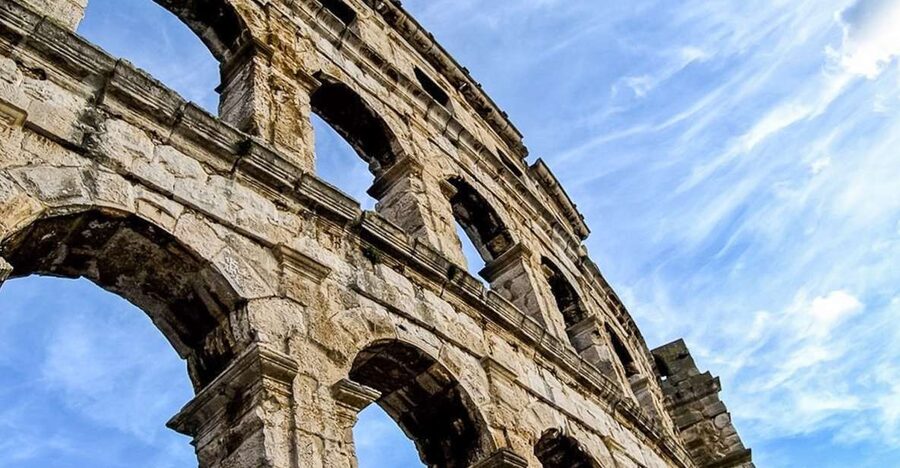
- One of Pula’s most iconic Roman structures you can explore at your own pace
- Underground gladiator exhibitions featuring Istrian olive and wine making in antiquity
- Self-guided info stops so you can spend as long or as little as you want
- A visit that works as a cool-off from beach time, especially in shoulder seasons
- Accessibility for most of the site, with one basement area restricted
Entering Pula Arena fast, without turning it into a chore
This is an entrance ticket, not a guided tour. That is good news if you prefer flexibility. You redeem your ticket at the main Pula Arena entrance, then you are free to roam the arena grounds.
If you are arriving in a busy part of town, your biggest win is not paying in cash or hunting for the right window. In practice, buying ahead usually saves time getting in. Still, do not assume it is literally no-line. The process includes ticket scanning and you may need to swap your online confirmation for a receipt at the entrance shop area. Think of it as fast access, not instant teleportation.
Getting there by car is also pretty straightforward. One of the best value parts of this stop is how easy it is to fit into a day in Pula. You can park nearby, then spend an hour or two in Roman stone instead of stuck in traffic.
Also note the setup for mobility: the whole site is wheelchair accessible except the lower gallery in the basement. If you are bringing a wheelchair or walker, that is the only real limitation to plan around.
A few more Croatia trips to weigh up
- Zadar: Plitvice Lakes Guided Day Tour with Tickets
★ 4.9 · 3,148 reviews - From Zagreb: Plitvice & Rastoke Guided Day Trip with Ticket
★ 4.9 · 2,955 reviews - From Split: Plitvice Lakes Guided Tour with Entry Tickets
★ 4.9 · 2,468 reviews
The Roman amphitheater: why this place still hits hard
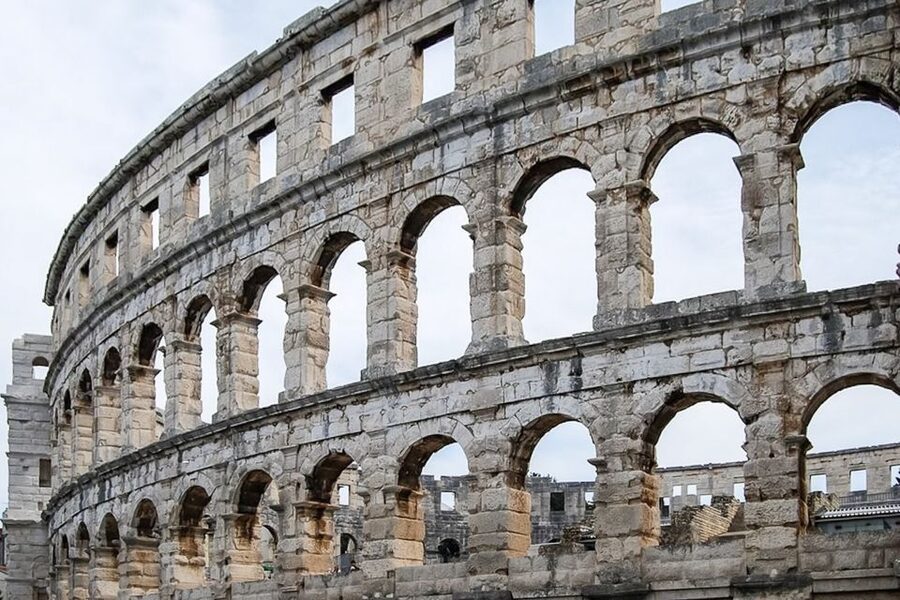
Once you are inside, the vibe is different from most museum stops. You are standing in an actual amphitheater, with real scale. The seats, walls, and open arena space make it hard to treat it like a photo-op.
You can appreciate it two ways.
First, there is the architecture. The Pula Arena is widely recognized as one of the most impressive Roman venues in Croatia, and you feel why quickly. Even if you have seen the Colosseum or a famous arena in Italy or France, Pula has its own feel. It is big, solid, and very much present tense.
Second, there is the imagination work, because you can stand where spectators once sat. When you look at the arena floor and then turn toward the surrounding seating, the building gives you the basic story without needing a lecture. People once gathered here for gladiators and animal hunts. You can connect that to what you learn underground with the olive-oil and viticulture exhibition.
If you have never toured Roman arenas before, the simplest approach is to do one slow walk around the perimeter, then sit briefly in the seating area. That quick reset helps your brain lock onto the shape of the place.
Underground gladiator level: olive oil and wine, not just sword drama
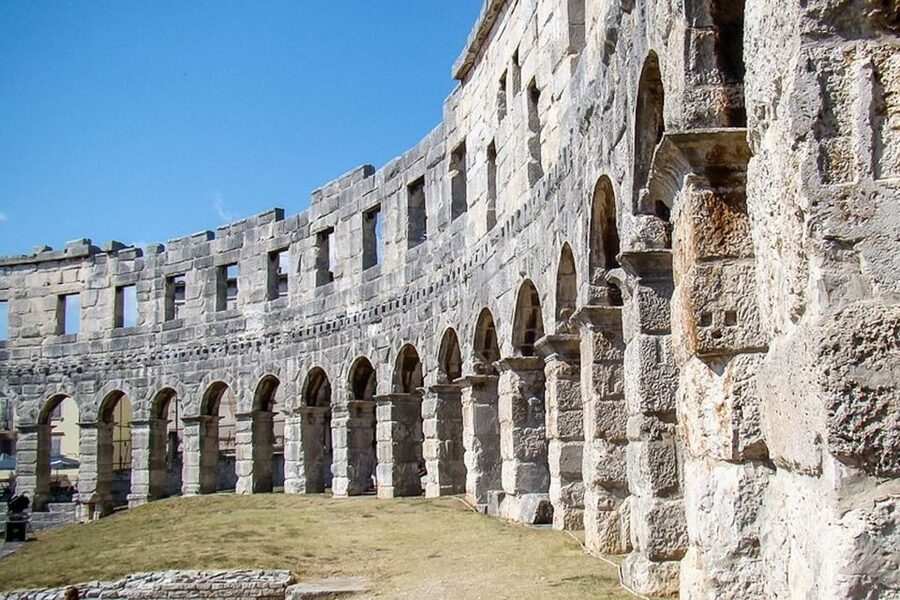
The real differentiator of this ticket is the permanent exhibition in the underground gladiator area. This is the hidden layer tied to the kinds of shows that happened above.
The exhibition is called Istrian Olive and Viticulture in Antiquity. It focuses on how olive oil and wine were made in ancient Istria, and it connects those products to everyday life and the economy of the Roman world.
What you will actually see matters. The underground exhibits include reproductions of tools and equipment such as:
- mills and presses for olive oil and grapes
- sedimentation tanks
- amphorae, the storage and transport containers for oil and wine
That set of objects does a great job grounding the Roman story. It moves you past the usual gladiator-only framing and shows how people supported those entertainments with agriculture, storage, and trade. If you love food history, this part alone is a strong reason to come.
One practical tip: give yourself enough time for the basement level. Even if you are quick upstairs, underground visits naturally slow you down because the layout encourages reading and close looking.
QR code self-guiding and headphones: the easiest way to learn
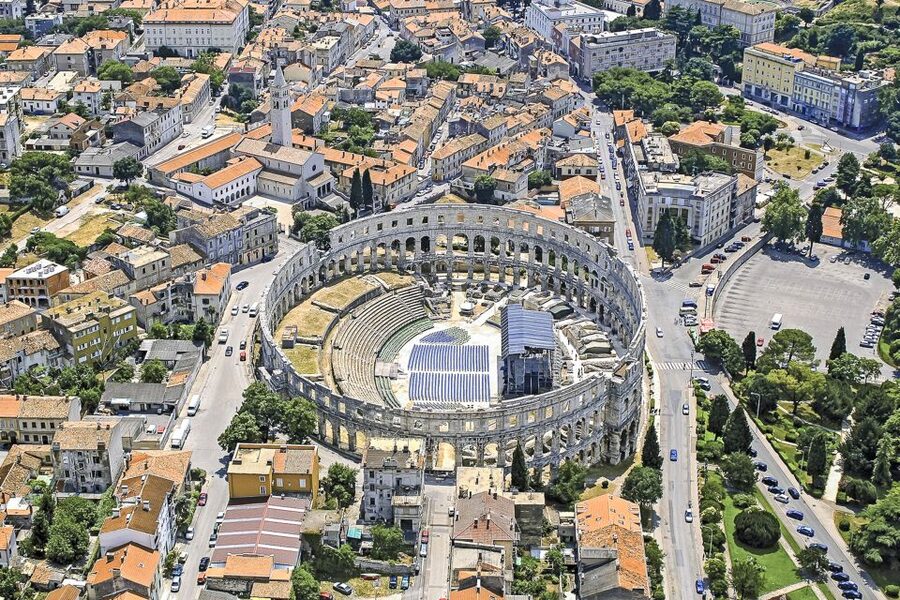
You do not get a staff-led tour with this ticket. Instead, the site supports self-guiding, and you use the information points as you go.
In the arena, you will find QR codes linked to explanations. People commonly pair those QR stops with audio, which is why the advice to bring headphones is important. The audio guide itself is not included, but if the QR system provides audio at the points you scan, headphones let you use it comfortably.
A heads-up from real-world experience: audio and device availability can vary by season and setup. In some moments, it works smoothly. In other cases, you may run into missing audio access or audio that does not behave the way you expect. If you want to feel prepared, bring headphones and also accept that you might rely more on boards and QR text than a spoken guide.
Another small consideration is navigation. There is no obvious, branded, follow-this-one-route style map described with the ticket. You can still manage it easily by doing a simple loop and then choosing whether to go underground during your visit.
Same coastline, a different sort of day:
- Split: Krka Waterfalls Trip with Boat Cruise and Swimming
★ 4.8 · 10,519 reviews - Blue Cave Small-Group Boat Tour from Dubrovnik
★ 5.0 · 9,360 reviews - From Split: Krka Waterfalls, Food & Wine Tasting Tour
★ 5.0 · 9,326 reviews - Full-Day Dubrovnik Elaphite Islands Cruise with Lunch and Drinks
★ 5.0 · 8,823 reviews
How long to plan, and when to go for the least stress
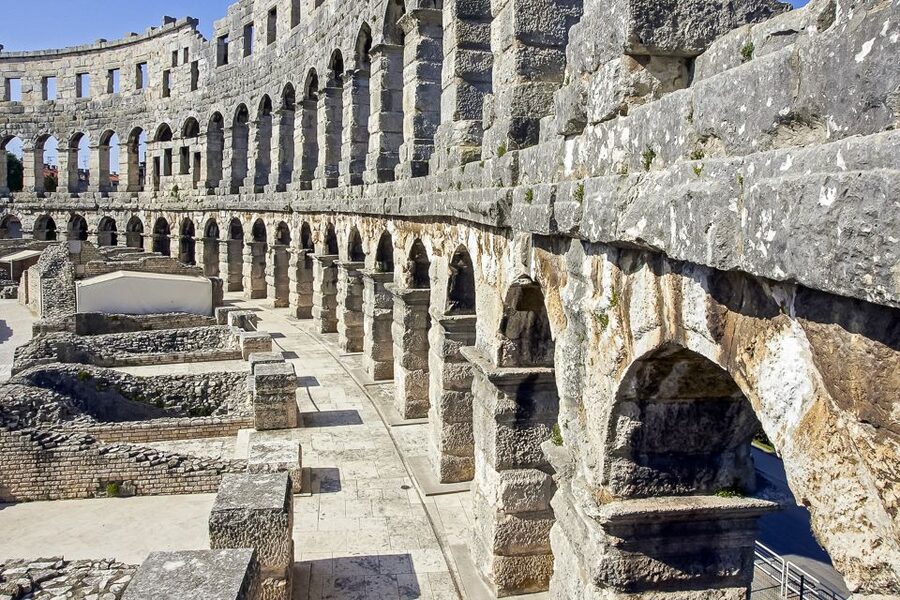
This is a 1-day ticket, and in practice it is an hour-and-change kind of outing. Many visitors spend around 90 to 120 minutes if they do the arena and the underground exhibition. If you take your time reading and stop often, it can stretch toward two hours.
The timing choice is what makes or breaks the experience.
- Go early to cut the crowd effect. People consistently recommend arriving when it is quiet, because the arena is wide open and the heat can get intense in summer.
- If you visit later, you can still have a great time, but you may deal with more noise, more foot traffic, and less breathing room around the best photo angles.
Weather matters too, but in a good way. Even on rainy days, you still get a lot out of it because the core experience is walking through stone and reading exhibitions. One caution: rain changes surfaces, so watch your footing on outdoor areas.
One more timing twist: the arena is used for events like concerts and summer gladiator-style recreations. If you are there when an event is happening, the acoustics and staging energy can add excitement. Just expect that noise and setup might limit how calmly you can explore certain sections.
Pairing Pula Arena with nearby Roman sights
The Pula Arena sits right in the city, so you can easily turn it into a Roman-themed afternoon instead of an isolated stop.
A good strategy is to treat the arena as your anchor:
- Start at Pula Arena when the light is nicest and the crowd is smallest.
- Then walk or transit to other nearby historic landmarks when you want a different type of viewing.
In particular, people often combine the arena visit with other well-known Roman or ancient-era stops around town, including the Temple of Augustus and the older fortress area. This makes the day feel cohesive, because you go from arena spectacle to calmer monuments and city views.
If you like history but hate rigid schedules, this is a great style of itinerary. You can spend more time in the arena if you want, then shorten the rest if you are tired.
Price and value: is $11 worth it?
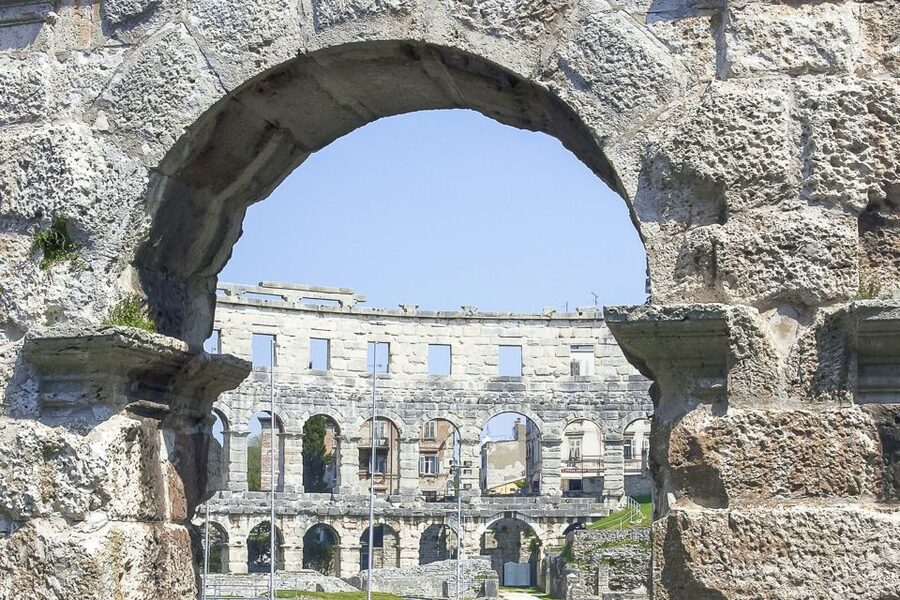
At about $11 per person, this ticket is one of the better-priced ways to see a top-tier Roman site in Croatia. The value comes from two things you actually get access to:
- the arena itself
- the underground permanent exhibition connected to Istrian agriculture and wine making
You also avoid some of the friction of buying on the spot. Even when you still have to scan and redeem the ticket at the entrance, pre-booking tends to reduce the time you lose to entry line chaos.
Is it perfect value for everyone? Not automatically.
If you were hoping for a full guided explanation, you will not get one with this ticket. If audio guide access fails or you cannot use the audio system, you may feel like you want more narration and more context for what you are seeing. In that case, you can still make it work with QR content and reading boards, but it is a different style of learning.
Still, for people who enjoy walking, reading, and self-paced museum time, this is strong value.
Who should book this ticket
This is a great fit if you:
- want a high-impact Roman amphitheater visit without committing to a guided tour
- like food and agriculture history, especially olive oil and wine
- prefer flexible timing and self-guided exploration
- want a break from beach-heavy days in Pula
It is less ideal if you:
- need a live English-speaking guide to translate everything
- rely heavily on an audio guide device and want it guaranteed to work in every moment
- need access to areas beyond the wheelchair-accessible parts, since the lower gallery in the basement is not accessible
Should you book Pula Arena Entrance Ticket?
If you are coming to Pula and you care about Roman architecture, this is an easy yes. The arena alone is worth your time, and the underground exhibition gives you a second angle that most amphitheaters do not. Add in the low price and the ability to go early to beat the crowds, and you get a very practical win.
Book it if you want history you can control. If you want someone to talk to you the entire time, you might prefer a guided option. But for most people, the self-guided format plus the underground exhibition is a smart use of a couple of hours.
FAQ
What is included with the Pula Arena entrance ticket?
The ticket includes entrance to the Pula Arena site.
Where do I redeem my ticket?
Redeem your ticket at the main Pula Arena entrance.
How long is the ticket valid?
The ticket is valid for 1 day. Availability shows starting times, so you should match your visit to the time you choose.
Do I need headphones?
Yes. The experience recommends bringing headphones.
Is an audio guide included?
No. An audio guide is not included.
What can I access in the underground gladiator area?
You get access to the permanent exhibition in the underground gladiator area, Istrian Olive and Viticulture in Antiquity, which focuses on tools and equipment related to olive oil and wine production, plus amphorae.
Is the arena wheelchair accessible?
The site is wheelchair accessible except for the lower gallery in the basement.
What is the approximate visit length?
This is a flexible self-paced visit. Many visitors spend about 90 to 120 minutes, and some spend closer to two hours if they take more time with the underground exhibition and information points.
Newest Croatia reviews on the site
- Krka National Park – Private Excursion from Dubrovnik with Mercedes Vehicle★ 5.0 · 4 reviews
- Private Boat Tours Dubrovnik to island Korcula★ 5.0 · 4 reviews
- Korcula, Ston, Wine Tasting and Lunch – Tour from Dubrovnik★ 5.0 · 3 reviews
- Montenegro Kotor Bay with Boat Ride to The Lady of the Rock★ 4.5 · 46 reviews
- Korčula & Ston: Island Charms, Pelješac Delights & Wine Tasting★ 4.0 · 6 reviews
- Korcula Private Tour★ 5.0 · 4 reviews
- Croatia Family Multi Activity Holiday package★ 4.0 · 91 reviews
- Korcula Private Tour from Dubrovnik★ 5.0 · 9 reviews
Tickets, compared.


Plitvice & Rastoke Guided Day Trip with Ticket
Read our review →
Plitvice Lakes Guided Tour with Entry Tickets
Read our review →
Rastoke & Plitvice Lakes Guided Tour with Ticket
Read our review →

Plitvice Lakes with Ticket & Rastoke Guided Tour from Zagreb
Read our review →
Skip-the-Ticket-Line Museum of Broken Relationships
Read our review →