
Review · OLD TOWN WALKING TOURS
Timeless Hvar: Old Town Walking Tour with Local Guide
That first hour in Hvar can feel like time travel. This walk is built around Hvar’s architecture and the island’s social stories, from old power struggles to the birth of Europe’s first public theatre, all shared by a licensed local guide. I like that you get a clear “what matters and why” overview without being buried in facts, and I also love the way the tour connects everyday island life to the art of UNESCO-protected lace-making. One thing to consider: the tour focuses on landmarks from the outside, so if you want interior access, you’ll need to follow up on your own.
You’ll start at the historic Arsenal, then move through the old cobbled streets with practical stops and viewpoint explanations. Expect a fast, easy loop designed to help you get your bearings for the rest of your day in Dalmatia, especially if you’re short on time or just arriving and want the big picture. I also appreciate the hands-on planning support: you’ll get guidance on what has entrances and opening hours so you can choose what to see next.
Recent feedback has been consistently positive, including a guide named Marija who’s praised for clear explanations of social and political history while walking the old streets. With a one-hour format, it’s a great fit for first-timers who want context, not a marathon.
In This Review
- Key things to know before you go
- Why this Hvar old town walk works in just one hour
- Meeting at the Arsenal: how to find your guide fast
- Hvar Theatre stop: the story behind the stage and the social power behind it
- City Lodge and the Renaissance Loggia: the island’s administrative “center of gravity”
- Benedictine Convent: what to notice when you’re looking at religious history from the outside
- Hvar Cathedral, St. Stephen’s Cathedral: the exterior cues you should look for
- UNESCO lace-making: the culture detail that makes the town feel lived-in
- Outside-only viewing: a feature, not a flaw
- Price and value: is $41 for a one-hour walking tour fair?
- What to do right after the tour so the planning pays off
- Who this tour fits best, and who should skip it
- Should you book Timeless Hvar?
- FAQ
- Where does the tour start?
- How long is the walking tour?
- How much does it cost?
- Is the tour in English?
- Are interior visits included?
- Is there free cancellation?
Key things to know before you go
- You start at the Arsenal, a historic anchor point that makes the rest of the route intuitive.
- The walk links architecture to power and daily life, including noble versus commoner tensions.
- You’ll hear the story tied to Hvar Theatre, including the claim about Europe’s first public theatre.
- UNESCO-protected lace-making shows up as more than a headline, it’s part of understanding island culture.
- Loggia, cathedral, and major squares are treated like storyboards, with explanations focused on what to notice from the outside.
- You get practical follow-up info so you can plan interior visits later at your own pace.
Why this Hvar old town walk works in just one hour
Hvar old town can overwhelm you in the best way. Narrow streets twist, stone buildings stack up, and everything looks important. This tour is smart because it gives you a guided thread you can hold onto while you wander on your own afterward.
In 60 minutes, you cover the core landmarks that define Hvar’s identity. That includes the Renaissance-style monumental spaces and the cathedral area, plus key stops that help you understand how the island’s rulers, institutions, and traditions shaped what you see today. You’re not asked to memorize, you’re guided to notice.
The tour’s tone is also practical. Instead of turning every stop into an exam, the guide focuses on what the building meant to the people who lived there. That makes the old stones feel less like scenery and more like evidence. And since most stops are outside, you can keep moving without waiting for doors, tickets, or guided entry times.
More old-town walks in Hvar City:
- Dubrovnik: Old Town Walking Tour
★ 4.8 · 5,174 reviews - Split: Old Town and Diocletian Palace Walking Tour
★ 4.9 · 4,727 reviews - Dubrovnik Discovery Old Town Walking Tour
★ 5.0 · 4,458 reviews
Meeting at the Arsenal: how to find your guide fast
You meet in front of the Arsenal, a large historic building with a big arch that’s easy to spot. The guide is there about five minutes early holding a sign that reads Timeless Hvar, wearing an official tour badge.
This matters more than it sounds. Hvar old town is compact, but it’s easy to lose time if you’re hunting for a meeting point. Showing up five minutes early also gives you a chance to orient yourself before the group sets off.
The tour itself is in English, so you’ll want to be comfortable following conversational history and local context at walking pace. If you’re jet-lagged, bring water, keep an eye on your footing on cobbles, and trust that the pace is built around a one-hour loop.
Hvar Theatre stop: the story behind the stage and the social power behind it
One of the first stops is the Hvar Theatre area, where you’ll spend around ten minutes sightseeing. This is the moment the tour starts connecting stone buildings to social life and politics.
You’ll hear the story of the island’s power dynamics, including conflicts between nobles and commoners, and how public life in Hvar developed. The tour also references the birth of Europe’s first public theatre, tying the theatre’s presence to what the island wanted to show, display, and control.
Why this stop is valuable: theatres are never only about performances. They also reveal who had money, who had status, and who benefited from public events. Even if you’re not a theatre person, it helps you read the town better. When you know the building’s purpose in its time, the facades stop looking random.
The main drawback of this type of stop is that it’s mostly exterior viewing. If you’re hoping for detailed interior descriptions or stage-level history, you may want to follow up independently, depending on what’s open when you visit.
City Lodge and the Renaissance Loggia: the island’s administrative “center of gravity”
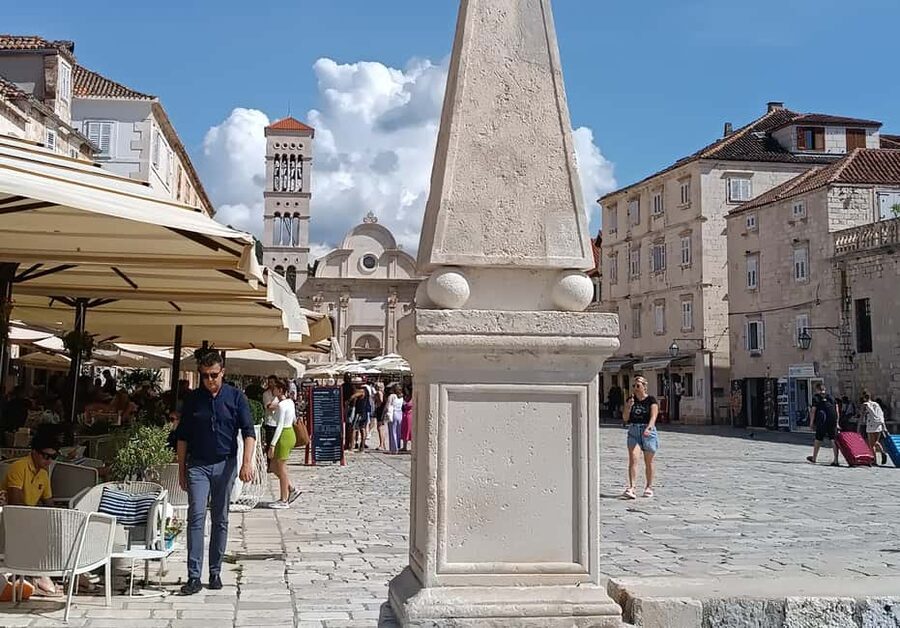
After the theatre, you move toward the City Lodge and the Renaissance Loggia area. This is a standout kind of stop because the architecture is doing real work. A Renaissance loggia was often tied to public business, official gatherings, and the display of authority.
You’ll see the Renaissance Loggia and learn how it once served as the island’s main administrative building. That theme matters: it explains why Hvar’s central spaces look the way they do. The architecture is the message, order and governance built into stone.
The tour also points you toward the grand main square, described as the largest on the Dalmatian coast. Even if you don’t measure it, you’ll feel the scale when you’re standing in the space. And if you’re the type who likes to understand why locals gather somewhere, this is your clue. Big squares are social engines, not just photo backdrops.
Exterior-only viewing helps here. You can take your time visually, then decide what you want to explore more later. The tour keeps you moving, but it doesn’t rush you out of the key visual moments.
More walking tours in Hvar City:
- Walking Tour of Split and Diocletian’s Palace
★ 5.0 · 2,588 reviews - Dubrovnik: Game of Thrones Walking Tour
★ 5.0 · 1,732 reviews - Dubrovnik Old Town History Walking Tour
★ 5.0 · 1,684 reviews - Krka Waterfalls tour with Trogir Walking tour and Krka panoramic boat cruise
★ 5.0 · 1,659 reviews
Benedictine Convent: what to notice when you’re looking at religious history from the outside
Next up is a Benedictine Convent stop. Even without going inside, convent sites are powerful story anchors because they represent long-term religious influence and how communities organized daily life.
In this part of the walk, you’re not just looking at a building. You’re learning how traditions shaped rhythms on the island, including what mattered to people across generations. The guide’s explanations keep you from treating it like a random old wall, and instead frame it as part of how Hvar functioned socially.
A practical note: if you’re sensitive to crowds or you prefer quieter moments, convent-area streets can vary. The tour is short, so you’re less likely to get stuck in long waits. Still, cobbles and narrow lanes mean you’ll want to keep your pace steady and avoid stopping in the path of others.
Hvar Cathedral, St. Stephen’s Cathedral: the exterior cues you should look for
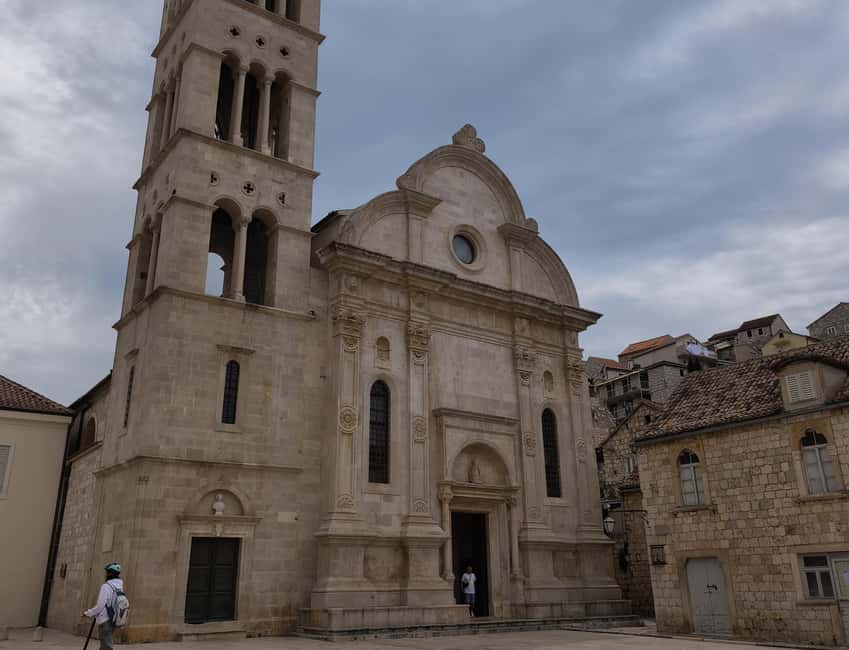
The itinerary includes Hvar Cathedral, and the tour also specifically calls out St. Stephen’s Cathedral as part of what you’ll see. Since the tour focuses on outside viewing, your time here is about reading the exterior details and understanding the cathedral’s role in Hvar’s story.
A cathedral like this is more than a religious landmark. It often served as a civic symbol, a community anchor, and a visible sign of continuity. The guide’s job is to point out how the cathedral fits into the wider town narrative, not just its location on the map.
What I like about this approach: you’ll know what you’re looking at before you decide whether you want to pay an interior ticket later. And because entrance fees are not included, the tour helps you plan around your priorities rather than forcing you into a schedule.
If your main goal is “see the inside no matter what,” you’ll likely need to do that separately. But if your goal is to understand why the cathedral matters and how it connects to the town’s evolution, this stop hits the right balance.
UNESCO lace-making: the culture detail that makes the town feel lived-in
One of the tour highlights is UNESCO-protected lace-making. This is where the experience stops being only about buildings and starts feeling human.
The guide explains the art of lace-making as a tradition tied to island identity. In practical terms, that means you can look at Hvar’s old architecture and see it as a backdrop for work, craft, and daily routines, not just formal ceremonies and monuments.
Why this matters for your trip: cultural crafts like lace-making are often the fastest way to understand what life was like before tourism changed the economy. When you know that tradition, you can better interpret what you see around town, from the importance of certain social structures to the way community identity gets carried forward.
Also, this is a perfect kind of content for a one-hour tour because it’s memorable. You don’t need a full museum visit to leave with a story you can carry through the rest of your day.
Outside-only viewing: a feature, not a flaw
This is an introductory walking tour, and it’s designed to explore landmarks from the outside. That choice has two benefits.
First, it keeps the tour moving. In an old town, waiting for interiors can eat your time fast. Second, it gives you freedom. You can visit interiors later at your own pace.
You’ll also receive practical details like entrance fees and opening hours for what you might want to see next. That turns the tour into a planning tool, not just a history lecture on your feet.
The one consideration is obvious: if you want a ticketed, interior-heavy experience, this may feel a little “viewpoints and explanations” rather than “full access.” The good news is that the tour gives you enough information to decide what’s worth paying for when you’re back in control of your schedule.
Price and value: is $41 for a one-hour walking tour fair?
At $41 per person for a one-hour walking tour, you’re paying for three things: a licensed local guide, a curated route through major old town landmarks, and context that you would not easily piece together on your own in a first pass.
For me, the value works best if you’re one of these travelers:
- You’re visiting Hvar old town for the first time and want a fast orientation.
- You care about how history shaped the buildings, especially social and political stories.
- You’re short on time and don’t want to waste the first day figuring out what matters.
If you already know Hvar very well, or you mainly want interior visits, you might feel the money is better spent on self-guided exploration plus tickets. But if you want the story behind what you see, the guide is the point, and the route is doing real work for you.
The tour is also short enough that it’s easy to fit into a day with beaches, boat rides, or lunch plans. That flexibility is part of what you’re paying for, not just the sights.
What to do right after the tour so the planning pays off
Because the tour shares practical entrance and opening-hour details, you can use it like a launchpad. After you finish back at the Arsenal, you’ll be positioned to make good choices fast.
Here’s how to use the momentum:
- Pick one or two landmarks you want to see from the inside, then check hours while they’re fresh in your mind.
- Walk the cobbled streets slowly for photos and atmosphere, but use the tour landmarks as reference points so you don’t lose your bearings.
- If you’re interested in crafts, keep an eye out for lace-related displays or local craft references as you keep wandering.
This “guided context first, independent time second” setup is ideal in places like Hvar where everything is close, but not everything is easy to interpret on the spot.
Who this tour fits best, and who should skip it
This tour is a good match for adults and older kids who enjoy guided walking and short, focused history. It also lines up well with travelers who like architecture, want cultural context, and value planning help for what to see next.
It is not suitable for children under 8, wheelchair users, and people over 95. Since the route involves cobbled streets and outside walking, it’s also smart to consider how you handle uneven ground.
If you’re traveling with a stroller or you have mobility concerns, you’ll likely want a different style of tour. But if you can comfortably walk for about an hour on uneven surfaces and you want a guided introduction, this is a strong choice.
Should you book Timeless Hvar?
Book it if you want a quick, well-structured introduction to Hvar old town with a local guide who explains not just what things are, but why they matter. The most praised parts, based on recent feedback, are the guide’s ability to connect the main attractions to social and political history, while keeping the pace friendly and the information easy to follow.
Skip it if your ideal day is mostly interior visits with tickets and long stops. This one is built for exterior storytelling plus practical pointers for what to do next.
If you’re arriving in Hvar with limited time and you want your first walk to set you up for better self-exploration, I’d book it early rather than late.
FAQ
Where does the tour start?
You meet in front of the Arsenal. The guide is there about five minutes early, holding a sign that says Timeless Hvar and wearing an official badge.
How long is the walking tour?
The tour lasts 1 hour.
How much does it cost?
The price is $41 per person.
Is the tour in English?
Yes, the live guide provides the tour in English.
Are interior visits included?
No. The tour explores landmarks from the outside, and entrance fees to interiors of landmarks are not included.
Is there free cancellation?
Yes, you can cancel up to 24 hours in advance for a full refund.
Newest Hvar City reviews on the site
- Split: Blue Cave & 5 Island Tour★ 4.3 · 12 reviews
- Hvar: Blue Cave, Green Cave & Stiniva Beach Speed Boat Tour★ 4.4 · 25 reviews
- Hvar: Tuk Tuk island tour★ 5.0 · 23 reviews
- Hvar:Blue & Grenn Cave and Vis Island Private Speedboat Tour★ 5.0 · 3 reviews
- Hvar Island Guided E-bike Tour★ 4.3 · 6 reviews
- Hvar: Stand Up Paddle Board Rental★ 5.0 · 20 reviews
- Hvar: Pakleni Islands Sailing Tour with Brunch★ 5.0 · 11 reviews
- From Hvar: Unforgetable Tour to the Island Vis and Blue Cave★ 4.5 · 100 reviews
Old Town Walking Tours, compared.


Plitvice Lakes with Boat Ride and Zadar Old Town Tour
Read our review →
Plitvice Lakes with Boat Ride & Zadar Old town tour
Read our review →
Dubrovnik Combo: Old Town & Ancient City Walls
Read our review →
City Walls, Old Town Walking Tour & Adriatic View
Read our review →Browse the lists this tour appears in