
Review · WALKING TOURS
Exclusive old Zagreb walking tour
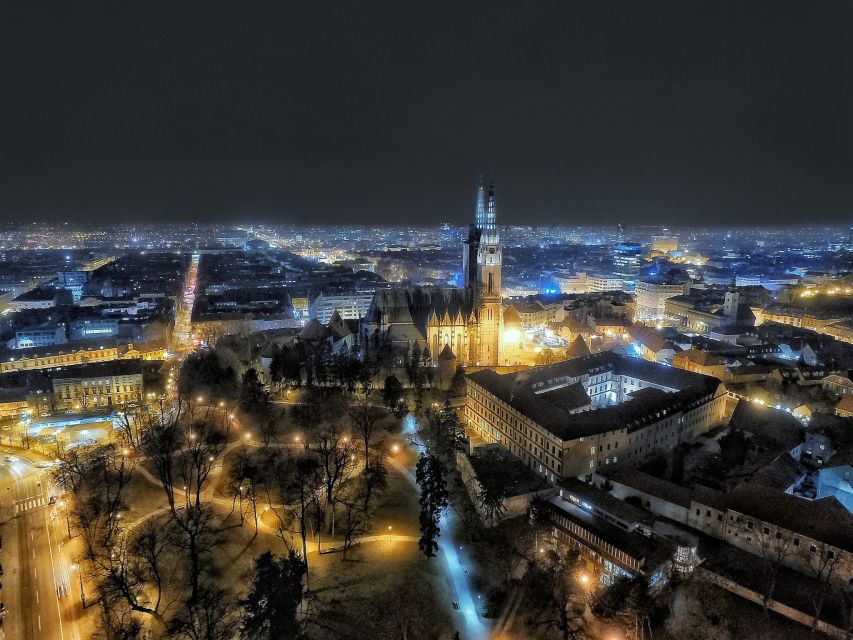
Zagreb’s story comes in layers. This old walking loop connects Kaptol and Gradec with real streets, real landmarks, and straight talk about how the city became what it is today.
I like two things most. First, it feels personalized and relaxed, not stuffed into a big group. Second, the guide (often Domagoj) ties the scenery to the bigger picture, from everyday life and architecture to Croatia’s past and present, with practical tips for what to do next.
One consideration: it is still a walking route, and old Zagreb streets can be uneven and steep in places. Even though the tour is wheelchair accessible, it helps to wear comfy shoes and be ready for a steady pace for 90 minutes.
In This Review
- Key things to know before you go
- Meeting at King Tomislav Square and getting your Zagreb bearings fast
- Zagreb’s big squares, small details, and the city layout that explains itself
- Zagreb Cathedral and the Kaptol story, where architecture does the talking
- Dolac and Opatovina: the open-air market break that feels like real Zagreb
- Gradec on the slope of Medvednica, and why Zagreb has two cores
- Kamenita Vrata and the Old Town loop, classic landmarks in the right order
- St Mark’s Square, Parliament and the Museum of Broken Relationships
- Gradec lookout, Strossmayer walk, and Lotršćak Tower at night
- Funicular line to Ilica Street, Zagreb Octogone, and Flower Square after dark
- What makes the guide-led format worth it for $35
- Who this tour fits best, and who might want a different pace
- Practical itinerary flow, stop by stop, in one glance
- Should you book this old Zagreb walking tour?
- FAQ
- Where does the tour start?
- How long is the old Zagreb walking tour?
- What is the price per person?
- What language is the tour guide?
- What stops are included in the route?
- Is the tour wheelchair accessible?
- Is free cancellation available?
- Can I book without paying right away?
Key things to know before you go
- Short, focused 90 minutes that covers a lot of Zagreb without feeling rushed
- Kaptol and Gradec contrast in one route, so you understand the city’s shape fast
- Dolac market and Dolac area stops add texture beyond statues and squares
- St Mark’s Square highlights like churches, institutions, and the Museum of Broken Relationships
- Night photo timing near Lotršćak Tower with viewpoints that make the evening walk worth it
Meeting at King Tomislav Square and getting your Zagreb bearings fast
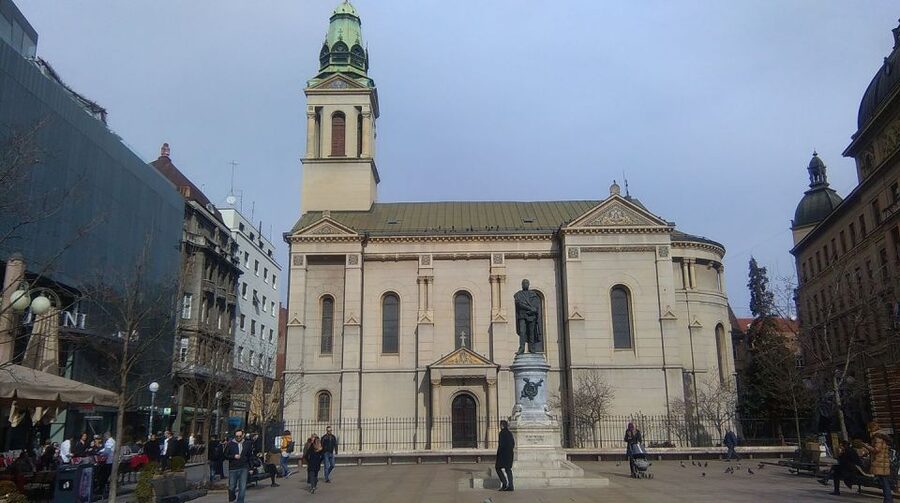
The tour starts at King Tomislav Square in the evening. That choice matters, because Zagreb’s center is easiest to read once the light shifts and the streets start to feel more like a living city than a postcard.
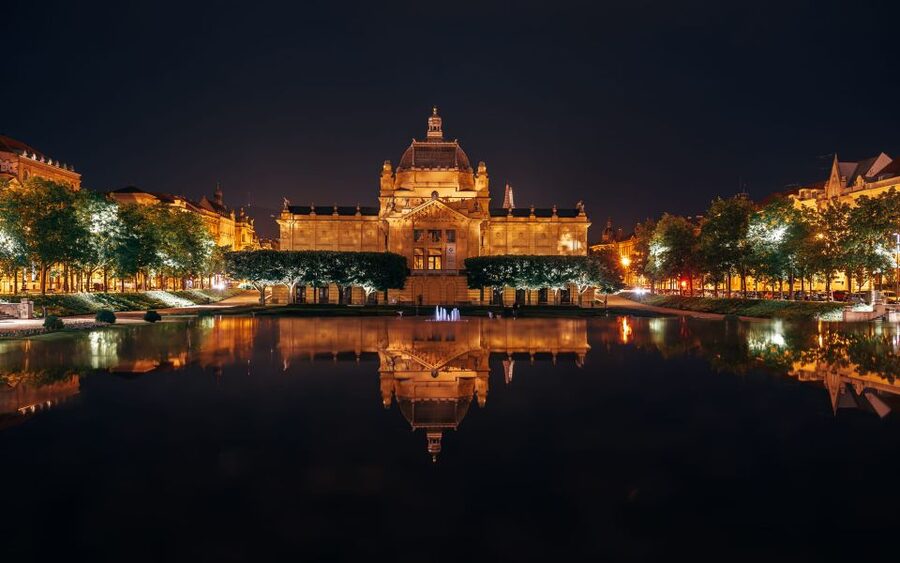
From there, the route moves toward Nikola Zrinjski Square and then to Ban Jelačić Main Square, the main hub where you feel the city’s rhythm. I like that this early section is not just walking for walking’s sake. It is where your guide sets the mental map: what area you are in, why it developed, and what key landmarks you will keep seeing again as the tour climbs and turns.
You get a fast orientation. That is especially useful if it is your first night in town and you want to know where to wander tomorrow without zigzagging randomly.
More Walking Tours in Zagreb
- Zagreb: City and WWII Tunnels Walking Tour
★ 4.9 · 1,230 reviews - Zagreb: City & History Walking Tour & WW2 Tunnels
★ 4.9 · 1,202 reviews - Walking tour of Zagreb
★ 5.0 · 383 reviews
Zagreb’s big squares, small details, and the city layout that explains itself
Zagreb’s downtown looks simple from a distance. Up close, it is a mix of open plazas, church stone, narrow lanes, and viewpoints that explain why the city grew where it did.
At Nikola Zrinjski Square, you will get context for the area’s role in the city’s story. Then Ban Jelačić Main Square gives you a natural transition point, because it sits right where people flow through daily. Expect the guide to connect what you see in front of you to larger themes like power, identity, and cultural change.
If you are the type who likes a city more after you understand how it works, this part is a win. It also helps you appreciate later stops like St Mark’s Square and the Old Town lanes, because you are no longer guessing what everything represents.
Zagreb Cathedral and the Kaptol story, where architecture does the talking
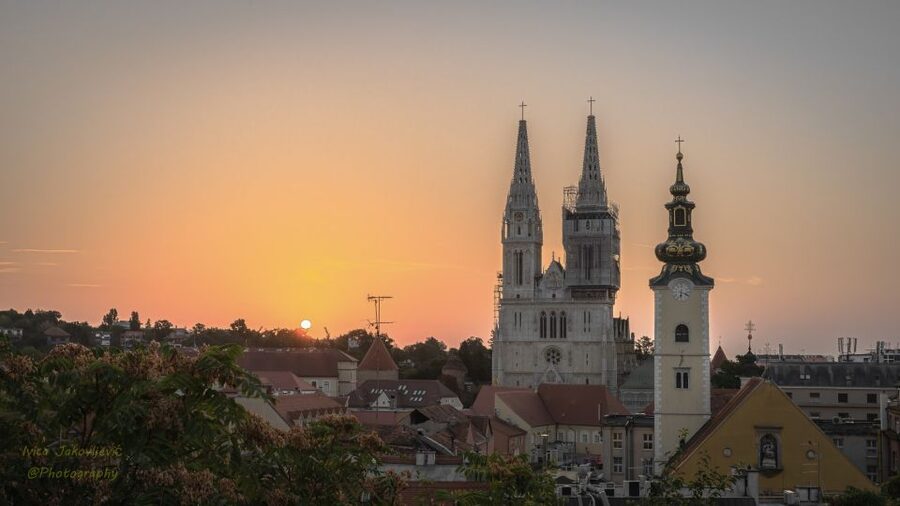
The tour includes a stop at Zagreb Cathedral and then continues to Kaptol, described as part of the Zagreb Archdiocese. This is a meaningful segment because Kaptol is not just a pretty district name. It reflects how Zagreb organized itself around religious and civic importance.
Even if you have seen grand cathedrals before, you will get more out of this walk because you are learning what to look for as you go. The guide’s focus is on explaining how the city’s layout and structures connect, so you notice details instead of just snapping photos.
One of the best parts of a guided church visit is timing. You are walking in sequence, not bouncing between unrelated places. That makes Kaptol feel like a chapter in a book instead of one more stop on a list.
Dolac and Opatovina: the open-air market break that feels like real Zagreb
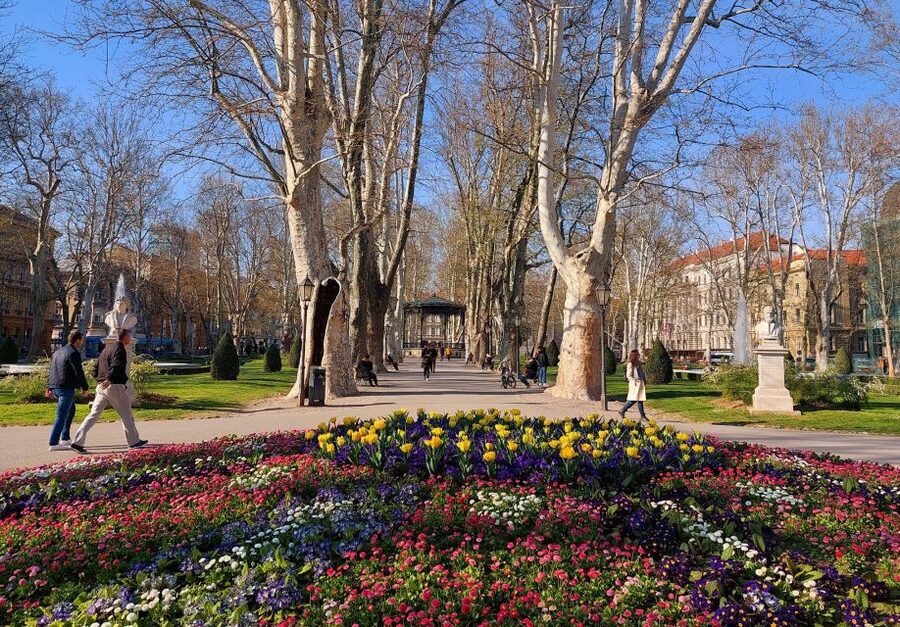
Next up is Dolac, the open-air market area, and Opatovina. This is where the tour shifts gears from monuments to daily life. Dolac is one of those places where people show up because it is useful and alive, not because it is scheduled.
The value here is subtle. A history and architecture route can turn into only looking up at buildings. Dolac grounds you again. You start thinking about Zagreb as a city of routines: where locals shop, how spaces are used, and how neighborhoods connect through movement.
If you want ideas for food and drink later, this is the kind of stop where the guide’s recommendations usually click, because you have actually seen the market atmosphere instead of hearing about it from a distance.
Same coastline, a different sort of day:
- From Zagreb: Plitvice & Rastoke Guided Day Trip with Ticket
★ 4.9 · 2,955 reviews - Zagreb: Rastoke & Plitvice Lakes Guided Tour with Ticket
★ 4.9 · 1,897 reviews - Communism & Croatian Homeland War Tour
★ 5.0 · 1,355 reviews - From Zagreb: Ljubljana and Lake Bled Tour
★ 4.8 · 1,021 reviews
Gradec on the slope of Medvednica, and why Zagreb has two cores
The tour then moves to Gradec, the older part of Zagreb on the slope of Medvednica. If you only know Zagreb as a city center around Ban Jelačić Square, Gradec is the surprise. It is a reminder that Zagreb’s identity is not built from one flat area. It grew on top of geography.
Why this matters: Kaptol and Gradec create a built-in contrast. One area often reads more civic and religious in tone, while the other shows you the fortified, older urban character. On this tour you do not just see both. You learn how the two sides relate, which helps you understand why today’s Zagreb feels like it has layers you can walk through.
The guide’s explanations also help you notice why viewpoints show up where they do. Gradec is a natural place to understand Zagreb from above, and you get that payoff later in the evening.
Kamenita Vrata and the Old Town loop, classic landmarks in the right order
A highlight included here is Kamenita Vrata, described as one of the best-preserved monuments of old Zagreb. You will see it as a rectangular tower-like structure, and then you continue into Old Town Zagreb.
This segment is valuable because it is a compact way to experience the medieval feel. The route through the Old Town gives you a sense of boundaries and old streets without turning the tour into a long medieval marathon.
The practical upside is that it helps you find your footing later if you decide to return on your own. Once you have done this loop with context, wandering around the same area feels less confusing.
St Mark’s Square, Parliament and the Museum of Broken Relationships
From Old Town, the tour reaches St Mark’s Square, with several major sights concentrated in one place. The route notes City Council, Parliament, and also the Museum of Broken Relationships, all in this area. You will also see churches and other historical buildings around the square.
This is one of the best spots on the whole tour because the city’s public face and its cultural side meet here. The institutions show you how Zagreb organizes governance and civic identity. The museum adds a different kind of meaning. It is not just a monument. It is a place that turns personal stories into an art form, which gives the square a human angle.
If you like learning why a place feels the way it does, St Mark’s Square delivers. You can look at the architecture and then link it to what you heard earlier about how the city evolved.
It is also a strong moment to slow down, take a breath, and let your guide connect dots while everyone is standing in the same frame.
Gradec lookout, Strossmayer walk, and Lotršćak Tower at night
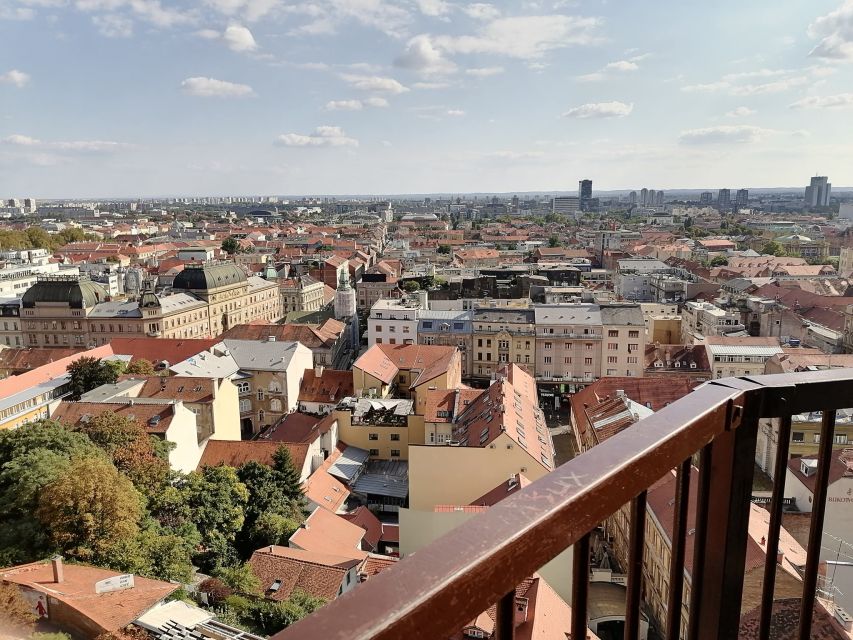
After St Mark’s Square, the route continues to a lookout in Gradec. Then you walk via the Strossmayer walk toward the viewpoint beneath Lotršćak Tower.
This part is built for photos, but it is more than just a picture stop. The timing near the tower is what makes it special. From this vantage, you can see Zagreb at night in a way that feels more layered than a daytime view.
The guide also helps you understand what you are looking at, so the skyline feels like a map instead of a blur. And yes, the night photos are a real payoff if you bring your camera, charge your phone, and take a moment to stand still instead of walking through every view.
Funicular line to Ilica Street, Zagreb Octogone, and Flower Square after dark
The tour then follows the line of the Zagreb funicular to Ilica Street, described as the longest street in Zagreb. You will also pass Zagreb Octogone and continue to Flower Square, where Zagreb youth tends to hang out in pubs at night.
This is a good ending because it answers a basic question most people have. After seeing old squares and big monuments, where do you go when the tour is over?
I like that the final stretch moves you from heritage to the city’s after-hours social scene. You do not leave the tour feeling stuck in museums-only mode.
For food and nightlife planning, it helps that your guide typically offers next-step ideas. On top of the sightseeing, that practical advice can turn one evening into two or three good plans.
What makes the guide-led format worth it for $35
The price is $35 per person for 90 minutes, with a live English guide. At this cost, you are paying for more than a route. You are buying context, pacing, and a guide who can answer the questions that pop up naturally as you walk.
The reviews point to the same theme: the guide stays engaging, explains history in a way you can actually use, and adds tips for what to do after the walk. People also mention a relaxed, not crowded feel, which is important on a walking tour. You want time for questions and you want to hear the explanation without competing for space.
So here is the value calculation I would use if I were picking tonight. If you love history but you also like getting oriented fast, the guided format usually saves you hours of guessing. If you would rather wander with no structure at all, you might find the route less useful, because it is designed to teach while you walk.
Who this tour fits best, and who might want a different pace
This tour is a strong match if you:
- Want an easy first introduction to old Zagreb without long transfers
- Care about how culture, architecture, and politics connect in the same city blocks
- Prefer a small, relaxed group feel instead of a crowd
- Need a route that is marked as wheelchair accessible and works for people using a stroller
It might be less ideal if you:
- Do not enjoy walking for 90 minutes, even at a moderate pace
- Want a more free-form tour where you pick every stop on the spot
One more practical note. Because the meeting happens in the evening, bring the same realism you would use for any night walk. Wear comfortable shoes, and if you are sensitive to light, plan a quick break when your eyes need it.
Practical itinerary flow, stop by stop, in one glance
Here is the tour sequence as it unfolds, so you can picture your evening:
- Meet at King Tomislav Square, then head through Nikola Zrinjski Square to Ban Jelačić Main Square
- Visit Zagreb Cathedral and Kaptol within the Zagreb Archdiocese area
- Walk the Dolac open-air market zone and Opatovina
- Go up to Gradec on the Medvednica slope area, then see Kamenita Vrata
- Continue into Old Town Zagreb, then to St Mark’s Square for City Council, Parliament, churches, and the Museum of Broken Relationships
- Head toward a Gradec lookout, then take the Strossmayer walk to the viewpoint under Lotršćak Tower for night photos
- Follow the Zagreb funicular line down toward Ilica Street, Zagreb Octogone, and end at Flower Square
If you like your evenings organized, this order is smart. It builds from central squares into higher old quarters, then drops back into lively city life.
Should you book this old Zagreb walking tour?
I think you should book it if you want a guided evening that gives you more than postcard photos. The best reason is the structure: Kaptol, Gradec, Old Town, St Mark’s Square, and a night viewpoint in one loop, plus practical suggestions that help you keep exploring after the walk.
Skip it only if you prefer self-guided wandering with zero explanations, or if 90 minutes of walking is not your thing. Otherwise, $35 feels fair for a live English guide who connects what you see to what it means, and keeps the pace relaxed.
If you are deciding between doing nothing and doing this, choose this. It is one of the fastest ways to understand Zagreb, and it leaves you with an actual route to return to tomorrow.
FAQ
Where does the tour start?
The tour meets at King Tomislav Square during the evening hours.
How long is the old Zagreb walking tour?
It lasts 90 minutes.
What is the price per person?
The price is $35 per person.
What language is the tour guide?
The live tour guide speaks English.
What stops are included in the route?
The route includes major areas and landmarks such as Nikola Zrinjski Square, Ban Jelačić Main Square, Zagreb Cathedral, Kaptol, Dolac and Opatovina, Gradec, Kamenita Vrata, St Mark’s Square (including City Council, Parliament, and the Museum of Broken Relationships), Lotršćak Tower viewpoints, Ilica Street, Zagreb Octogone, and Flower Square.
Is the tour wheelchair accessible?
Yes, the tour is listed as wheelchair accessible.
Is free cancellation available?
Yes. You can cancel up to 24 hours in advance for a full refund.
Can I book without paying right away?
Yes, it offers Reserve now & pay later, meaning you can book a spot and pay nothing today.
Newest Zagreb reviews on the site
- Toast to the Morning After: Zagreb Museum of Hangovers Visit★ 4.0 · 39 reviews
- From Split: Transfer to Zagreb with Stop at Plitvice Lakes★ 4.6 · 44 reviews
- Private Walking Tour of Zagreb★ 4.9 · 5 reviews
- From Zagreb: Ljubljana, Postojna Cave & Predjama Castle Tour★ 4.9 · 71 reviews
- Jump into Zagreb: Walking Tour with local guide★ 4.8 · 3 reviews
- From Zagreb: Varazdin Baroque Town & Trakoscan Castle★ 4.9 · 38 reviews
- From Zagreb to Plitvice Lakes and Rastoke – Private day tour★ 5.0 · 4 reviews
- From Zagreb: Plitvice Lakes National Park Full-Day Tour★ 4.7 · 98 reviews
Walking Tours, compared.
Walking Tour of Split and Diocletian’s Palace
Read our review →
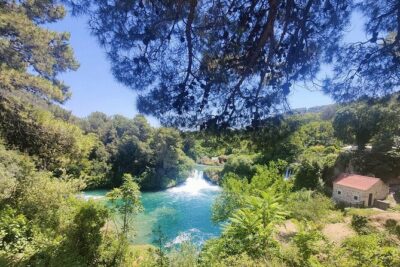
Krka Waterfalls tour with Trogir Walking tour and Krka panoramic boat cruise
Read our review →
City Walls Early Morning or Sunset Walking Tour
Read our review →Browse the lists this tour appears in