
Review · HISTORICAL TOURS
Zagreb: City & History Walking Tour & WW2 Tunnels
Zagreb gets personal fast. This 2.5-hour walking tour mixes top sights with real wartime context, plus storytelling that makes the streets feel lived in. I especially like the Grič Tunnel visit, because it turns history into something you can stand inside, not just read.
I also like the small group setup, which keeps it conversational and lets you ask questions as you go. One thing to plan around: the WWII tunnel visit can be cancelled if it is closed for an event, so you should be ready for that possibility.
In This Review
- Key highlights worth your time
- Why this route works in 150 minutes
- Zrinjevac Park to Ban Jelačić Square, the city’s orientation
- Zagreb Cathedral and Dolac Market, how locals see the city
- The WWII-era Grič Tunnel stop, where the tour turns serious
- Upper Town, Gradec viewpoints, and Strossmayer’s perspective
- Lotrščak Tower, St Mark’s Square, and the postcard rooflines
- Museum of Broken Relationships and Stone Gate, the left-turn history
- Price and value, why $11 can still feel like a bargain
- What to wear, how to plan your timing, and what to watch for
- Should you book this Zagreb walking tour with WWII tunnels?
- FAQ
- How long is the Zagreb City & History Walking Tour with WW2 Tunnels?
- What does the tour cost?
- Where do I meet the guide?
- Is food and drinks included?
- Is this tour suitable for wheelchair users?
- Can I always visit the WWII-era Grič Tunnel?
- Is Dolac Market included, and is it open all day?
- Will we ride the Zagreb funicular during the tour?
- What is the cancellation and pay later policy?
Key highlights worth your time
- WWII history at walking pace: the Grič Tunnel stop adds a serious twist to a classic city loop
- Small group feel: more back-and-forth, easier to hear, and less time lost in a crowd
- Zagreb’s core in one plan: Zrinjevac Park, Ban Jelačić Square, Cathedral, Dolac Market, Upper Town, and more
- Story-driven landmarks: you focus on why places matter, not just what they look like
- Upper Town viewpoints: Strossmayer Promenade plus Lotrščak Tower for postcard views
- Local recommendations at the end: your guide closes with suggestions for food and museums
Why this route works in 150 minutes
If Zagreb is your first stop on the Balkans, you need a clean overview day. This tour is built for exactly that: a manageable walk that covers both the lower center and the Upper Town, so you leave with a mental map that actually sticks.
The other reason it works is pacing. You get frequent short stops for photos and explanations, rather than one long monologue at one landmark. Even if you are not a hardcore history person, you will still come away understanding how Zagreb grew, changed, and reinvented itself.
And the small-group format matters more than it sounds. With fewer people, guides like Petra, Tomislav, and Maja can steer the conversation toward your interests, whether you care about architecture, everyday life, or wartime survival stories.
More History Tours in Zagreb
- Authentic Croatian Food & Heritage Walk in a Small Group
★ 5.0 · 36 reviews - Sites & Bites Private Food and History Tour of Zagreb
★ 5.0 · 35 reviews - Zagreb: Historic Walking Tour with a Local Guide
★ 5.0 · 28 reviews
Zrinjevac Park to Ban Jelačić Square, the city’s orientation
You start in Park Zrinjevac, meeting at the display on Trg Nikola Šubić Zrinski 2, next to the meteorological station. It is a good opener because it gives you breathing room before you hit the main squares and sidewalks.
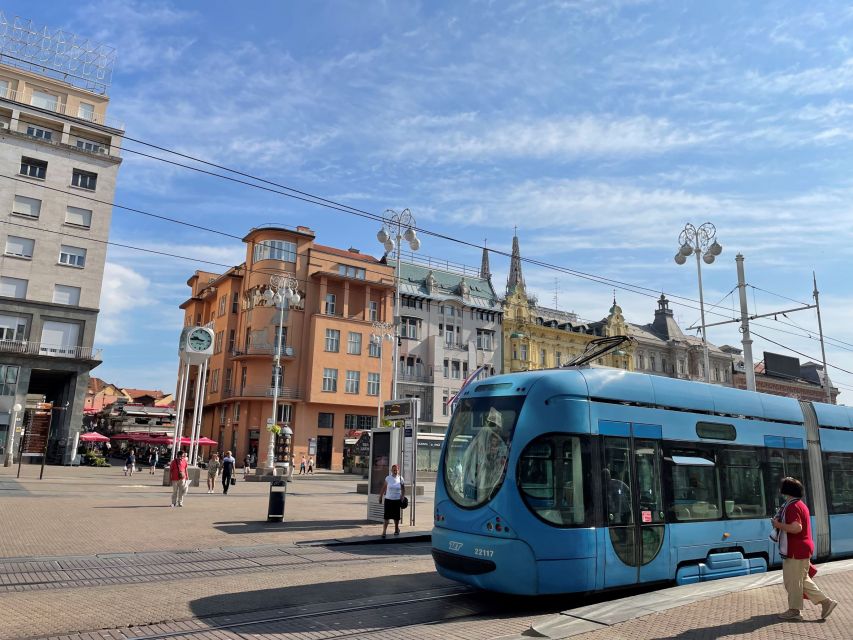
From there, you head toward Ban Jelačić Square, Zagreb’s busy heart. This is where the guide sets context: how the city got its name, the legends around its founding, and the human scale of Zagreb’s center. If you have never been here, this is the moment you start recognizing patterns, how streets funnel movement, and where people actually spend time.
I like that this stage is not just photos and facts. The guide’s style helps you understand the city’s rhythm, so the later stops feel like the next chapter, not disconnected sites.
Zagreb Cathedral and Dolac Market, how locals see the city
Next comes the Cathedral, one of Zagreb’s iconic landmarks. You will get the story behind its origins, plus the turbulent parts of its past and the restorations it has undergone. Even if you have seen big cathedrals before, this explanation helps you connect the building to Zagreb’s changing fortunes.
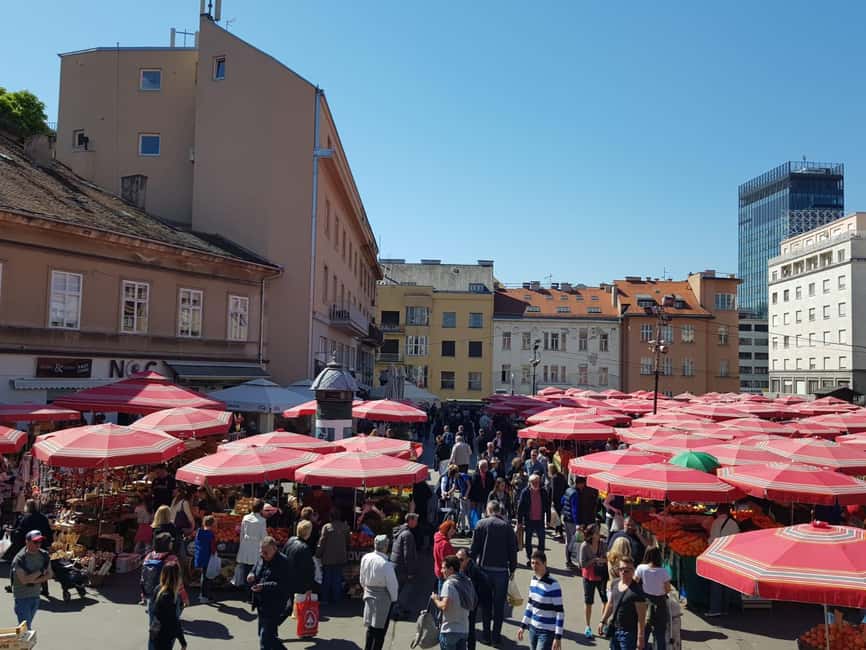
Then you move on to Dolac Market, known as the belly of Zagreb. This is where everyday culture takes over. You will walk through the market area and learn how locals use it daily, for fresh produce and street life that feels practical rather than staged.
Two notes to keep you from wasting time:
- Dolac Market can be closed in the afternoon and on public holidays, so timing matters.
- If the market is closed when you arrive, the tour still keeps moving, but your sensory experience may be more muted than on a morning visit.
Between Cathedral and market, you also pass through the café-and-street-life vibe of Tkalčićeva Street. It is one of those streets that makes sense only when you learn the local habit behind the lounging and chatting.
The WWII-era Grič Tunnel stop, where the tour turns serious
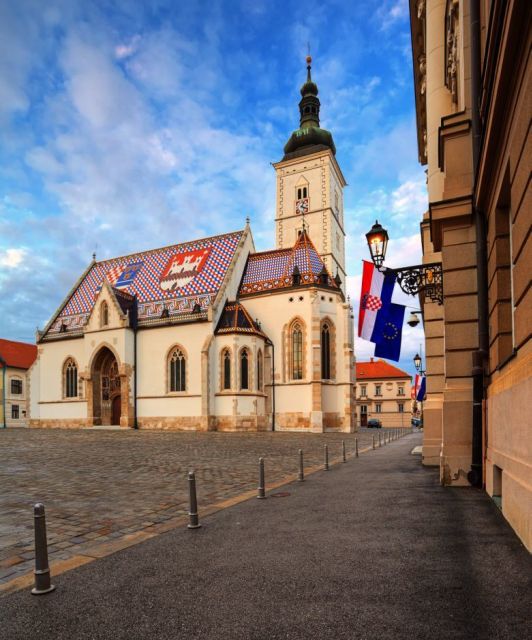
This is the headline in the best way: you step into the WWII-era Grič Tunnel beneath Zagreb’s Upper Town. The guide frames it as a wartime shelter, then connects it to what that survival meant for ordinary people.
What I like about this stop is how it changes your view of the city above. Once you understand what was happening underground, the Upper Town’s calm feels different. It is not scary-tour drama, it is grounded context.
The one practical drawback is also important: the tunnel may be closed to visitors if there is an exhibition, theatre show, or similar event. If that happens on your day, you will not be able to visit the tunnel.
So your best strategy is mental flexibility. Even without the tunnel access, the rest of the walking sequence still works as a solid Zagreb introduction, but you may miss the tour’s most emotional moment.
More Walking Tours in Zagreb
- Zagreb: City and WWII Tunnels Walking Tour
★ 4.9 · 1,230 reviews - Walking tour of Zagreb
★ 5.0 · 383 reviews - Zagreb Small Group Guided Walking Tour with WW2 Tunnels
★ 5.0 · 380 reviews - Zagreb: Restaurants, Food & Old Town Walking Tour
★ 5.0 · 191 reviews
Upper Town, Gradec viewpoints, and Strossmayer’s perspective
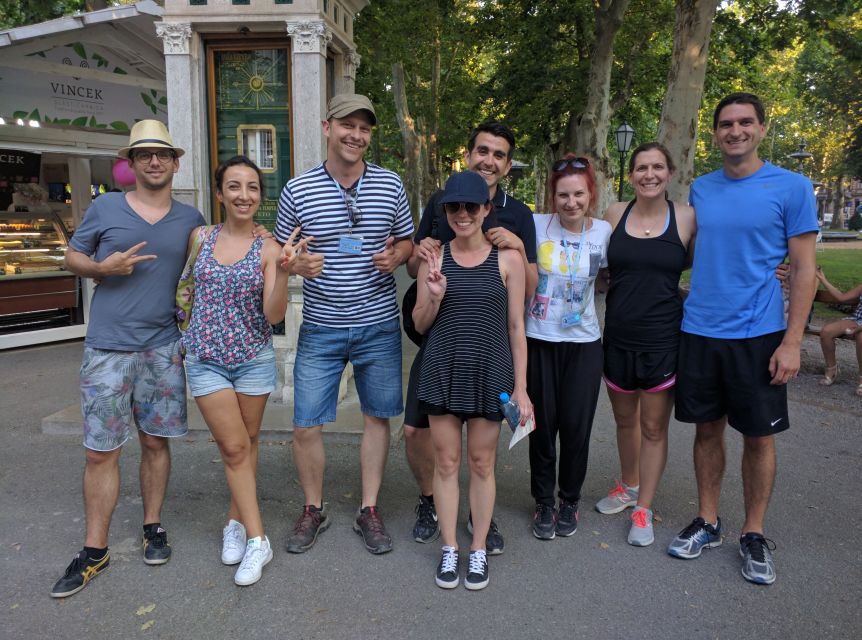
After the tunnel area, you head up into the Upper Town, also called Gradec. This part of Zagreb is why the city feels layered: medieval settlement vibes, streets that climb, and viewpoints that force you to slow down and look.
You walk along Strossmayer Promenade, a leafy terrace with some of the best panoramas over the rooftops. This is the stage where you get orientation fast. From here, the city’s layout makes more sense, and you start picturing where you can return later on your own.
It is also a good time to ask questions. Guides such as Petra and Tomislav are known for answering patiently, and the “why” questions tend to land well when you can see the whole scene in front of you.
Lotrščak Tower, St Mark’s Square, and the postcard rooflines
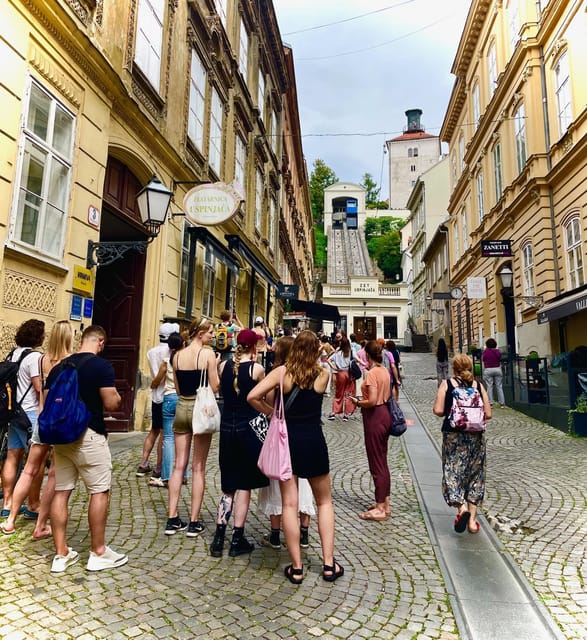
Lotrščak Tower is next, a standout visual marker on the skyline. You get time for a photo and an explanation that ties it back to the city’s defense and identity. If timing lines up, you may catch the midday cannon firing connected with the tower. It is not guaranteed in the sense of a universal schedule you can count on every day, but the tour is often structured to take advantage of that moment when possible.
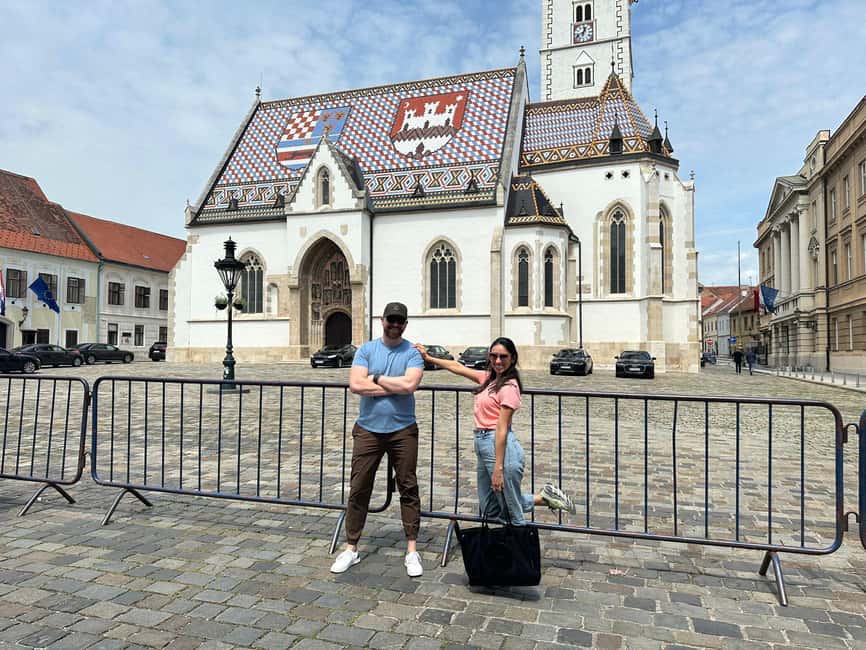
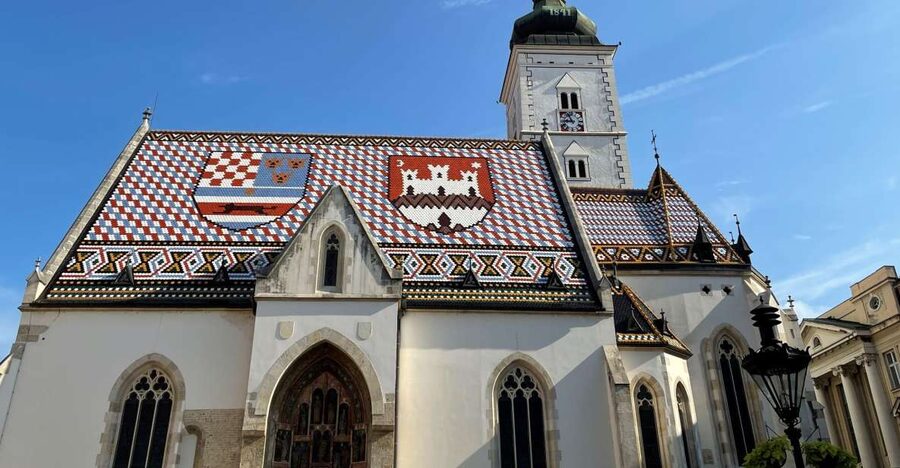
Then you reach St Mark’s Square and St Mark’s Church, instantly recognizable by its colorful tiled roof. This stop is where art and symbolism come forward. You learn what you are looking at and why it matters in Zagreb’s story, not just that it looks pretty.
If you enjoy symbolism and city identity, this sequence is a strong payoff. If you just want photos, it still delivers, but you will get the most from it if you listen for the meaning behind the colors and forms.
Museum of Broken Relationships and Stone Gate, the left-turn history
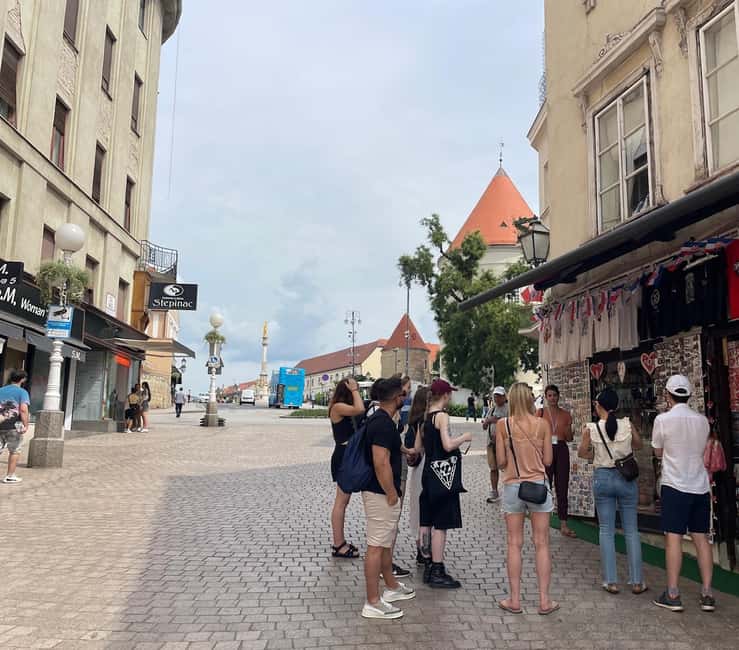
Between the big postcard sites, the route passes the Museum of Broken Relationships. You do not spend a long time there, but it is a quick pass-by that gives you a hint of Zagreb’s modern, slightly unusual side. If you are curious, your guide can point you toward whether it is worth your time when you have free hours.
Next comes Stone Gate, the only surviving gate from Zagreb’s old fortifications. This is one of those stops that feels quietly powerful. You can see the city’s boundaries in a way that is hard to imagine from street-level movement alone.
Inside the Stone Gate area, there is a hidden chapel with a painting of Our Lady, said to be miraculous and loved by locals. Even if you are not religious, it is worth paying attention to how communities attach meaning to small places. It is a reminder that history is not only buildings and battles, it is also belief and memory.
The tour ends with a short secret stop as a final change of pace before returning to Ban Jelačić Square. That ending matters. If you are starting your trip, this is when your guide can steer you toward what to do next based on what you care about.
Price and value, why $11 can still feel like a bargain
At $11 per person for about 150 minutes, the value is mostly about the guide and the structure. You are not paying for transportation, you are paying for a licensed local guide who connects multiple city layers into one walk.
Where this price really pays off is in pacing and group size. Small-group touring often costs more elsewhere, but here the setup helps you avoid the two biggest walking-tour problems: long waits and thin explanations. When the guide can actually talk to you, you get more than a photo itinerary.
Also, you get a mix of categories, history, daily life, architecture, and a WWII underground stop. That is a lot to compress into one afternoon without turning the walk into a slog. If you are only in Zagreb for a short window, this can be the most efficient way to get oriented before you pick neighborhoods for deeper exploring later.
Food is not included, so you will still need to budget for lunch or snacks. That said, your guide typically leaves you with ideas for where to eat based on what you like.
What to wear, how to plan your timing, and what to watch for
This is a walking tour, and it is not designed for wheelchair users. Plan on steady walking and some uphill sections as you head toward the Upper Town.
Wear comfortable shoes you trust. Zagreb’s center is walkable, but cobbles and longer distances can add up once you stack multiple stops like Cathedral, markets, and the climb to Gradec.
Timing can also affect two big parts of the experience:
- Dolac Market can be closed in the afternoon and on public holidays.
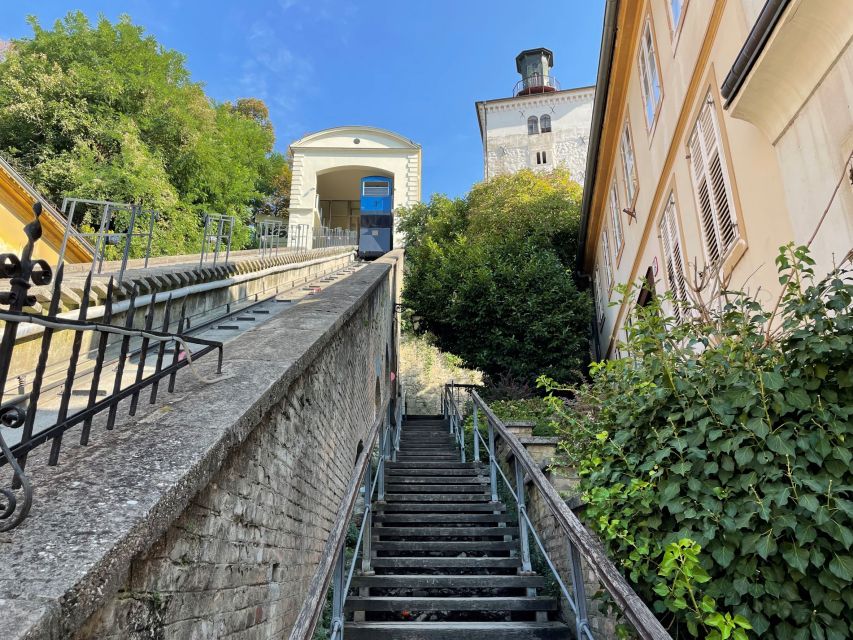
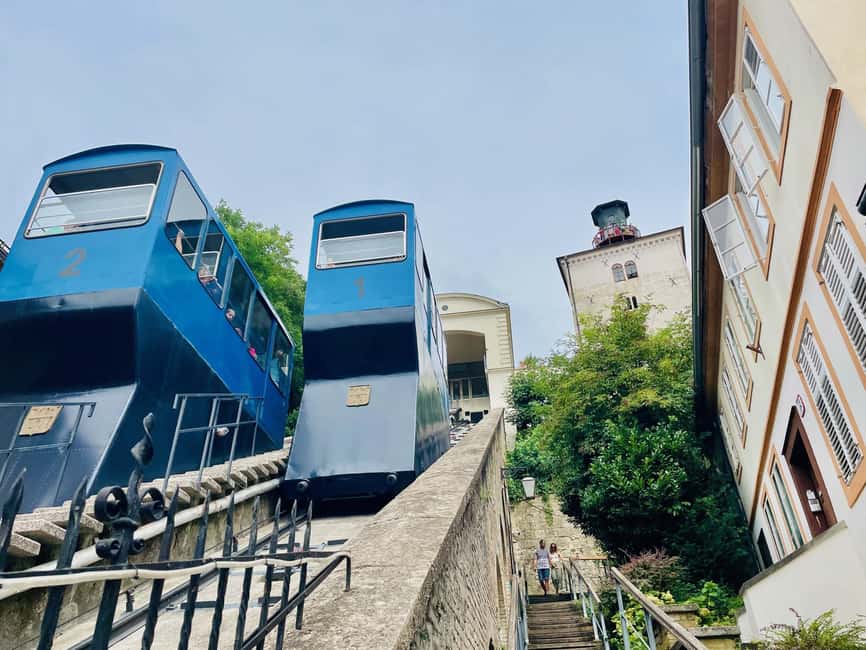
- The funicular near the area is currently closed for renovation until March 2026, so you should not count on riding it during your tour.
Finally, keep your expectations flexible for the WWII tunnel. If it is closed because of an exhibition or theatre show, you will have to accept that the tunnel portion might not happen on your day.
Should you book this Zagreb walking tour with WWII tunnels?
Book it if you want an efficient first pass at Zagreb that goes beyond surface sightseeing. This is a great choice for first-timers, people who like asking questions, and anyone who appreciates storytelling tied to places, not just dates.
I would also book it if you are the type who likes “two sides of a city” in one outing. Zagreb’s Upper Town viewpoints plus the human scale of Dolac Market, then the serious pivot into the Grič Tunnel, is a strong mix.
Skip it only if the idea of losing the tunnel visit would bother you a lot. That part is a highlight, but it can be shut for events. If you are visiting during a period with closures or you are short on time, consider having a backup plan for the WWII theme so you still get value from the rest of the walk.
If your goal is to leave Zagreb feeling like you understand the place, not just visited it, this tour is a smart move. You finish back at Ban Jelačić Square with enough context to explore the city your way next.
FAQ
How long is the Zagreb City & History Walking Tour with WW2 Tunnels?
The tour lasts about 150 minutes (around 2.5 hours).
What does the tour cost?
The price is $11 per person.
Where do I meet the guide?
You meet at Trg Nikola Šubić Zrinski 2, at Park Zrinjevac, next to the Meteorological station.
Is food and drinks included?
No, food and drinks are not included.
Is this tour suitable for wheelchair users?
No, it is not suitable for wheelchair users.
Can I always visit the WWII-era Grič Tunnel?
The tunnel may be closed to visitors if there is an exhibition, theatre show, or similar event, in which case it will not be possible to visit.
Is Dolac Market included, and is it open all day?
Dolac Market is part of the experience, but it is closed in the afternoon and on public holidays.
Will we ride the Zagreb funicular during the tour?
No. The funicular is currently closed for renovation until March 2026, although it may be visible nearby.
What is the cancellation and pay later policy?
You can reserve now and pay later, and you can cancel up to 24 hours in advance for a full refund.
More Historical Tours in Zagreb
- Dubrovnik Old Town History Walking Tour
★ 5.0 · 1,684 reviews - Walking Tour of Split with a ‘Magister’ of History
★ 5.0 · 1,122 reviews - Split Walking Tour with Professor of History
★ 5.0 · 926 reviews - Split: History and Heritage Walking Tour
★ 4.9 · 650 reviews
Newest Zagreb reviews on the site
- Toast to the Morning After: Zagreb Museum of Hangovers Visit★ 4.0 · 39 reviews
- From Split: Transfer to Zagreb with Stop at Plitvice Lakes★ 4.6 · 44 reviews
- Private Walking Tour of Zagreb★ 4.9 · 5 reviews
- From Zagreb: Ljubljana, Postojna Cave & Predjama Castle Tour★ 4.9 · 71 reviews
- Jump into Zagreb: Walking Tour with local guide★ 4.8 · 3 reviews
- From Zagreb: Varazdin Baroque Town & Trakoscan Castle★ 4.9 · 38 reviews
- From Zagreb to Plitvice Lakes and Rastoke – Private day tour★ 5.0 · 4 reviews
- From Zagreb: Plitvice Lakes National Park Full-Day Tour★ 4.7 · 98 reviews
Historical Tours, compared.
Walking Tour of Split with a ‘Magister’ of History
Read our review →
Split History and Gastro Small-Group Tour with Food and Drinks
Read our review →
PREMIUM Emperor’s Walking Tour for History Lovers + Museum
Read our review →Browse the lists this tour appears in