
Review · ZAGREB TOURS
From Zagreb: Yugoslavia Memorial Sites Tour
Spomeniks turn history into stone. This private Yugoslavia Memorial Sites day takes you out of central Zagreb to three purpose-built monuments, a mix of modernist design and complicated memory that still shapes Croatia today.
What I like most is the way you get both place and context, not just photos. With an English local guide named Patrik and a rural route through forests and smaller towns, you’re set up to understand why these memorials were made in the first place.
The one drawback to plan around: there is no lunch, and the tour runs rain or shine, with restrictions like closed footwear and no wheelchair access.
In This Review
- Key Things You’ll Notice on This Zagreb Memorials Tour
- From Zagreb to Rural Memorial Ground
- Why Spomeniks Matter for Understanding Yugoslav Croatia
- Podgarić at 9:00, Moslavina’s Revolution Monument
- Jasenovac at 10:30, Stone Flower Monument and Museum
- Sisak at 12:30, Detachment Monument in Brezovica Forest
- How Long Is Enough for Three Memorial Sites?
- Private Group Value, Price, and What You’re Paying For
- What You Need to Bring and Wear (This Is Not Optional)
- Who This Tour Is Best For
- A Balanced Take on the Mood: Artistic Memorials and Serious Reality
- Should You Book This Zagreb Memorial Sites Tour?
- FAQ
- How long is the tour from Zagreb to the Yugoslavia memorial sites?
- How many locations will we visit?
- What are the main stops on the itinerary?
- What time does pickup happen and when is drop-off?
- Is lunch included in the price?
- Is the tour guided, and what language is offered?
- What does the price include?
- What do I need to bring?
- Are open-toed shoes allowed?
- Is the tour wheelchair-friendly?
Key Things You’ll Notice on This Zagreb Memorials Tour
Spomeniks across decades, built roughly from the 1950s through the 1990s, so you’ll see changing styles and messages.
A private group with an English local guide, which matters a lot for sites that demand context, not just silence.
Three very different stops, from a Moslavina revolution monument to a concentration camp memorial, then on to a forest monument near Sisak.
Flashlights are included, handy for any darker or enclosed spots at memorial areas.
Jasenovac gets museum time, not just a quick look at a monument.
From Zagreb to Rural Memorial Ground
This is a full day that starts early in Zagreb and spends its energy on the kind of history you usually miss if you only stick to the city highlights. You’ll be picked up from your accommodation in Zagreb at 8:00, then you’ll head out by road toward rural memorial locations tied to Yugoslav-era remembrance.
The timing is tight in a good way: you’re not doing long, aimless drives, and each stop has a clear role in the story. You’ll reach Podgarić at around 9:00, arrive at Jasenovac at about 10:30, then make the Sisak area stop around 12:30, with drop-off back at your arranged location at 15:00. That schedule gives you enough structure to keep moving, without rushing so hard that every place feels like a drive-by.
For me, the practical win is the private setup. At this price point, you’re paying for convenience plus interpretation, and that matters more here than at a casual museum stop.
A few more Zagreb trips to weigh up
- From Zagreb: Plitvice & Rastoke Guided Day Trip with Ticket
★ 4.9 · 2,955 reviews - Zagreb: Rastoke & Plitvice Lakes Guided Tour with Ticket
★ 4.9 · 1,897 reviews - Communism & Croatian Homeland War Tour
★ 5.0 · 1,355 reviews
Why Spomeniks Matter for Understanding Yugoslav Croatia
These monuments are called spomeniks, which is basically the Yugoslav memorial language of stone, concrete, and shape. They weren’t made as tourist souvenirs. They were built as public memory tools, often with strong ideas about who mattered, what happened, and how future generations should see it.
You’ll see that in the way the tour is organized around three distinct places, each connected to a different part of the Yugoslav story. Even if you come with only a general sense of the region’s turbulence, the physical differences between the stops do a lot of the teaching. The architecture and the setting are part of the message.
I also like how the tour description sets expectations clearly: these memorial structures were built between about 1950 and the 1990s. That means the tour is not one single time period. You’re looking at how remembrance was constructed over decades.
Podgarić at 9:00, Moslavina’s Revolution Monument
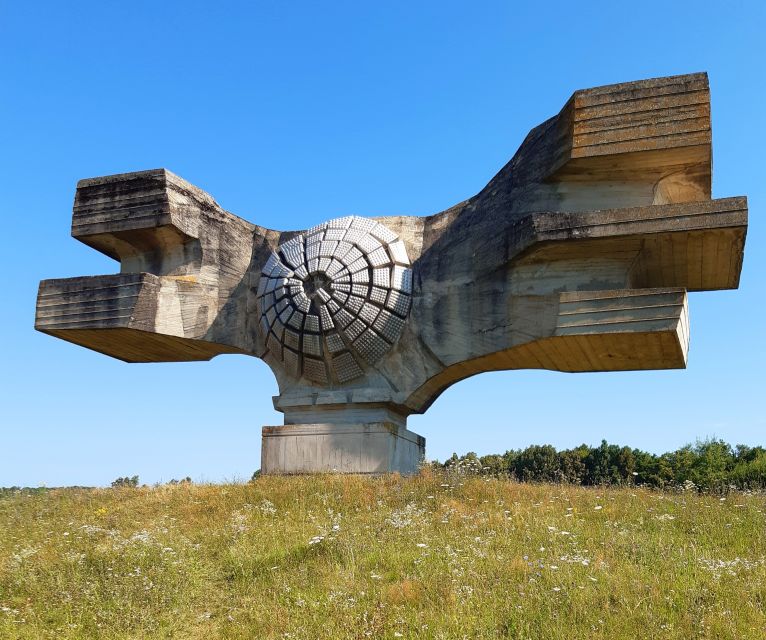
Your first stop is Podgarić, centered on the Monument to the Revolution of the People of Moslavina. This is your “before the heavy stuff” introduction to Yugoslav-era memorial thinking. Instead of beginning with a modern tragedy, you start with a revolutionary framing, which helps you understand how public monuments can promote an official story, then later confront harsher truths.
What to expect here is a monument experience where the setting matters. You’ll be in an area tied to regional identity, and the structure is meant to be read as more than a sculpture. It’s a statement. The tour’s value is that the guide can connect what you’re seeing on site to the bigger context of the former Yugoslavia and how different regions experienced the era.
A good consideration: if you’re short on patience for symbolism, monuments can feel abstract. The fix is simple. Take a few minutes to slow down, look at angles and layout, and ask your guide to connect the artistic choices to the historical message.
Jasenovac at 10:30, Stone Flower Monument and Museum
Then the tone changes, quickly and clearly. Jasenovac is a concentration camp memorial, and you’ll visit the Stone Flower Monument plus the Museum of Jasenovac concentration camp.
This is the stop where you should prepare yourself mentally. Even if you’ve read about Jasenovac, the memorial approach hits differently in person. There is a solemn mix here of mourning and witness. The Stone Flower Monument is built to be remembered, not admired, and the museum visit matters because it turns the location into documented history rather than only a visual symbol.
One thing I appreciate about the way this tour handles Jasenovac is the combination of monument and museum. A monument gives you the emotional and symbolic message. The museum helps you keep facts anchored. In places like this, the balance is everything.
From a practical standpoint, you’ll likely want to wear comfortable shoes. You may spend more time than you expect standing, reading, and walking between parts of the memorial area. Also, this tour includes flashlights, which can be useful for certain exploration routes at memorial sites, especially if you’re moving through areas that are darker or enclosed.
Same coastline, a different sort of day:
- Zagreb: City and WWII Tunnels Walking Tour
★ 4.9 · 1,230 reviews - Zagreb: City & History Walking Tour & WW2 Tunnels
★ 4.9 · 1,202 reviews - From Zagreb: Ljubljana and Lake Bled Tour
★ 4.8 · 1,021 reviews - Best of Zagreb with the WW2 Tunnels
★ 5.0 · 973 reviews
Sisak at 12:30, Detachment Monument in Brezovica Forest
After Jasenovac, the tour heads toward Sisak for the Monument of the Detachment in the Brezovica forest area. This is a different kind of memorial setting, quieter in feel, because it’s tied to a forest landscape rather than a museum-heavy complex.
The forest setting matters for how you experience memory. In open countryside or in a structured memorial complex, you can feel like you’re looking at history as a topic. In a wooded area, memory becomes part of the physical world around you. You’re dealing with scale, atmosphere, and distance, and the guide’s explanations help connect that environment to the meaning behind the monument.
This stop is also a strong example of why the tour is worth doing even if you’re not a “monument person.” The design and location can be striking, but the best part is the context you receive, especially from a guide like Patrik who links the site back to the regional background that shaped the Yugoslav period.
How Long Is Enough for Three Memorial Sites?
This outing runs about 10 hours total. That’s long enough for real attention, not long enough to burn out. You’re scheduled to cover three locations, with a museum stop included in the Jasenovac portion, which is the most time-demanding.
I think the best way to judge the pacing is to look at what’s actually included at each stop. Podgarić is a monument visit. Jasenovac includes the Stone Flower Monument and the museum visit. Sisak is another monument experience. That mix is why you get variety without the day turning into a checklist.
Still, plan your energy. This is not a stroll-and-shopping day. It’s history work, on the road, under weather that can change fast in Croatia, which is why the tour runs rain or shine.
Private Group Value, Price, and What You’re Paying For
The price is $402 per group up to 2, for a 10-hour day. That sounds like a lot until you break it down by what you’re actually getting.
If you go with one companion, you split the cost, making it roughly $201 per person. If you go alone, it’s the full $402 per person. Either way, you’re not just paying for transport. You’re paying for:
- Pickup and drop-off from your Zagreb accommodation area
- A private local English guide
- Organization that lines up three locations
- A Jasenovac Memorial museum visit
- Flashlights for exploration
Do it independently and you might save on the guide. But in a day like this, where context changes how you read every monument, a guide can be the difference between ticking boxes and actually understanding what you’re seeing.
Also, private is not a small detail here. Memorial sites can get intense. Having your own pacing, your own questions, and a guide who can adjust answers to your interests makes the experience more manageable and more personal.
What You Need to Bring and Wear (This Is Not Optional)
This tour runs rain or shine, so pack like weather matters, because it does. Bring a passport or ID card, since it’s required for participation.
For footwear, open-toed shoes are not allowed. You’ll want closed-toe shoes with grip, because memorial sites often involve walking on uneven ground, and you’ll be switching between driving and foot time.
Flashlights are included, but you can still bring a small personal light if that helps you feel comfortable. The key is that you should arrive ready to move.
One more practical point: lunch is not included. That’s manageable if you plan around it. Either eat before pickup and pack a snack for the day, or at least have a clear lunch plan back in Zagreb after drop-off.
Who This Tour Is Best For
I’d recommend this tour if you fall into one of these buckets:
- You want a sharper understanding of Yugoslav history beyond textbooks, through the actual monuments built to communicate that history.
- You like off-the-beaten-track sites and don’t mind a more serious tone for part of the day.
- You prefer private, English-led interpretation, especially for places like Jasenovac where context helps you read what you’re seeing.
It’s less ideal if you need wheelchair access. This tour is not suitable for wheelchair users.
A Balanced Take on the Mood: Artistic Memorials and Serious Reality
What makes the itinerary work is that it doesn’t pretend all memorials are the same kind of experience. Podgarić is revolutionary memory in monument form. Jasenovac is an experience of victims and atrocity, supported by a museum. Sisak brings you back to a different memorial atmosphere in a forest setting.
That shift is emotionally demanding, but it’s also why the day makes sense. The Yugoslav period is complicated, and memorial culture reflects that complexity, sometimes in propaganda-shaped design, sometimes as witness and mourning.
If you’re the kind of traveler who likes feeling prepared rather than surprised, you’ll do best by treating this as a focused history day, not a casual sightseeing loop.
Should You Book This Zagreb Memorial Sites Tour?
Yes, if you want a private, English-guided route that connects three spomenik sites into a coherent day. The strongest reasons to book are the combination of (1) Patrik’s regional explanations, (2) the clear pairing of monuments with the Jasenovac Memorial museum, and (3) the fact that you’ll get rural Croatia scenery as part of the story, not as filler.
I’d skip or reconsider if you’re very sensitive to heavy topics, or if you’re counting on lunch being handled for you, or if you need wheelchair-friendly access.
If you go in with closed-toe shoes, a snack plan, and the mindset that you’re here to understand memory in stone, concrete, and forest settings, this tour is the kind of experience that turns a vacation day into real learning.
FAQ
How long is the tour from Zagreb to the Yugoslavia memorial sites?
The tour lasts 10 hours.
How many locations will we visit?
You’ll visit 3 unique locations.
What are the main stops on the itinerary?
The stops are Podgarić (Monument to the Revolution of the People of Moslavina), Jasenovac (Stone Flower Monument and Museum of Jasenovac concentration camp), and Sisak (Monument of the Detachment in Brezovica forest).
What time does pickup happen and when is drop-off?
Pickup starts at 08:00 from the arranged location in Zagreb, and drop-off is at 15:00.
Is lunch included in the price?
No, lunch is not included.
Is the tour guided, and what language is offered?
Yes, there is a live English-speaking tour guide.
What does the price include?
It includes complete tour organization, pickup and drop-off, a private local guide, the Jasenovac Memorial museum visit, and flashlights for exploration.
What do I need to bring?
You should bring a passport or ID card.
Are open-toed shoes allowed?
No, open-toed shoes are not allowed.
Is the tour wheelchair-friendly?
No, the tour is not suitable for wheelchair users.
Newest Zagreb reviews on the site
- Toast to the Morning After: Zagreb Museum of Hangovers Visit★ 4.0 · 39 reviews
- From Split: Transfer to Zagreb with Stop at Plitvice Lakes★ 4.6 · 44 reviews
- Private Walking Tour of Zagreb★ 4.9 · 5 reviews
- From Zagreb: Ljubljana, Postojna Cave & Predjama Castle Tour★ 4.9 · 71 reviews
- Jump into Zagreb: Walking Tour with local guide★ 4.8 · 3 reviews
- From Zagreb: Varazdin Baroque Town & Trakoscan Castle★ 4.9 · 38 reviews
- From Zagreb to Plitvice Lakes and Rastoke – Private day tour★ 5.0 · 4 reviews
- From Zagreb: Plitvice Lakes National Park Full-Day Tour★ 4.7 · 98 reviews
Zagreb Tours, compared.
Plitvice & Rastoke Guided Day Trip with Ticket
Read our review →
Rastoke & Plitvice Lakes Guided Tour with Ticket
Read our review →


Plitvice Lakes with Ticket & Rastoke Guided Tour from Zagreb
Read our review →Browse the lists this tour appears in