
Review · DIOCLETIAN'S PALACE TOURS
Split: Diocletian’s Palace Private walking tour
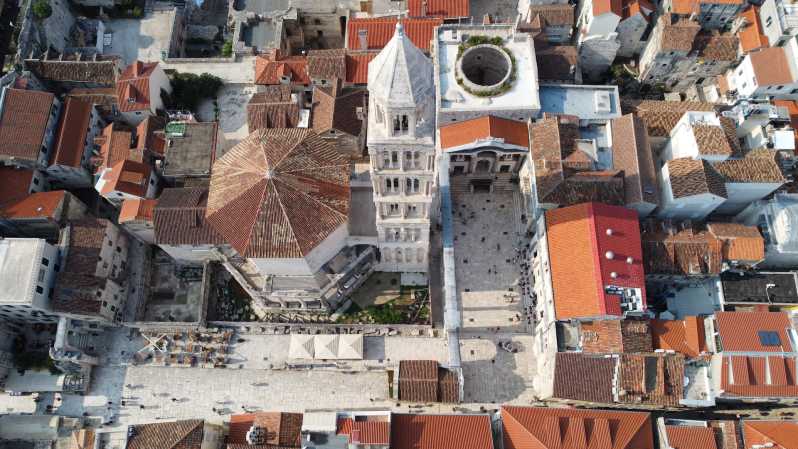
Roman walls, in the middle of Split. This private walk turns Diocletian’s Palace from stone into daily life, especially at the Peristyle and around the Split Cathedral. I like that the palace is not a dead ruin, it is part of the city, so you get real context instead of just captions.
My other favorite part is the pace and control of a small group. With a guide like Dana getting praise for keeping things clear and fun, you finish with the highlights mapped in your head. One heads-up: some spots may be off limits on certain days due to events or church services, and the site is only partly wheelchair accessible, though the route can be adapted if you tell them in advance.
In This Review
- Key highlights you should care about
- Why Diocletian’s Palace Private Tour Feels Like a Real Place
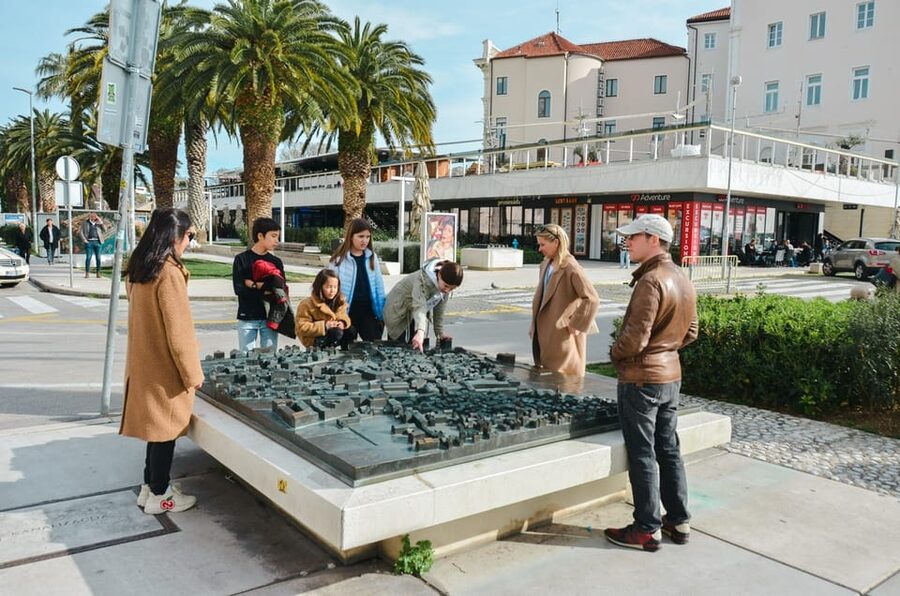
- Meeting at the Bronze Model by Riva, Then Getting Your Bearings Fast
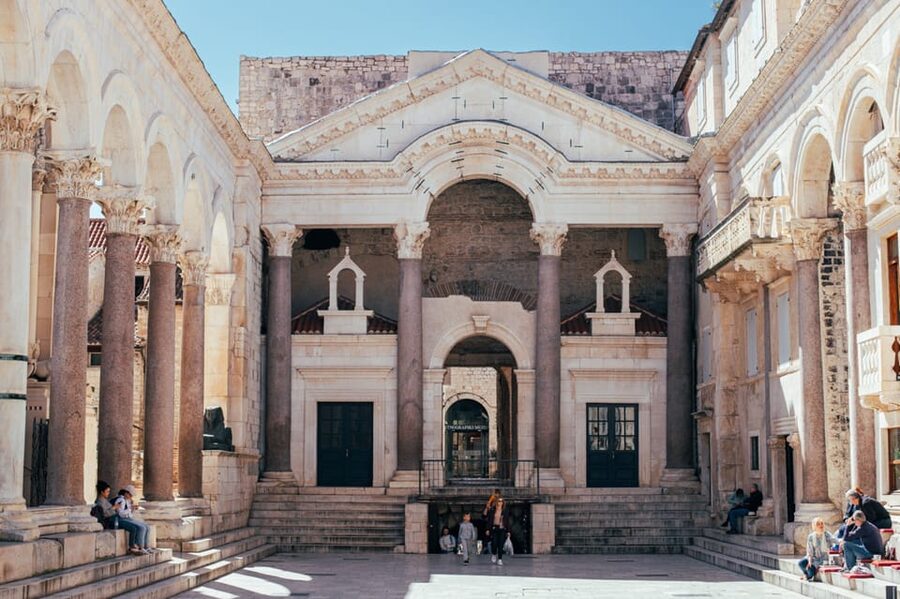
- Peristyle: The Emperor’s Meeting Ground and Jupiter’s Son Connection
- Split Cathedral: From Diocletian’s Mausoleum to Christian Landmark
- Vestibule: The Grand Entrance to Diocletian’s Private Chambers
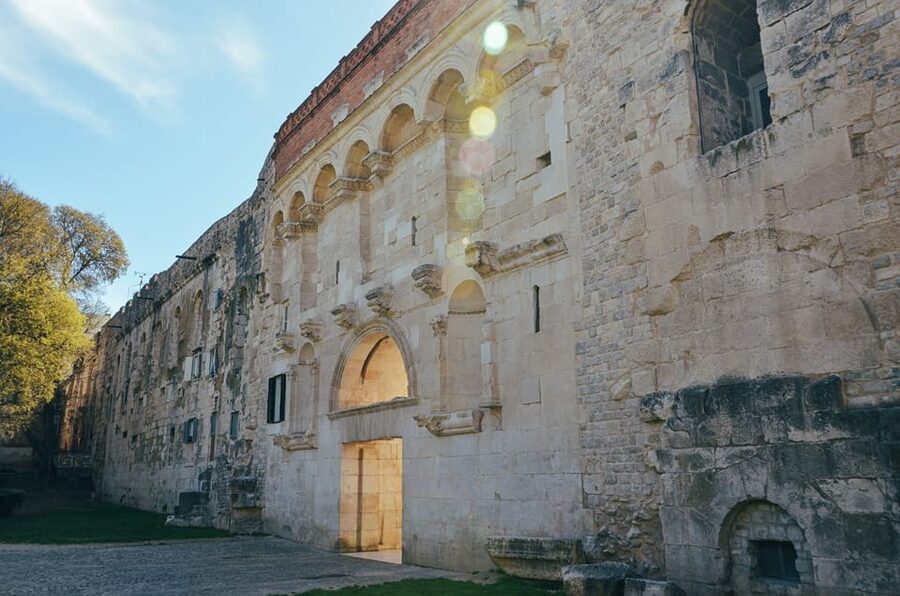
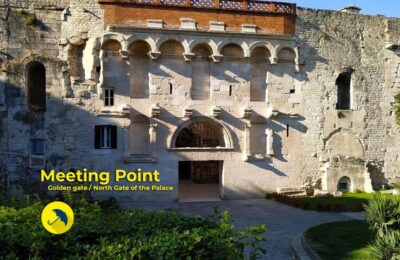
- North Gate, Porta Aurea, and St. Martin in an Old Guard Corridor
- What the Tour Does Well for First-Time Split Visitors
- Price and Value: Is $135 per Person Worth It?
- Your Walking Route, Step by Step, and What You Might Miss If You Go Alone
- Timing and Accessibility Notes You Should Plan Around
- Who This Private Diocletian’s Palace Tour Suits Best
- Should You Book This Tour?
- FAQ
- How much does the Split Diocletian’s Palace private walking tour cost?
- What group size is this tour limited to?
- Where does the tour start, and where does it end?
- What languages are offered?
- Is the tour wheelchair accessible?
- What if a sight cannot be visited due to an event or church service?
- Can I reserve now and cancel later?
Key highlights you should care about
- Peristyle and Jupiter’s son story: Learn why Diocletian was treated like Jupiter’s son in this key ceremonial space
- Split Cathedral’s origin on a mausoleum: Understand how the building changed with Christianity
- Vestibule focus: See the grand entrance tied to Diocletian’s private chambers
- North Gate, Porta Aurea, and city power: Go to the Roman era’s main gate and hear its legacy
- Church of St. Martin inside an old guard corridor: Spot the city’s smallest church in a Roman setting
Why Diocletian’s Palace Private Tour Feels Like a Real Place
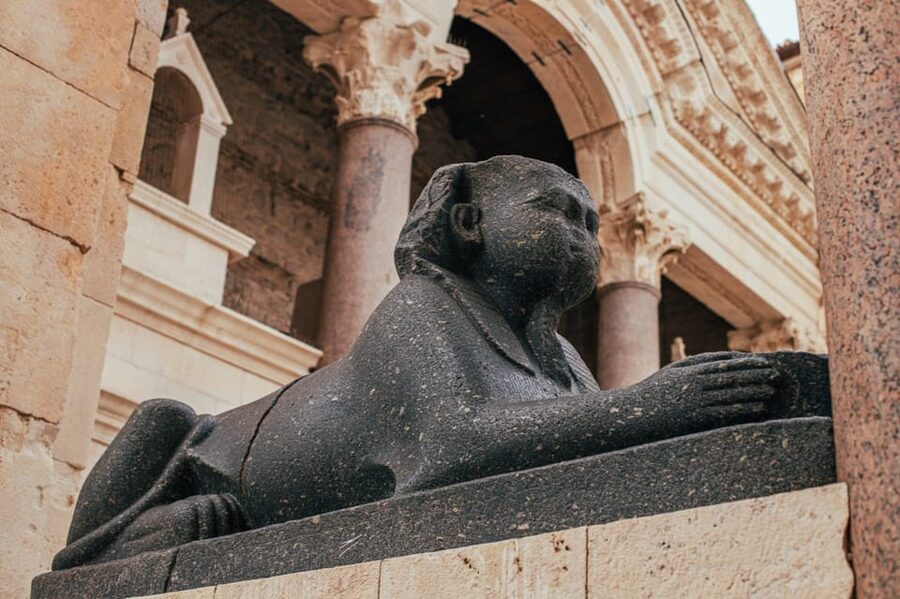
Diocletian’s Palace is one of those sights where the best learning happens because people still live there. You are not touring an empty exhibit. You are walking through the kinds of spaces that still make sense in a working city. That small detail changes everything. It is easier to picture how authority, worship, and daily movement worked when the palace is still woven into modern streets.
The private format also matters. This is not a stop-and-vanish experience. You can ask questions as you walk, and you are not fighting for time with a huge crowd. The tour stays focused on the palace’s most meaningful spaces, so you get what you came for without feeling rushed.
More Walking Tours in Split
- Split: Old Town and Diocletian Palace Walking Tour
★ 4.9 · 4,727 reviews - Walking Tour of Split and Diocletian’s Palace
★ 5.0 · 2,588 reviews - Krka Waterfalls tour with Trogir Walking tour and Krka panoramic boat cruise
★ 5.0 · 1,659 reviews
Meeting at the Bronze Model by Riva, Then Getting Your Bearings Fast
The tour starts at the bronze model of the city of Split, at the eastern end of the promenade Riva. That is a smart choice because Riva is where most people land mentally, even if you are staying somewhere else. You begin with a quick sense of orientation before you head into the palace maze.
This is also the kind of start that helps you later. After the walk, you are more likely to understand how the old walls and gates relate to the city center you will explore on your own. One review praised the tour as a fast way to see the highlights, learn a lot, and get the lay of the land. That is exactly what I look for in a first-orientation day.
Practical tip: wear shoes you trust. Even if you do not walk far, the stone and narrow paths inside the palace zone can be uneven.
Peristyle: The Emperor’s Meeting Ground and Jupiter’s Son Connection
The Peristyle is the ceremonial heart most visitors remember, and this tour uses it the right way. You do not just look at columns and try to guess the setting. You learn what the space meant in Diocletian’s era.
Here, Diocletian was worshipped as Jupiter’s son. That detail turns the Peristyle from pretty architecture into political religion. In Roman terms, that matters because it explains how power was staged. The emperor was not simply a ruler, he was part of a cosmic story that people could physically see and participate in.
You also learn why the Peristyle was a meeting place. When you understand what kind of gathering happened here, the layout clicks. You can better imagine people approaching, the sense of procession, and how the space supported the emperor’s presence.
What I like: guides tend to focus on the visuals. This tour gives you the meaning behind them, so your photos feel connected to something real, not just pretty stone.
Split Cathedral: From Diocletian’s Mausoleum to Christian Landmark
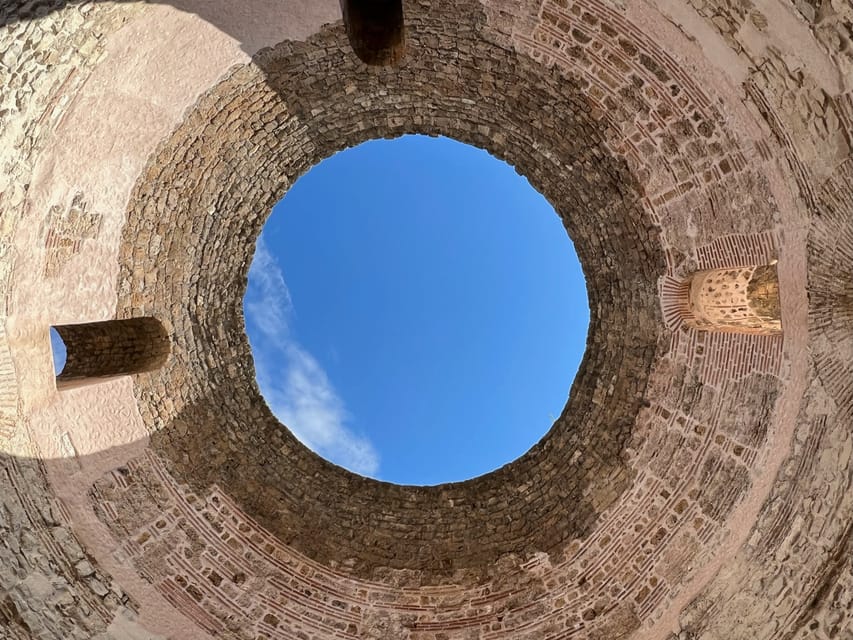
Next comes Split Cathedral, which is tied directly to Diocletian’s story. This cathedral began as the mausoleum of Emperor Diocletian. Then came Christianization, and the emperor’s remains vanished. The structure shifted roles, becoming a magnificent cathedral.
That transformation is why this stop is worth your attention. You see one building, but you get two belief systems expressed through the same bones. It is a lesson in how power and religion reuse existing space instead of starting from scratch.
As you look at the cathedral’s exterior, the guide’s job is to make the change feel logical, not random. The key idea for you: you are looking at survival of place. Even as the meaning changed, the location stayed important.
Drawback to keep in mind: because this is a church building, you may find certain areas or views affected by services or events. The good news is the tour is prepared to slightly adjust the program when that happens.
More Diocletian's Palace walks in Split:
- Split & Diocletian’s Palace Walking Tour
★ 5.0 · 1,125 reviews - Split: Diocletian Palace & Old Town Guided Walking Tour
★ 4.7 · 882 reviews - Split Old Town and Diocletian’s Palace Tour
★ 4.8 · 716 reviews - Split: Game of Thrones Tour with Diocletian’s Palace Cellar
★ 4.8 · 545 reviews
Vestibule: The Grand Entrance to Diocletian’s Private Chambers
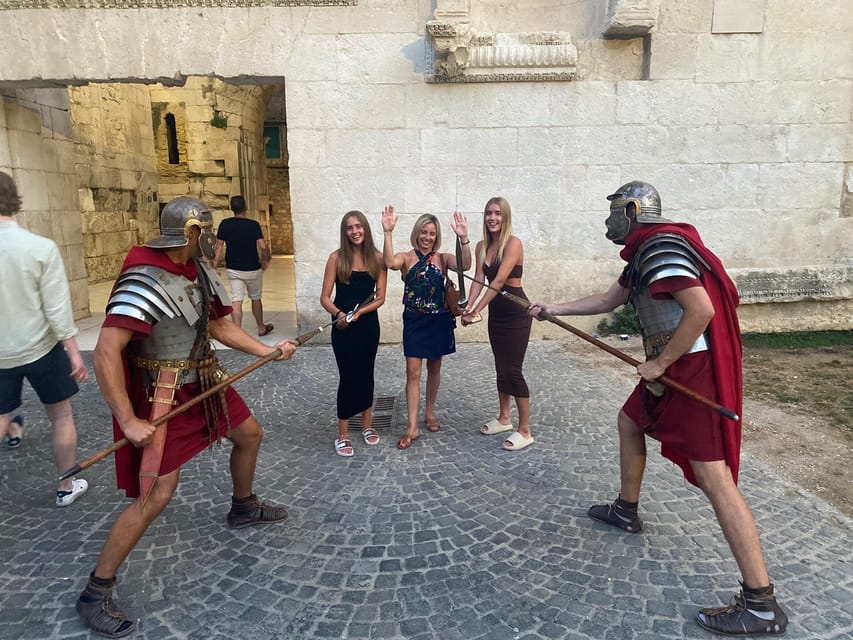
The Vestibule is described as the grand entrance to Diocletian’s private chambers. That framing is helpful because it guides what to notice. You stop thinking of the palace as one big public complex and start seeing it as a layered home, with different levels of access.
This is where you practice imagination. If Diocletian’s private area needed a controlled gateway, you can understand the purpose of the Vestibule in the emperor’s household. The tour explains it as a distinguished passage that welcomed dignitaries from around the world.
Even without walking through every imaginable room, the concept gives you perspective. You are not only touring monuments. You are touring a system of movement and status, where certain spaces were meant for the public interface and others for the emperor’s inner world.
If you like architecture with a story behind it, this stop delivers.
North Gate, Porta Aurea, and St. Martin in an Old Guard Corridor
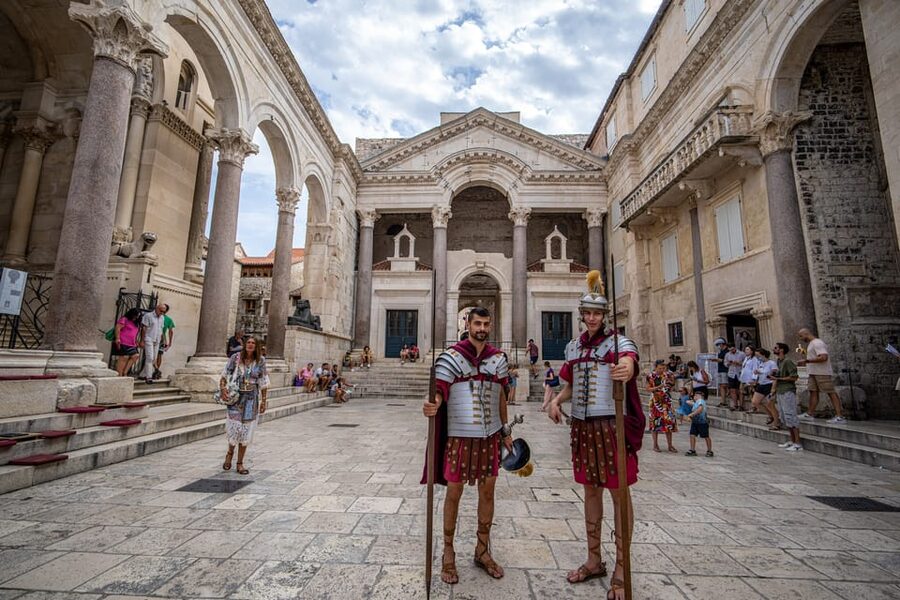
The North Gate is treated as the most important city gate during the Roman era. It is also known as the Golden Gate, or Porta Aurea. That name alone is a clue. In Roman cities, major gates were not just logistics, they were stage sets for authority.
The tour focuses on the gate’s significance, so you understand what it likely meant for arrivals, ceremonies, and city control. When you hear Porta Aurea and Golden Gate mentioned together, the meaning is not only poetic. It is a signal that this entrance was meant to feel special and central.
Then comes a fun twist that makes the walk feel more like exploring than checking boxes: inside the former guard corridor is the Church of St. Martin. This is described as the city’s smallest church, placed in a Roman military context.
This stop works because it shows how the palace keeps getting repurposed. A guard corridor becomes a church space. The palace keeps living, just changing function over time.
You will likely leave this section thinking about gates differently, not just as walls with openings, but as changing roles for centuries.
What the Tour Does Well for First-Time Split Visitors
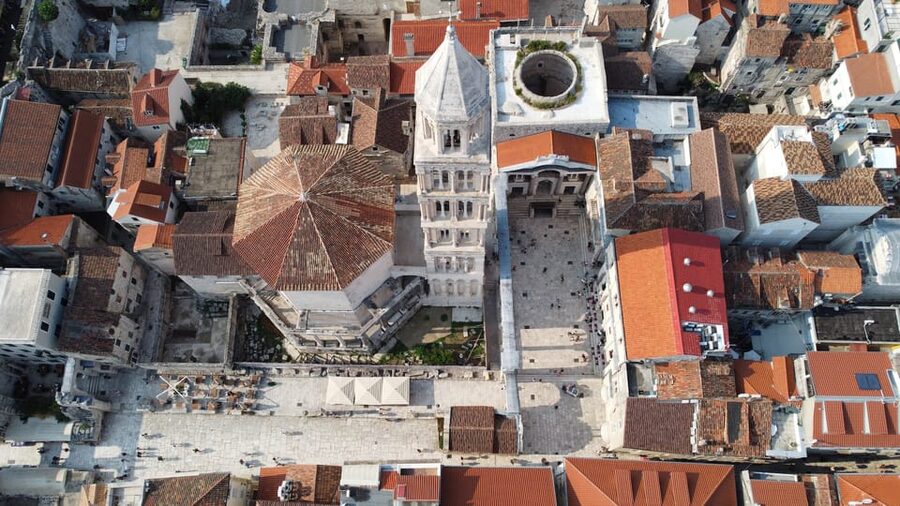
This is a good fit if you want a concentrated introduction to Split’s core story. A lot of people rush through Diocletian’s Palace, then spend the next two days feeling like they missed the point. This tour gives you a path through the major spaces that connect into a coherent narrative.
The small-group promise helps too. The tour is set for a maximum of 10 participants. That size keeps the experience from turning into a lecture with no interaction. It also makes it easier for the guide to adapt pacing when people have questions or when a sight changes status due to services.
A note from the reviews you should trust: one person highlighted that the tour was an amazing way to quickly see the highlights and get the lay of the land for the city center. Another praised Dana as enthusiastic, and said the private tour was unforgettable. If you value a guide who can explain without talking down, you are in the right place.
Price and Value: Is $135 per Person Worth It?

$135 per person is not a bargain-basement price. But it also is not priced like a big coach-tour with limited interaction. You are paying for a private walking guide experience designed around a small group.
Here is where value comes from for you:
- Focused access to the key palace spaces (Peristyle, cathedral origin story, Vestibule, North Gate/Porta Aurea, and St. Martin)
- Small group size (up to 10) that supports real questions
- Individually customizable design, so the guide can tailor emphasis to your interests
If you are the type of traveler who reads signs and then still asks, So what am I looking at?, this price starts to make sense fast. You are not paying for more ruins. You are paying for interpretation, so you get meaning from the same stones you would see anyway.
If you are extremely price-sensitive or you already know the palace layout well, you might decide to do it on your own with a guidebook. But for most visitors, especially first timers, the guided context is the value.
Your Walking Route, Step by Step, and What You Might Miss If You Go Alone
The tour’s route is essentially a best-of sequence through the palace’s most important story points. You move from the ceremonial core to religious transformation, then toward the emperor’s controlled spaces, and finally to the city’s major gate and its later life as a church-adjacent corridor.
Going alone, you can absolutely see these things. But you might miss:
- why Diocletian’s Jupiter’s son idea matters in the Peristyle
- how the cathedral’s role changed after Christianization and what that means for interpreting the building
- why the North Gate is called Porta Aurea and why that matters for city power
- the clever layering of Roman and Christian uses, like St. Martin inside the former guard corridor
This tour is built to prevent that kind of fog. You end with a mental map, not just a set of photos.
Timing and Accessibility Notes You Should Plan Around
This site is partly not wheelchair accessible. The tour can be adapted to special needs, but you need to inform the provider in advance. If mobility is a factor for you, do not assume the route will magically work out on the day.
Also, some sights cannot be visited at certain times due to events or church services. When that happens, the program changes slightly. That is normal for active historical sites, and it is good that the tour is set up to handle it.
If you want a smooth experience, message the provider ahead of time with your priorities: which stops you most want, and any limitations you have.
Who This Private Diocletian’s Palace Tour Suits Best
Choose this tour if you:
- want a high-impact introduction to Diocletian’s Palace in one go
- like history that explains meaning, not just dates
- prefer smaller groups so questions are actually possible
- are starting your Split trip and want a clear sense of city center layout
It might be less ideal if you hate walking, dislike churches, or need guaranteed access to every single space regardless of services. The tour adjusts when events happen, so your day may be slightly different from someone else’s.
Should You Book This Tour?
My take: if you are visiting Split for the first time and you want the palace to make sense fast, this private walking tour is a smart booking. The price is solid for what you get, because you are paying for interpretation at the key stops, in a group small enough to stay personal.
Book it especially if Peristyle, cathedral origins, and the Porta Aurea North Gate story sound like your kind of history. And if you are comparing options, look for a guide who can connect the stones to how people lived, worshipped, and moved through the palace. Based on what people shared about Dana, you are likely in good hands.
FAQ
How much does the Split Diocletian’s Palace private walking tour cost?
It costs $135 per person.
What group size is this tour limited to?
The tour is designed for a group of maximum 10 participants.
Where does the tour start, and where does it end?
It starts at the bronze model of the city of Split at the eastern end of the promenade Riva, and it ends back at the meeting point.
What languages are offered?
The tour is available in French, German, and English.
Is the tour wheelchair accessible?
The site is partially not wheelchair accessible, but the tour can be adapted to special needs if you inform the provider in advance.
What if a sight cannot be visited due to an event or church service?
It may happen that some sights cannot be visited, and the program will be slightly changed in that case.
Can I reserve now and cancel later?
You can reserve and pay later. You can cancel up to 24 hours in advance for a full refund.
Newest Split reviews on the site
- Split: Blue Lagoon Boat Trip with Lunch, Wine and Snorkeling★ 5.0 · 3 reviews
- Split: Guided Sunset Sea Kayaking & Snorkeling Tour★ 4.8 · 185 reviews
- Split: Sunset Guided Kayaking Tour★ 4.8 · 71 reviews
- Sunset Cruise With Music and Views of Split Riviera★ 3.6 · 10 reviews
- Step into History: Private Guided Walking Tour of Split★ 5.0 · 3 reviews
- Stand Up Paddle Tour in Split★ 4.7 · 17 reviews
- Split&Sip: Educational wine tasting★ 4.9 · 52 reviews
- Split Walking Tour with History Professor★ 5.0 · 23 reviews
Diocletian's Palace Tours, compared.
Walking Tour of Split and Diocletian’s Palace
Read our review →

Diocletian Palace & Old Town Guided Walking Tour
Read our review →
Game of Thrones Tour with Diocletian’s Palace Cellar
Read our review →
Diocletian’s Palace and Old Town SMALL GROUP Walking Tour
Read our review →
PRIVATE Walking Tour of Diocletian’s Palace & Old Town
Read our review →Browse the lists this tour appears in