
Review · HISTORICAL TOURS
Split Walking Tour with History Professor
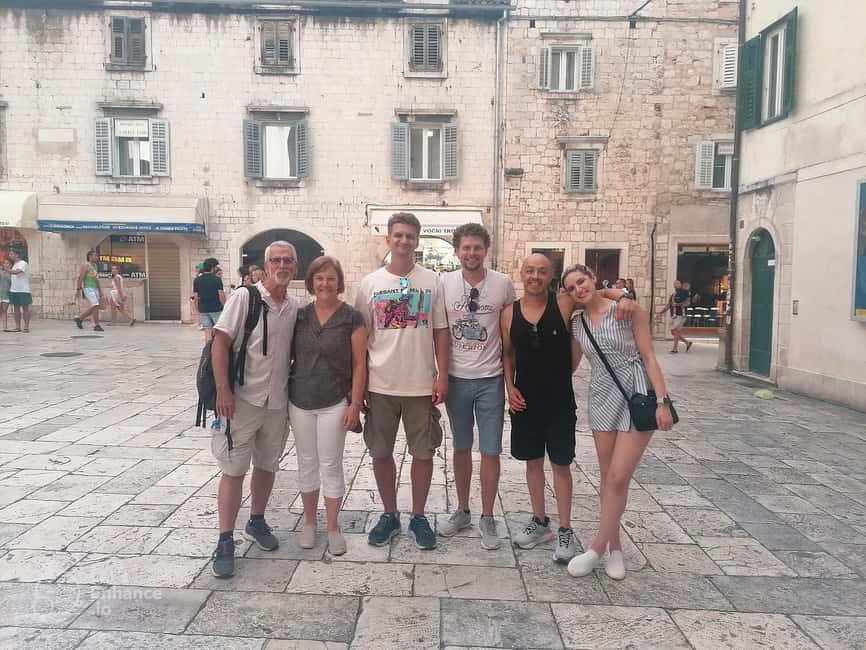
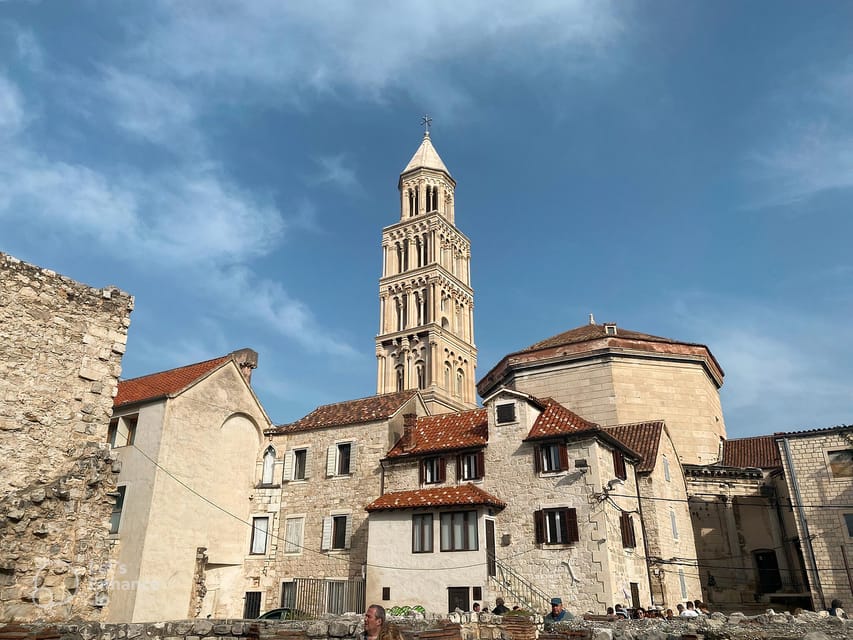
Split can feel like one long postcard until you learn how it was built. This walking tour uses a professor-style approach to turn Diocletian’s Palace into a living timeline, then keeps going into medieval and modern Split. I like that it stays small-group and conversational, and you end up with real places to picture instead of vague names.
Two things really stand out for me: you get a history professor delivery from Mario, plus the pace is broken into short stops with actual look-and-ask moments. The second big plus is the mix of Roman structure, medieval faith, and later European influences, so you get a city that makes sense as you walk.
One consideration: it is not suitable for wheelchair users, and you should plan on steady walking over uneven historic surfaces. Comfortable shoes matter here more than you might expect.
In This Review
- Key highlights before you go
- Why a history professor approach matters in Split
- Starting at the Riva Harbor model, your bearings get set fast
- Diocletian’s Palace substructures, Peristyle, and Vestibule
- Diocletian’s Palace substructures
- Peristyle of Diocletian’s Palace
- Vestibule
- Cathedral of Saint Domnius and Temple of Jupiter
- Cathedral of Saint Domnius
- Temple of Jupiter
- The Golden Gate, Grgur Ninski, and the palace-to-city shift
- Golden Gate
- Grgur Ninski Statue
- Marmontova Ulica
- Prokurative and Fruit’s Square for modern street-level Split
- Prokurative
- Fruit’s Square (Trg Brace Radic)
- Game of Thrones spots, and why they still fit the history
- Price and time value, with admissions handled clearly
- What it feels like on the ground, pacing and group size
- Who should book this Split walking tour
- Should you book this tour?
- FAQ
- How long is the Split walking tour?
- Where does the tour start, and where should I meet?
- Is the tour group size small?
- Are tickets included for the Cathedral of Saint Domnius and the Temple of Jupiter?
- What language is the tour guide?
- Is the tour wheelchair friendly, and what should I wear?
Key highlights before you go
- Professor-led storytelling with humor that keeps the group engaged.
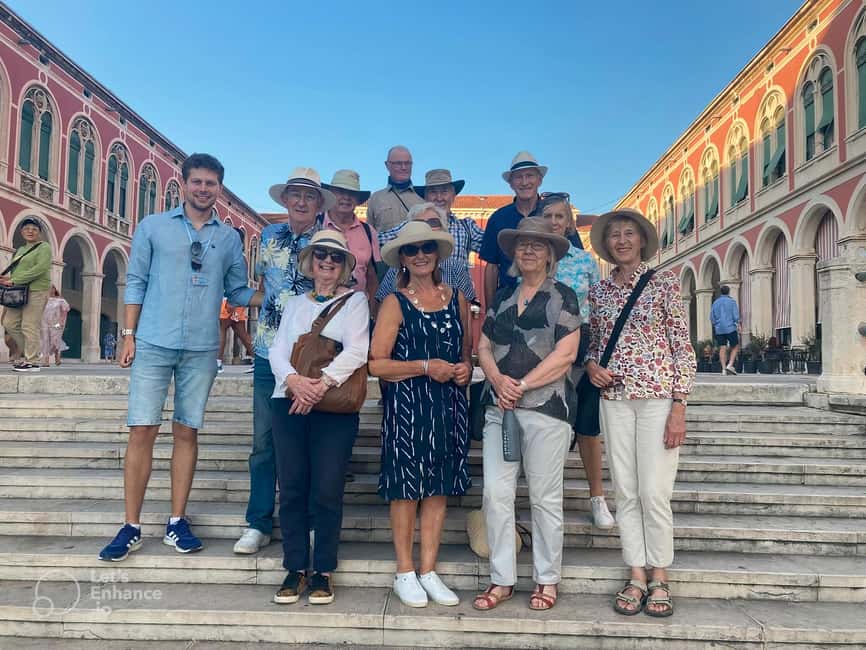
- Small private groups that make questions feel normal, not awkward.
- Diocletian’s Palace focus first, then the route expands into medieval and later Split.
- Game of Thrones locations woven into the same historical landmarks you came for.
- A practical walking route that connects major sights without turning into a marathon.
Why a history professor approach matters in Split
Split’s big sites are famous for a reason, but many tours stop at dramatic viewpoints and photo stops. This one works differently. Mario teaches like a professor who wants you to understand the cause-and-effect: who built what, why they built it where they did, and what changed when new powers arrived.
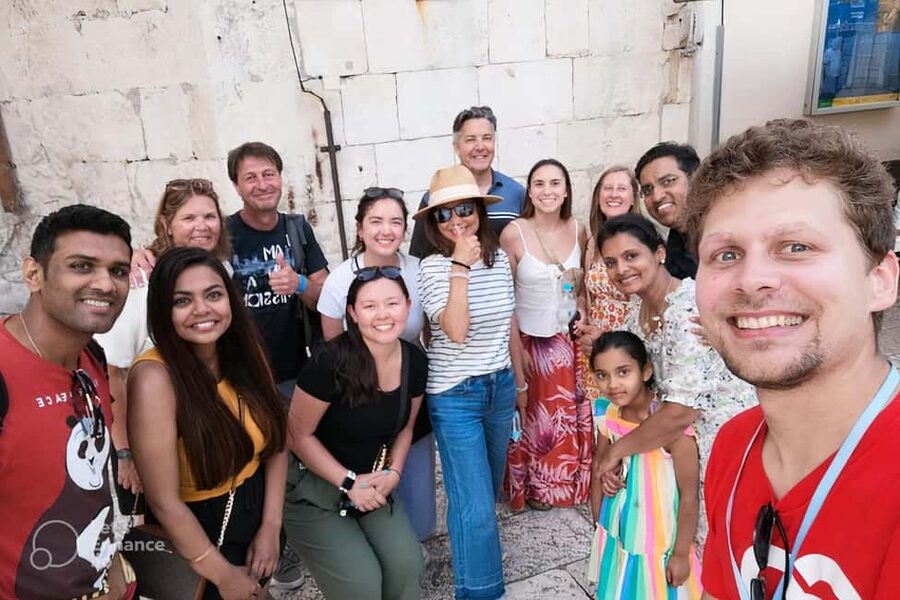
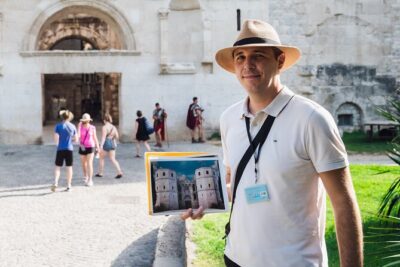
That teaching style shows up in the way the group is pulled into the story. Mario keeps you involved by posing questions and encouraging interaction, so you are not just passively listening. And the humor helps, because history can get heavy fast when the facts pile up. Here it stays readable.
The other reason this approach works is that Split is layered. You are walking through Roman palace space, then stepping into medieval and later city life. If you have only seen Diocletian’s Palace from the outside, you might miss the bigger pattern. This tour helps you see it.
More History Tours in Split
- Walking Tour of Split with a ‘Magister’ of History
★ 5.0 · 1,122 reviews - Split Walking Tour with Professor of History
★ 5.0 · 926 reviews - Split: History and Heritage Walking Tour
★ 4.9 · 650 reviews
Starting at the Riva Harbor model, your bearings get set fast
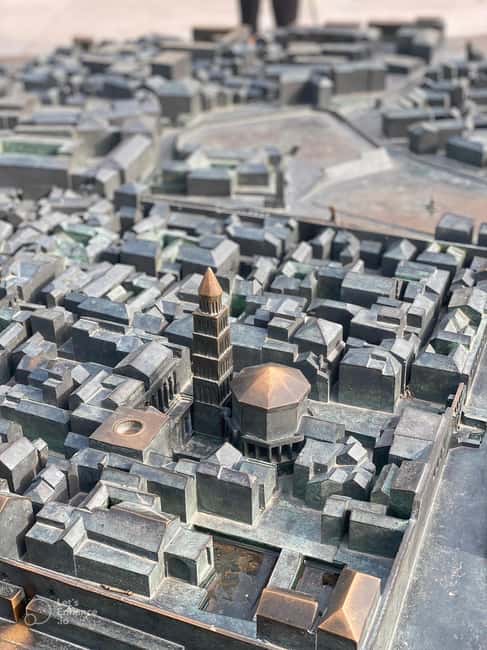
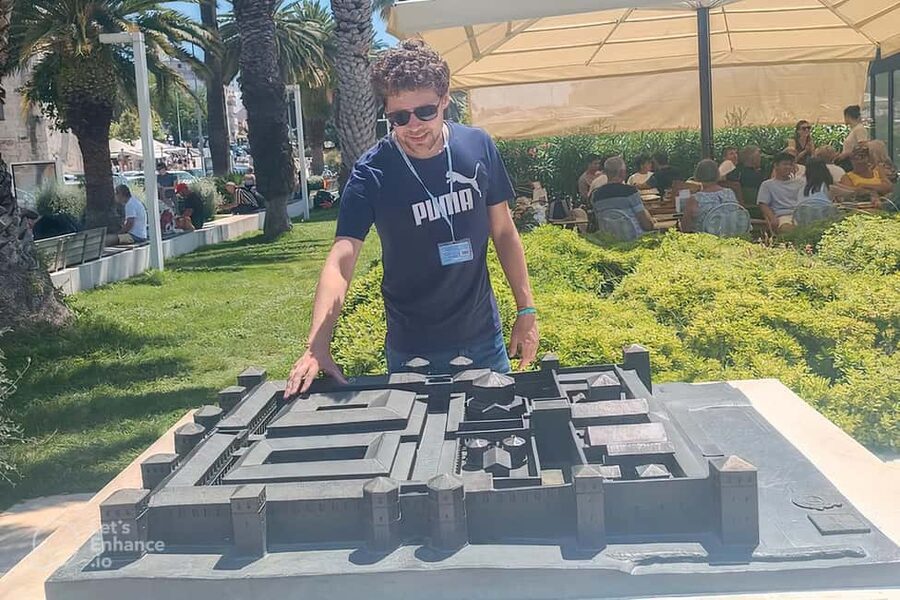
Your tour begins at the Riva promenade area, at a model of the historical core of the city of Split. That first stop is more useful than it sounds. When you understand the palace layout and how the old center fits together, every next turn feels clearer.
The stop is short, about 10 minutes, which means you still start exploring quickly. You also get a quick orientation to the city’s main “shape,” so later landmarks like the palace substructures and the Cathedral of Saint Domnius feel connected rather than random.
If you are visiting Split for the first time, this is a big win. Without it, it is easy to wander around the old town and think everything is just “old stone.” With it, you start noticing relationships between buildings, walls, gates, and streets.
Diocletian’s Palace substructures, Peristyle, and Vestibule
The route immediately anchors you in Diocletian’s Palace, and that is the right move. You first visit the substructures, then move into the core palace spaces: the Peristyle and the Vestibule.
Diocletian’s Palace substructures
You spend about 5 minutes here. That is not a long time, but it works as a quick reality check. Substructures show you the engineering side of the palace, and they help explain why the palace still feels like a city within the city. Even in a short stop, you learn what you are actually standing on.
One practical note: because this is a stone-heavy area, expect uneven ground. Your “comfortable shoes” requirement is not optional, especially if you have any ankle issues.
More Walking Tours in Split
- Split: Old Town and Diocletian Palace Walking Tour
★ 4.9 · 4,727 reviews - Walking Tour of Split and Diocletian’s Palace
★ 5.0 · 2,588 reviews - Krka Waterfalls tour with Trogir Walking tour and Krka panoramic boat cruise
★ 5.0 · 1,659 reviews - Split & Diocletian’s Palace Walking Tour
★ 5.0 · 1,125 reviews
Peristyle of Diocletian’s Palace
Next is the Peristyle, where you get around 10 minutes. This is one of the palace spaces that makes the place feel alive, not museum-still. You see how open and structured the palace layout is, which helps you understand why later residents could adapt the space rather than rebuild everything from scratch.
This is also where the tour’s teaching style shines. Mario does not just name parts, he explains what the layout implies, and how the Roman palace became a foundation for later Split.
Vestibule
The Vestibule stop is about 10 minutes. It is a strong transition point, because it sits between the palace’s grand logic and the reality of what became everyday movement. By the time you reach this area, you usually have a better sense of how Roman authority and later city life occupy the same footprint.
If you like “how cities work” more than just “what things look like,” this section is a highlight.
Cathedral of Saint Domnius and Temple of Jupiter
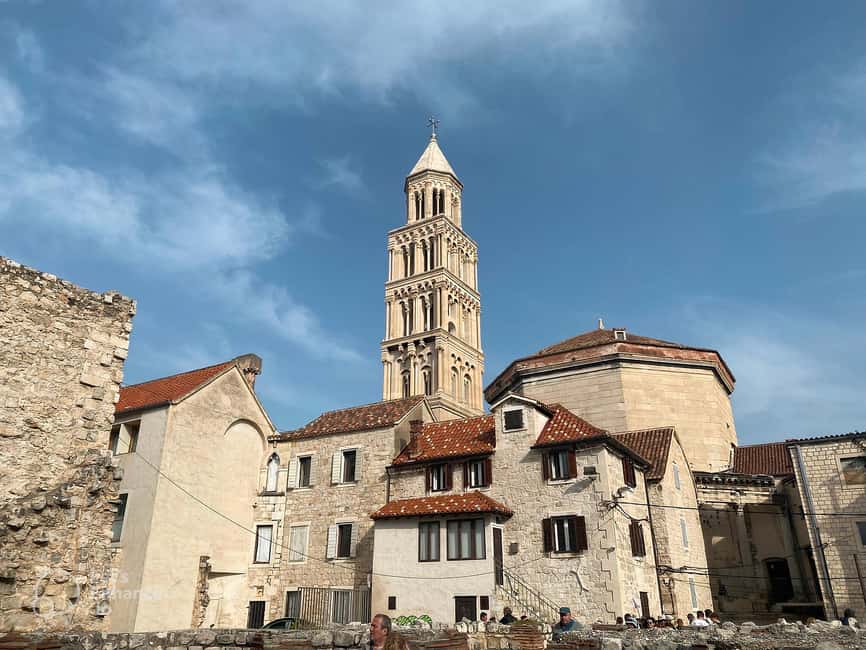
After you soak up Roman palace spaces, the tour shifts from imperial architecture to religious and civic landmarks.
Cathedral of Saint Domnius
You spend about 20 minutes at the Cathedral of Saint Domnius, with admission excluded. Even without getting too technical, this stop matters because it represents continuity. Instead of the palace remaining only an old monument, key structures kept being used, repurposed, and respected.
This is also a good moment to slow down. The cathedral stop is long enough to let you absorb details rather than rush through. If you like seeing how power changes form over time, this part of the route delivers.
Temple of Jupiter
Then you visit the Temple of Jupiter for about 10 minutes, and admission is excluded here as well. This is the Roman side of the story made visible again, and it reinforces what you have been learning about the palace function.
Even if you do not go inside everything, the way Mario connects the temple to the wider palace layout helps it make sense. It is not just another Roman ruin. It becomes a piece of the overall system that shaped Split.
Practical tip: because admissions are excluded, decide in advance whether you want to add tickets for those two stops. If you prefer to keep the day simple, you can still learn a lot from what you see at the exterior and nearby areas, but the full experience costs a little extra.
The Golden Gate, Grgur Ninski, and the palace-to-city shift
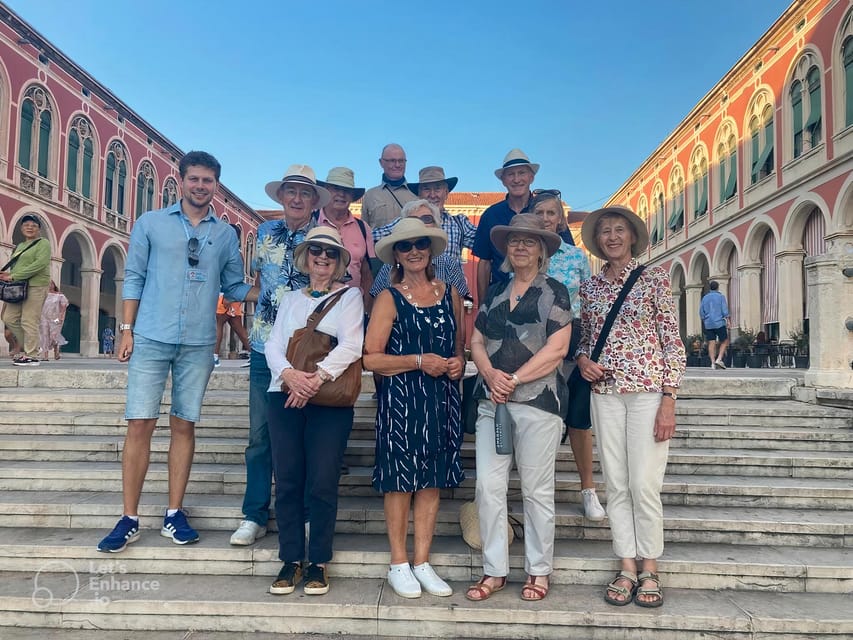
At this point, you have Roman space in your head. Now you start moving through Split as a city, not just a palace site. The tour includes a few anchor landmarks that help you feel the transition.
Golden Gate
The Golden Gate stop is about 10 minutes. This is one of those places where the palace logic becomes obvious. Gates are not just decorative. They signal control, movement, and what mattered most to the builders.
When you are walking through Split’s old streets, the Golden Gate acts like a marker for where the palace’s boundaries were and how the city’s flow worked around it.
Grgur Ninski Statue
Next is about 10 minutes at the Grgur Ninski statue. This stop shifts you into more later identity and local memory. It is a quick but useful reminder that history here is not only ancient Rome. Split’s identity also gets shaped by medieval and beyond, and local landmarks keep that story visible.
Marmontova Ulica
Then you head onto Marmontova Ulica for around 10 minutes. This section is where you start feeling the “later Split” influences more clearly. Mario connects these streets to the idea that different empires and rulers left traces in architecture and urban style.
Even if you only notice buildings and street rhythm, you are building a mental map for what you will see later on your own.
Prokurative and Fruit’s Square for modern street-level Split
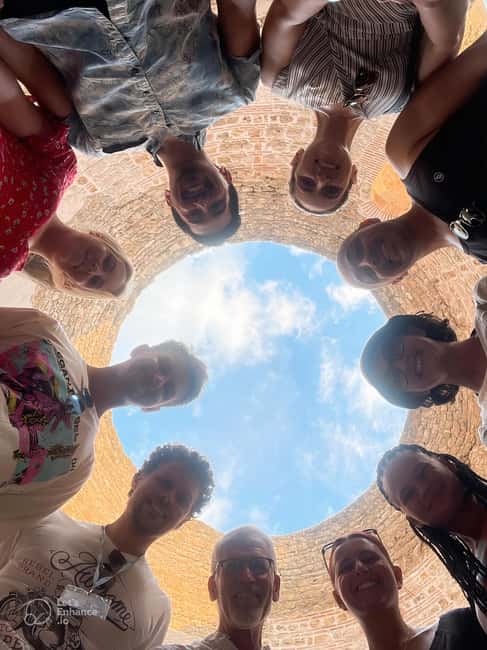
Two more stops bring the tour into lived-in city space: Prokurative and Fruit’s Square (Trg Brace Radic).
Prokurative
You spend about 10 minutes at Prokurative. This area gives you a sense of civic life, not just monument viewing. It is a good place to reorient after the heavier palace and cathedral stops.
Mario’s style helps here too, because the talk often connects these streets to historical influence, like Venice and Ottoman-era presence, and even the later imprint of Napoleon. You do not need to already know those names. The tour gives you a storyline so the influences feel grounded in real places.
Fruit’s Square (Trg Brace Radic)
Finally, you reach Fruit’s Square for about 15 minutes. That extra time matters because squares are where local life shows itself best. It is a fitting ending because you can look around and see how a historic core still functions as a social center.
If you want photos, this is the moment when it often works best. If you want understanding, it is also where you feel the city as a whole.
Game of Thrones spots, and why they still fit the history
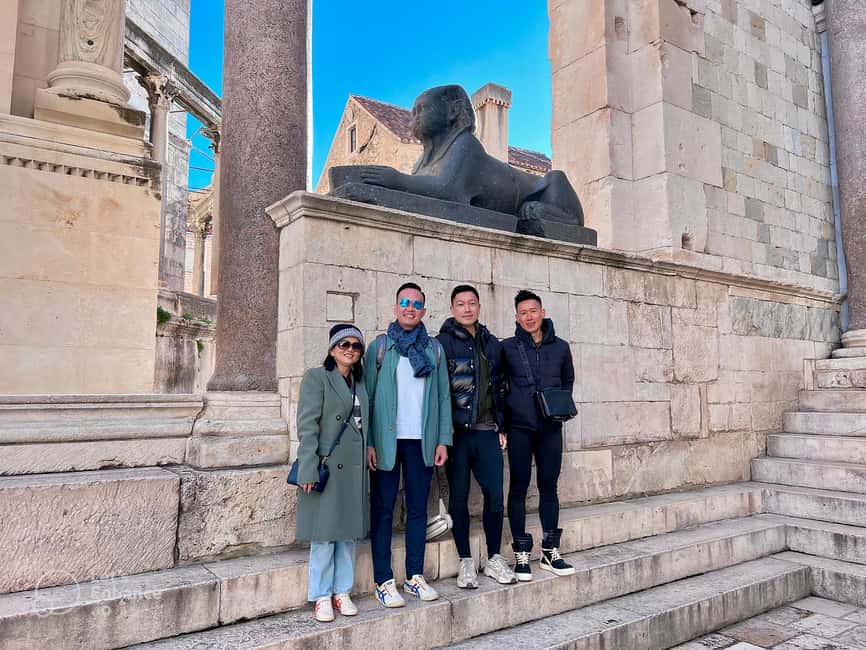
The tour includes Game of Thrones locations, but the smartest part is how they are used. Instead of treating filming sites as separate trivia, you see them attached to the same landmarks you are learning about.
That matters because it keeps the story anchored. You are not just hunting for a TV reference. You are looking at architecture that actually existed before the series and still shapes the way Split reads today.
If you are a fan, this makes the whole walk more fun. If you are not, it still works, because the tour uses those spots as another entry point into the city’s layered identity.
Price and time value, with admissions handled clearly
The price is $23 per person for a tour listed at around 2 hours, and the experience is framed as a 2-hour-and-some-minutes kind of walk. For that amount of time, you cover a compact set of major landmarks, starting with Diocletian’s Palace interiors and moving outward into medieval and later city space.
The best value piece is not only the number of stops. It is the teaching method. When a guide like Mario is engaging and interactive, you get more than scenery. You leave with names you can place, plus an explanation of how Split grew into the city you see now.
Two admissions are excluded: the Cathedral of Saint Domnius and the Temple of Jupiter. That is fairly standard for walking tours that include big ticket sites, and it gives you control over whether you want to add those costs. If you plan to visit inside, budget extra. If you mostly want the outside and context, you still get a strong tour.
What it feels like on the ground, pacing and group size
You can count on a small private group setup, which is a major quality factor here. In a small group, it is easier for Mario to ask questions and tailor pacing so you are not lost in a crowd.
The tour also uses short stops rather than one long lecture. You get about 10 minutes at several points, with a couple of longer windows like the cathedral. That structure keeps attention up, and it lets you walk between major themes: Roman palace, religion, civic identity, and street-level city life.
This tour is appropriate for all ages, but again, it is not for wheelchair users. If you are traveling with kids, seniors, or anyone who needs breaks, you should wear shoes with good grip and plan for uneven historic flooring.
Who should book this Split walking tour
This is a great pick if you fall into one of these categories:
- You want more than a basic postcard tour and prefer explanations you can remember.
- You want Diocletian’s Palace plus the rest of Split, not just one site.
- You like guides who keep it lively, ask questions, and use humor to keep history moving.
- You are a Game of Thrones fan who wants filming locations tied to real places, not separate trivia.
It is less ideal if you need wheelchair access, or if you are the type of traveler who wants long free time to wander without structure.
Should you book this tour?
I think you should book it if you want your first days in Split to feel organized and meaningful. The combination of Mario’s professor-style storytelling, the small-group feel, and the route that links Roman palace, medieval landmarks, and later street-life influences gives you strong value for a short walking day.
Before you go, do two simple things: wear comfortable shoes, and decide whether you want to add admission at the Cathedral of Saint Domnius and Temple of Jupiter. If you do that, you will get the best version of this experience, the one where history becomes a map you can walk with.
FAQ
How long is the Split walking tour?
The tour duration is listed at 2 hours.
Where does the tour start, and where should I meet?
The guide waits next to the Brass Gate of Diocletian’s Palace.
Is the tour group size small?
Yes. It is described as a small private group.
Are tickets included for the Cathedral of Saint Domnius and the Temple of Jupiter?
Admission is excluded for both the Cathedral of Saint Domnius and the Temple of Jupiter.
What language is the tour guide?
The tour is offered in English.
Is the tour wheelchair friendly, and what should I wear?
It is not suitable for wheelchair users. Wear comfortable shoes and comfortable clothes.
More Historical Tours in Split
- Split History and Gastro Small-Group Tour with Food and Drinks
★ 5.0 · 375 reviews - SPLIT-PREMIUM Emperor’s Walking Tour for History Lovers + Museum
★ 5.0 · 333 reviews - Split: Local History and Culture 90-Minute Walking Tour
★ 5.0 · 194 reviews - Split: Historical & Gastro Treasures Tour with Green Market
★ 4.9 · 144 reviews
Newest Split reviews on the site
- Split: Blue Lagoon Boat Trip with Lunch, Wine and Snorkeling★ 5.0 · 3 reviews
- Split: Guided Sunset Sea Kayaking & Snorkeling Tour★ 4.8 · 185 reviews
- Split: Sunset Guided Kayaking Tour★ 4.8 · 71 reviews
- Sunset Cruise With Music and Views of Split Riviera★ 3.6 · 10 reviews
- Step into History: Private Guided Walking Tour of Split★ 5.0 · 3 reviews
- Stand Up Paddle Tour in Split★ 4.7 · 17 reviews
- Split&Sip: Educational wine tasting★ 4.9 · 52 reviews
- Split – Walking in Khaleesi Footsteps in the City of Dragons★ 5.0 · 13 reviews
Historical Tours, compared.
Walking Tour of Split with a ‘Magister’ of History
Read our review →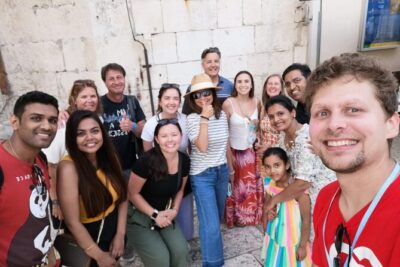

Split History and Gastro Small-Group Tour with Food and Drinks
Read our review →Browse the lists this tour appears in