
Review · WALKING TOURS
Pula walking tour
Pula hits you fast, in the best way. This 1.5 hour walking tour strings together Pula’s Roman big hitters and the bits between them, guided by a local in English, with a small group size that keeps the pace human. You get a clear route and context, without needing to be a tour-book expert.
I really like two things here. First, the focus on major monuments in a short loop means you leave with your bearings and a sense of how the city fits together. Second, the guides tend to be personable and highly engaged, with praise coming up for guides such as Sini and Jane, so it feels more like a conversation than a lecture.
One consideration: a lot of the stops are from the outside, so if you’re hoping for nonstop inside access (especially for paid sites), you will want to plan extra time or budget for separate entries.
In This Review
- Key things that make this Pula walk work
- How the 90-minute route keeps Pula simple
- Starting at Pula Arena and getting your bearings fast
- Amphitheatre de Pula: the Roman star, seen the practical way
- Kastel fortress views that help you read the city
- Pula Cathedral: brief outside talk, possible quick entry
- Tempio di Augusto: Roman temple stop, focused and quick
- Arco dei Sergi: an easy win for free Roman storytelling
- Gradska Trznica Pula: market stop for real city life
- Gate of Hercules and the Twin Gates: your Roman photo finish
- Price and value: what $20.16 really buys you
- Who should book this Pula walking tour
- Small practical tips for a better walk
- Should you book this Pula walking tour with Istria Tours?
- FAQ
- How long is the Pula walking tour?
- What is the price per person?
- Is the tour offered in English?
- Where do I meet and where does the tour end?
- Are entries included for the sights?
- Does the tour run in bad weather?
Key things that make this Pula walk work
- Small group cap (max 15) means easier questions and a calmer pace.
- 90-minute timing gives you a smart overview, then free time to wander on your own.
- Outside viewing of the Arena, temple, and arches keeps the tour moving without ticket juggling.
- Market stop at Gradska Trznica is a practical taste of everyday Pula.
- A gate finish (Gate of Hercules, then the Twin Gates) gives you strong photo points and closure.
How the 90-minute route keeps Pula simple
This is the kind of tour that helps you start your day in Pula without feeling like you’ve committed to a whole afternoon. The walk is about 1 hour 30 minutes, and that matters because Pula is best enjoyed by moving between viewpoints, old stone, and street life, not by standing still.
You’ll cover several landmarks in a tight sequence, with short stops that are long enough for a good explanation and quick photo breaks. The pace is also built for people with moderate physical fitness, so you should not feel wrecked at the end if you wear decent shoes.
Group size is capped at 15 travelers, which is one reason the tour tends to stay lively. You get a sense of local storytelling, plus time for questions, without the feeling of being herded.
One more thing I appreciate: the tour runs in all weather conditions. That’s not a deal-breaker, but it does mean you should pack for sun, wind, or rain and dress appropriately.
More Walking Tours in Pula
- Pula: Historic Walking Tour with Local Guide & City Views
★ 4.8 · 214 reviews - Pula: Historic Sites Guided Walking Tour
★ 4.8 · 78 reviews - Pula Essentials Walking Tour
★ 4.8 · 64 reviews
Starting at Pula Arena and getting your bearings fast
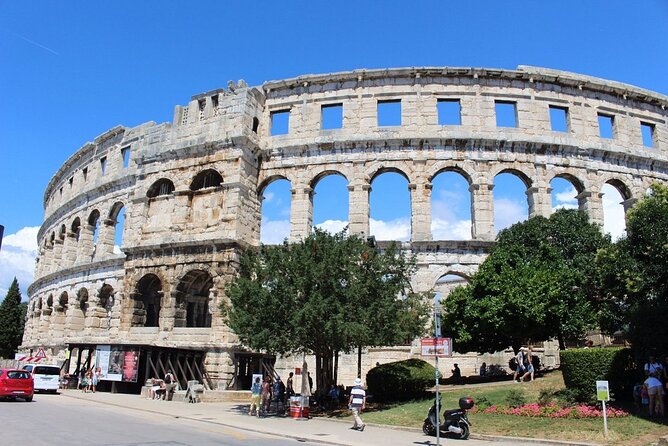
You meet at Pula Arena, Flavijevska ul., 52100, Pula. This is a useful starting point because it anchors the whole story. The amphitheater is the obvious landmark, but it also helps you understand why Pula’s Roman era still feels close, even when you’re walking through modern streets.
You’ll get a mobile ticket, and you’ll likely need to show up on time so your guide can keep the group aligned. The tour ends at the Twin Gate (Carrarina ul. 8, 52100, Pula), which is convenient because it puts you near the center so it’s easy to continue exploring after the walk.
If you like a clean plan, this tour gives you one. If you like wandering with purpose, it’s even better, because the route functions like a guided shortcut through the highlights.
Amphitheatre de Pula: the Roman star, seen the practical way
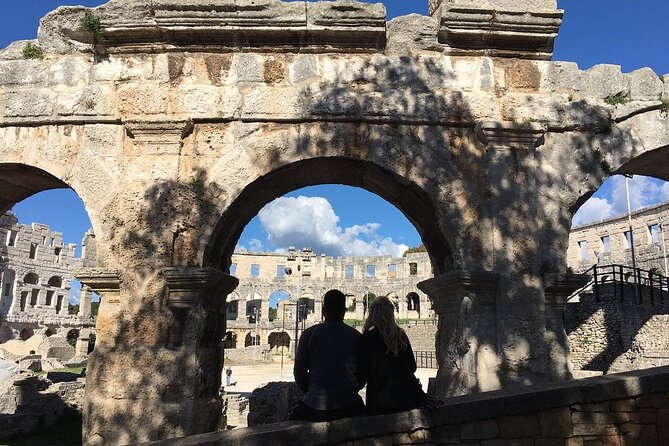
The first stop is Amphitheatre de Pula, with about 20 minutes and an outside viewing. The ticket note is important: admission is not included. That said, outside viewing is still valuable because the building’s size and structure tell you a lot, even without stepping inside.
From the outside, your guide can explain what you’re looking at, like how the amphitheater fit into the city and what it suggests about Roman public life. This is the kind of stop where you start seeing Pula as more than a pretty coastal town. You begin to understand why this place mattered.
Drawback? If you want a full arena walkthrough, you’ll need separate plans. But as a first exposure, it’s a strong opener. It sets the theme for the rest of the walk, then you keep moving.
Kastel fortress views that help you read the city
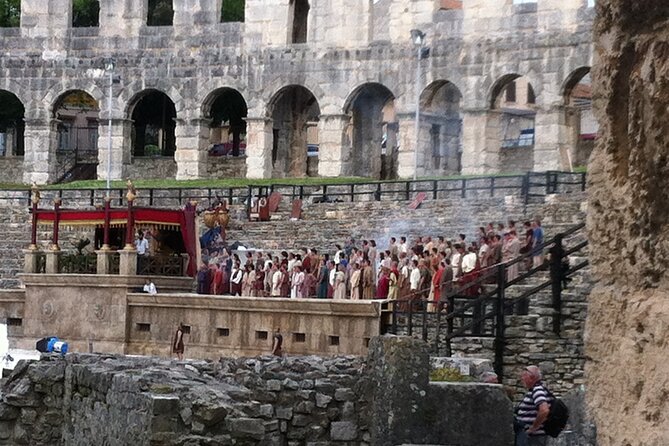
Next comes Kastel, with about 10 minutes, again described from the outside. You’re also going to enjoy the view toward the harbor, which is the real payoff here.
This viewpoint works like a map in your head. Once you can see the harbor and the general layout, the Roman monuments stop being random points on a route. They start looking like parts of one bigger plan: where power sat, where traffic flowed, and how the city connected to water.
One nice balance here is that the stop is short but not rushed. You get enough time to listen, take pictures, and orient yourself.
Same coastline, a different sort of day:
- Medulin -Kamenjak 5h boat trip with lunch & drinks on Sandra Boat
★ 5.0 · 1,621 reviews - Full-Day Boat Tour of the Medulin Archipelago from Medulin
★ 5.0 · 1,389 reviews - Pula: Kayaking, Snorkeling, Cliff jumping, photos included
★ 4.8 · 1,147 reviews - 3hours all inclusive Sunset&Dolphin Tour from Medulin on Sandra
★ 5.0 · 1,130 reviews
Pula Cathedral: brief outside talk, possible quick entry

The tour moves to Pula Cathedral for about 5 minutes. Like the other major sights, your guide focuses on the church from the outside. If the church is open, you can enter, and the entry is listed as free.
This is a smart approach for a walking tour because it respects how unpredictable openings can be. You’re not promised inside access. Instead, you get a quick stop that may turn into a short bonus if the timing is right.
Even if you do not get inside, you still walk away with a clearer sense of how the city’s religious architecture fits into the longer timeline that your guide keeps connecting.
Tempio di Augusto: Roman temple stop, focused and quick
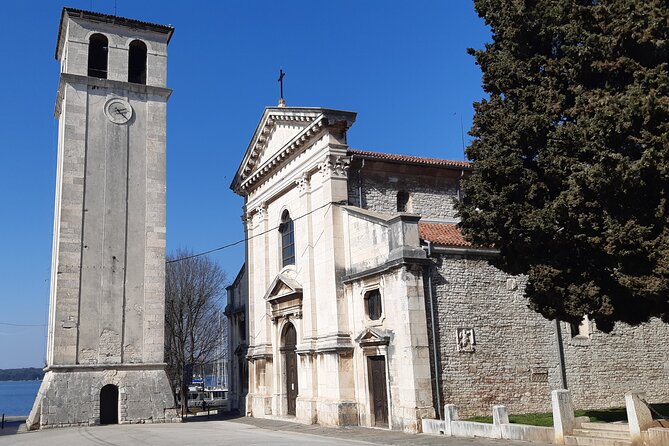
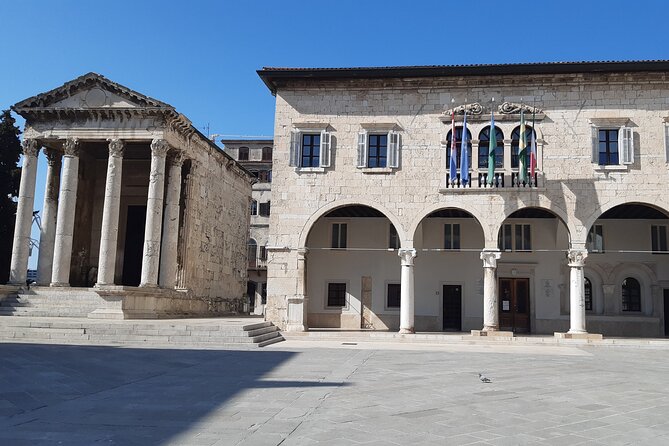
At Tempio di Augusto, you’ll spend about 10 minutes and view the temple from the outside. The admission note says entries are not included, so expect explanation and observation rather than a ticketed visit.
This stop is worth it because temples are the kind of architecture people miss when they speed past. Up close, even from outside, you can see the style choices that mark Roman building priorities, and your guide’s job is to point out what to notice.
If you’re photo-focused, this is a good pause. If you want to go deeper into architecture, you may want to add independent time later, since this tour’s format keeps things efficient.
Arco dei Sergi: an easy win for free Roman storytelling

Next up is Arco dei Sergi, about 10 minutes. This one is listed as free, and your guide will explain it from the outside.
This is the kind of monument that can feel easy to skip because it is smaller than the amphitheater and fortress. But arcs and arches matter, because they show how Roman cities celebrated movement, routes, and status.
The advantage here is cost control. Since the stop is free, you do not have to wonder if you should have brought an extra ticket. You can just enjoy the story and keep walking.
Gradska Trznica Pula: market stop for real city life
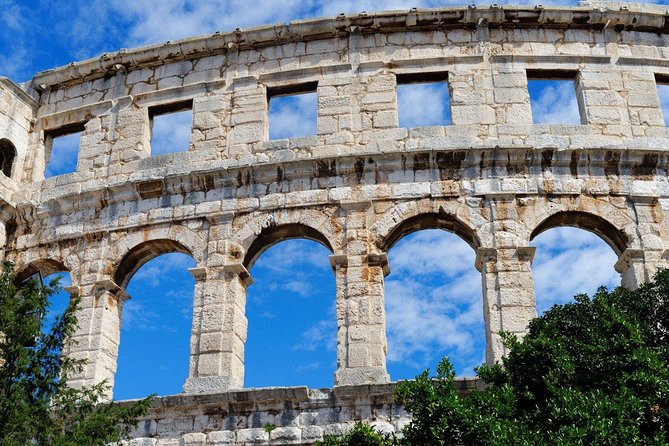
The tour then heads to Gradska Trznica Pula, about 10 minutes, and it’s listed as free. Even though it’s a short stop, a market visit is a smart ingredient. It adds modern daily rhythm to the Roman outline you’ve been following.
If you want to understand Pula as a place where people still shop, talk, and eat, this is one of your best moments. You might see local produce, seafood, and everyday choices that help you picture the city beyond stone monuments.
One practical tip: go in with flexible expectations. A market can look different depending on the day and time, and your guide’s outside viewing approach means the goal is context and atmosphere, not a timed food tour.
Gate of Hercules and the Twin Gates: your Roman photo finish
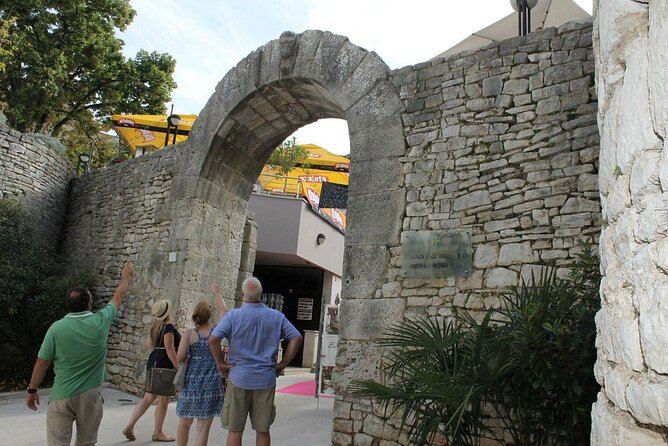
You end with the city’s gate area, starting with the Gate of Hercules for about 5 minutes, and then the Twin Gates of Pula for about 5 minutes. Both are listed as free, and your guide explains them from the outside.
Gates are powerful because they mark transitions. When you reach these, the tour starts to feel complete: you started at the big Roman showpiece, worked through Roman religious and civic symbols, saw the harbor viewpoint, then you close with the entrance story of the old city.
This is also where you can slow down a touch for photos if your group is moving smoothly. The short timing helps you finish while you still have energy to wander more.
Price and value: what $20.16 really buys you
At $20.16 per person, the pricing feels reasonable for an English-speaking local guide plus a route that hits many high-recognition points. The math works best if you treat this tour as an orientation tool, not as an “everything included” ticket package.
Keep in mind what is not included: entries and admissions. Several major stops are outside viewing, and some sites explicitly say tickets are not included. That doesn’t make the tour bad. It just means your money buys guidance and context, not paid access to multiple buildings.
Where the value shines is in the selection. You still get the Arena area, Kastel harbor views, a cathedral stop if it’s open, a temple, an arch, a market, and the gate finale within about 90 minutes. For a first-time visit, that’s a lot of structure for the cost.
Also, the tour caps at 15 people, which improves the experience. Small group tours often cost more. Here, you’re getting that advantage without the huge price tag.
Who should book this Pula walking tour
This tour fits best if you want:
- A short overview that helps you navigate Pula on your own afterward.
- Roman sites plus everyday city texture, since you get a market stop.
- A local perspective in English, with enough time for questions.
It can also be a good choice for families, since past experiences mention keeping teens interested and the walk is not framed as extreme. Children must be accompanied by an adult, so plan accordingly.
You should think twice if you mainly care about inside access and paid museum-style experiences. Since several stops are outside and admission is not included for many monuments, you may feel you want more time at fewer places.
The good news is that this tour ends at the Twin Gates area, so you can choose what to explore next based on your interests.
Small practical tips for a better walk
- Wear comfortable shoes. Even at a moderate pace, you’ll be walking between sites.
- Bring a layer. The tour runs in all weather, so sun or wind can change quickly.
- Plan your photos early. The amphitheater and fortress viewpoints are popular for a reason.
- If you see the cathedral is open when you arrive, take the chance. That inside option is one of the potential bonuses.
- In Pula, you’ll likely notice language variety, and your guide may reflect that. One review noted that Italian and Croatian are both official national languages, so you may see signs and hear bilingual context while you walk.
Should you book this Pula walking tour with Istria Tours?
If you’re weighing this tour against wandering on your own, I think it wins when you want a faster understanding of Pula. For the money, you get a guided route that hits a balanced mix of Roman monuments, a harbor-orienting viewpoint, and a market stop. It also sets you up to explore with confidence after the tour ends at the Twin Gates area.
I’d book it if your priority is learning how Pula’s old city story connects to the city you see today, without spending most of a day in one place. If your priority is paid indoor access and longer site visits, you’ll probably want to pair this with additional independent time.
Bottom line from a practical point of view: this is a strong intro to Pula, especially when you only have a short window and you want your walking to feel guided, not random.
FAQ
How long is the Pula walking tour?
The tour lasts about 1 hour 30 minutes.
What is the price per person?
The price is $20.16 per person.
Is the tour offered in English?
Yes, it is offered in English.
Where do I meet and where does the tour end?
You meet at Pula Arena on Flavijevska ul. in Pula, Croatia. The tour ends at the Twin Gate on Carrarina ul. 8, Pula, Croatia.
Are entries included for the sights?
No. Entries are not included, except that some stops list free entry. For example, the Pula Cathedral can be entered if open, and the Arco dei Sergi, Gradska Trznica Pula, Gate of Hercules, and the Twin Gates are listed as free. Admission tickets are not included for other stops.
Does the tour run in bad weather?
Yes, it operates in all weather conditions, so you should dress appropriately.
Newest Pula reviews on the site
- SUP Yoga in Stunning Stoja Bay: Balance, Breath & Connect★ 5.0 · 14 reviews
- From Fažana: snorkeling at sea cave and Brijuni Island★ 4.8 · 49 reviews
- Rent a boat up to 6 person on Cape Kamenjak Nature Park★ 4.8 · 76 reviews
- Pula:Sunset Tour By Clear Kayak,Cave,Swim & Cliff Jumping★ 4.9 · 35 reviews
- Fažana: Guided Buggy Tour in the Heart of Istria★ 4.8 · 109 reviews
- Pula: Swimming & snorkeling Boat Tour★ 3.4 · 7 reviews
- Pula: Sunset/Night Illuminated Transparent Kayak Tour★ 4.9 · 126 reviews
- Pula: Your Custom Private Half-Day Sailing Adventure★ 5.0 · 4 reviews
Walking Tours, compared.
Walking Tour of Split and Diocletian’s Palace
Read our review →
Krka Waterfalls tour with Trogir Walking tour and Krka panoramic boat cruise
Read our review →
City Walls Early Morning or Sunset Walking Tour
Read our review →Browse the lists this tour appears in