
Review · HISTORICAL TOURS
Pula: Historic Sites Guided Walking Tour
Roman Pula tells its story fast. This guided walking tour links Pula Arena to the town’s quieter Roman leftovers, with a local guide pointing out details you would miss on your own. You get a clear overview, then a route that keeps moving through the old center.
I love how the tour mixes big ticket sights with smaller surprises, like the Augustus Temple and the Roman Forum area. It also earns points for the panoramic views from Pula Castle, which make the whole walk feel like more than just sightseeing. The price is also friendly for what you cover in 90 minutes.
One thing to plan around: entry tickets are not included, so a couple of stops may cost extra depending on what you want to go inside. It runs rain or shine, and it is not designed for people with mobility impairments.
In This Review
- Key things to know before you walk Pula
- Pula in 90 minutes, from Arena to Twin Gate
- Pula Arena first, then a quick jump to Venetian Pula
- Pula Cathedral and the Roman layers you can actually see
- Roman Forum highlights: Augustus Temple, City Hall, and Arch of Sergii
- Market breaks and the Gate of Hercules finale
- What makes the guide matter, and why you’ll care
- Price and value: $20 for a focused historic loop
- Practical tips so the walk stays fun
- Should you book this guided walking tour of Pula’s historic sites?
- FAQ
- How long is the Pula Historic Sites Guided Walking Tour?
- How much does the tour cost?
- Where do I meet the guide?
- What sites are included in the route?
- Is the tour in English?
- Are entry tickets included?
- Is the tour affected by weather?
- Is video recording allowed?
- Is it suitable for people with mobility impairments?
Key things to know before you walk Pula
- Start at Pula Arena, then follow the historic thread through town to the Twin Gate
- Pula Castle viewpoints give you a fast, high payoff break from street-level exploring
- Roman Forum stops include Augustus Temple, City Hall, and the Arch of Sergii
- You’ll spot Roman traces like mosaics while the guide connects them to later eras
- Pula Market and Gate of Hercules add real city atmosphere beyond the big monuments
- Guided in English, with a guide who keeps stories clear and answers coming
Pula in 90 minutes, from Arena to Twin Gate
This tour is built for orientation. You start right where Pula’s power display begins, at the entrance of the Pula Amphitheater, and you get a brief, organized overview before you move. That matters because Pula can feel like a pile of ancient stones until someone puts the pieces together for you.
You then keep walking through the old town in a time-efficient loop. The route is designed so you hit the major Roman anchors, then shift to later layers like the Venetian-era castle, and finish with the dramatic ancient gateway area near the Twin Gate. At 90 minutes, it is not a long, slow amble. It is an efficient way to build a mental map you can use for the rest of your day.
If you like your history with a sense of direction, you will appreciate the pacing. You are not just collecting photos, you are learning what to look for as you go.
More Walking Tours in Pula
- Pula: Historic Walking Tour with Local Guide & City Views
★ 4.8 · 214 reviews - Pula walking tour
★ 5.0 · 96 reviews - Pula Essentials Walking Tour
★ 4.8 · 64 reviews
Pula Arena first, then a quick jump to Venetian Pula
The tour begins in front of the Arena entrance, and your guide should be easy to spot, usually holding an umbrella and wearing a blue card around the neck. That sounds small, but on a busy day it helps you start right on time without hunting.
From there, you head toward Pula Castle, built by the Venetians in the 17th century. The payoff here is twofold. First, you learn what the castle was for and who lived here before, which gives the viewpoint context. Second, you get panoramic views that make the walk feel connected to the shape of Pula itself.
This is one of the smartest parts of the route because views are a natural reset. You look out, you understand where you are in town, then you continue into the older core with a clearer sense of scale.
Pula Cathedral and the Roman layers you can actually see
After the castle stop, the tour shifts back toward the center with the Cathedral and the surrounding historic fabric. Even if you do not plan to go inside, the guide’s job is to help you read the area, not just point at it.
From there you transition into the Roman section of town, including Roman mosaics spotted along your path. Seeing mosaics up close does something that textbook history cannot. It reminds you these places were once lived in, decorated, and cared for.
The guide also helps connect the Roman pieces to what came later. Pula’s story is not one straight timeline. You get Roman cores, then later eras that reused, reshaped, or built near them. That makes the city feel layered, not dated.
If you hate feeling rushed in museums, this is a good compromise. It is outdoors, in motion, and still taught.
Roman Forum highlights: Augustus Temple, City Hall, and Arch of Sergii
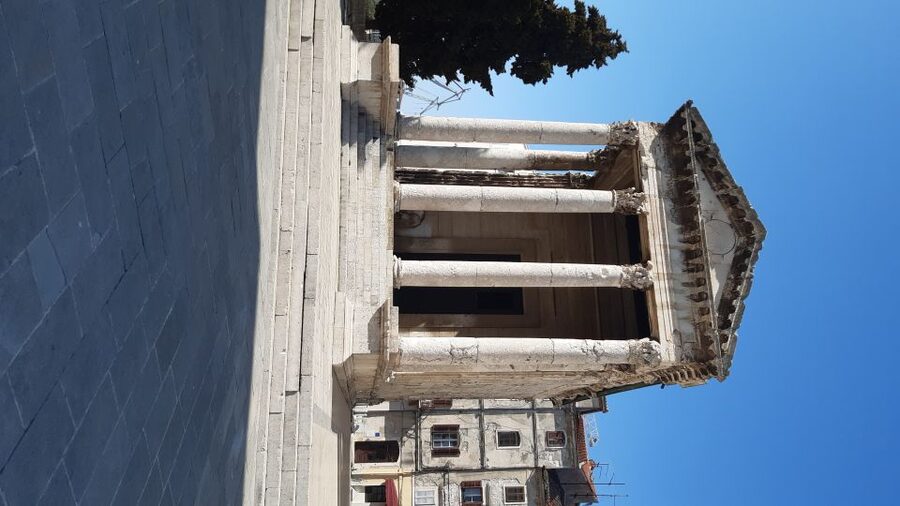
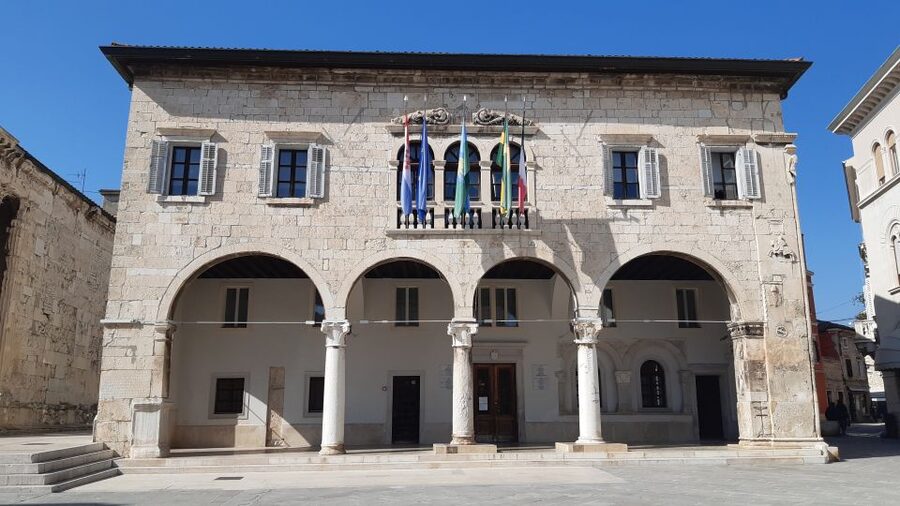
The Roman Forum area is the tour’s centerpiece, and it hits the landmarks you actually want to remember. Expect stops that include Augustus Temple and City Hall, plus the Arch of Sergii.
The Augustus Temple is a key highlight, and the way the guide frames it helps you understand why it mattered in the Roman world, not just that it exists. You also get a look at how the forum space worked as a public center, where politics, society, and religion overlapped.
The Arch of Sergii adds another angle. Arches are easy to photograph, but without context you miss the point. Your guide’s explanations help you understand what the arch signifies and how it fits into the broader Roman layout.
One practical tip: bring your curiosity. Questions are encouraged, and if you pause to ask how the guide knows what they know, you will often get answers that make the next stop click.
A few more Pula trips to weigh up
- Olive Oil Guided Tasting and History in Pula
★ 4.5 · 34 reviews - Dubrovnik Old Town History Walking Tour
★ 5.0 · 1,684 reviews - Zagreb: City & History Walking Tour & WW2 Tunnels
★ 4.9 · 1,202 reviews - Walking Tour of Split with a ‘Magister’ of History
★ 5.0 · 1,122 reviews
Market breaks and the Gate of Hercules finale
The route does not end with Roman stones. You get a stop at the Pula Market, established in the early 1900s. This is a nice change of pace because it turns the tour from strictly ancient into something still part of daily life.
It is also a good moment to regroup, because you have already covered the biggest monument zone. The market stop gives you a sense of where people gather now, which makes the historic walk feel less like a separate theme park.
Then you finish near the Gate of Hercules. Ancient city gates can look simple from far away, but with guidance you pick up how they shaped movement through town. It is a strong, visual closer to the story of Roman Pula, with the added satisfaction that you end at Twin Gate rather than back where you started.
If you plan to wander after the tour, this finish point is useful. You end near another dramatic landmark, which makes it easier to keep exploring without getting turned around.
What makes the guide matter, and why you’ll care
A walking tour lives or dies by the guide’s clarity and energy. This one is led by a local expert, and the English delivery is consistently praised for being easy to follow. You can also expect a friendly, question-friendly style, with guides known for good humor and for connecting facts to what you are seeing.
Guides like Sini, and also heard as Sinisha in some cases, are often singled out for excellent English and for answering questions from the group without turning the whole thing into a lecture. That tone is exactly what I look for in a short tour. You get information, but you still feel like you are walking around a real city.
Also, because the route is only 90 minutes, the guide’s “what to look for” approach is crucial. You learn what matters at each stop, so you leave with actual recall, not just a memory of where the building was.
Price and value: $20 for a focused historic loop
At $20 per person for a 90-minute English guided walk, this is a solid value if your goal is a fast overview of Pula’s must-see historic sites. You are paying for a local guide, not a stack of admissions. That is why the route works so well.
What is not included is just as important. Entry tickets are not included, so if you plan to go inside certain places, you may need to budget extra. Still, you can enjoy plenty of the experience from the street and outdoor viewing points, especially if you treat the guide as your museum audio guide.
For many people, the best value is not the monuments themselves. It is leaving with a mental map. Once you know how the Roman Forum, cathedral area, castle viewpoint, and gates relate, your self-guided time gets better. You can choose what to revisit, and you will know what you are looking at when you return.
Practical tips so the walk stays fun
This tour runs rain or shine, so pack for weather. Because the guide may be using an umbrella to stay prepared, you should consider bringing your own as well if you dislike wet discomfort.
You are also asked to skip video recording during the tour. Still take photos if you want, but expect the guide to manage the rules in order to keep the group moving smoothly.
Comfort matters. This is not listed as suitable for people with mobility impairments. The tour is walking-heavy and takes place through old-town streets, so if you have any walking limitations, think hard before booking.
Lastly, plan to arrive at the meeting point with a little buffer. You meet the guide in front of the Amphitheater entrance, and they should have that blue card and umbrella so you can identify them quickly.
Should you book this guided walking tour of Pula’s historic sites?
Book it if you want a tight, high-value overview of Pula’s standout ancient landmarks, especially the Roman core around the Forum area and the dramatic finish near the gates. It is a great pick for first-time visitors who want context fast, or for people who only have a short window and still want their time to feel purposeful.
Skip or rethink it if you mainly care about going inside buildings with paid admissions, because entry tickets are not included. Also consider your mobility needs, since the tour is not suitable for mobility impairments and you will be walking throughout the route.
If you do book, go in with one attitude: look up, look around, and ask questions. With a good guide and a short loop, you come away understanding Pula in a way that lone wandering often does not deliver.
FAQ
How long is the Pula Historic Sites Guided Walking Tour?
The tour lasts 90 minutes.
How much does the tour cost?
The price is $20 per person.
Where do I meet the guide?
Meet your guide in front of the Amphitheater entrance. The guide has a blue card around their neck and holds an umbrella.
What sites are included in the route?
You’ll cover the Pula Arena area, Pula Castle, the Cathedral, the Roman Forum area (including the Augustus Temple and City Hall), Roman mosaics along the way, the Arch of Sergii, the Pula Market, and end at the Twin Gate near the Gate of Hercules.
Is the tour in English?
Yes, the live tour guide offers the tour in English.
Are entry tickets included?
No. Entry tickets are not included.
Is the tour affected by weather?
The tour takes place rain or shine.
Is video recording allowed?
No, video recording is not allowed.
Is it suitable for people with mobility impairments?
No, it is not suitable for people with mobility impairments.
Newest Pula reviews on the site
- SUP Yoga in Stunning Stoja Bay: Balance, Breath & Connect★ 5.0 · 14 reviews
- From Fažana: snorkeling at sea cave and Brijuni Island★ 4.8 · 49 reviews
- Rent a boat up to 6 person on Cape Kamenjak Nature Park★ 4.8 · 76 reviews
- Fažana: Guided Buggy Tour in the Heart of Istria★ 4.8 · 109 reviews
- Pula:Sunset Tour By Clear Kayak,Cave,Swim & Cliff Jumping★ 4.9 · 35 reviews
- Pula: Swimming & snorkeling Boat Tour★ 3.4 · 7 reviews
- Pula: Sunset/Night Illuminated Transparent Kayak Tour★ 4.9 · 126 reviews
- Pula: Your Custom Private Half-Day Sailing Adventure★ 5.0 · 4 reviews
Historical Tours, compared.
Walking Tour of Split with a ‘Magister’ of History
Read our review →

Split History and Gastro Small-Group Tour with Food and Drinks
Read our review →Browse the lists this tour appears in