
Review · HISTORICAL TOURS
Pula: Historic Walking Tour with Local Guide & City Views
Roman Pula comes alive at walking pace.
This tour is built around Pula’s Roman amphitheatre and a licensed local guide who can turn stone, street corners, and everyday life into easy stories. You get alternative angles on the city, plus city views that come naturally as you move between monuments and old neighborhoods.
What I like most is the way the experience feels personalized. Marina can steer the conversation toward local lifestyle, culture, nature, or food, so it does not turn into a one-size-fits-all script. I also love that the route mixes big Roman highlights with a real taste of daily Istrian culture via a farmer’s market stop.
One thing to plan for: entrance fees are not included. You can still decide on-site whether to visit the amphitheatre, but you should expect extra cost if you choose to go in.
In This Review
- Key highlights you will feel right away
- Pula on foot: why this tour works (and who it’s for)
- Meeting Marina at Arena, under the wooden roof
- The Pula amphitheatre: built for reasons bigger than gladiators
- Twin, Hercules, and Sergii gates: real stone stories, not textbook names
- Forum square: from Roman civic center to today’s market rhythm
- The farmer’s market stop: local culture you can actually point to
- How the route stays “only” 90 minutes to 2 hours
- Group size, questions, and a guide who can adapt
- Price value: $29 for a focused, story-led walk
- Wheelchair accessible and private group options
- Should you book Marina’s Pula walking tour?
- FAQ
- Where does the tour meet?
- How long is the walking tour?
- What language is the guide?
- Are entrance fees included for the amphitheatre?
- Is the tour wheelchair accessible?
- Can I pay later or cancel for a refund?
Key highlights you will feel right away
- Start at the amphitheatre entrance so you understand the city’s Roman gravity from minute one
- Learn what the arena was built and used for, beyond the usual gladiator story
- Walk past three still-standing Roman city gates named Twin, Hercules, and Sergii
- See the Forum square as a Roman version of the farmer’s market, and connect it to today
- Spot story clues everywhere, including an explanation for the goat on the regional flag
Pula on foot: why this tour works (and who it’s for)
Pula is not a city that begs for rushing. It rewards slow steps. This walking tour fits that mindset perfectly because you get a tight route with big payoffs: Roman landmarks, street-level details, and a guide who can explain what you are actually standing in front of.
I think the sweet spot here is time and attention. You get about 90 minutes to 2 hours, which is long enough to see major points and ask questions, but short enough to stay flexible. If you love history but hate museum marathons, you will appreciate that it stays walkable and story-driven.
This also suits you if you enjoy food and everyday culture, not just monuments. The market stop and the Forum square connection give context to how cities functioned then and how they still do now. And if you travel with kids or you just want a relaxed pace, the small-group feel helps.
More Walking Tours in Pula
- Pula walking tour
★ 5.0 · 96 reviews - Pula: Historic Sites Guided Walking Tour
★ 4.8 · 78 reviews - Pula Essentials Walking Tour
★ 4.8 · 64 reviews
Meeting Marina at Arena, under the wooden roof
You meet at the amphitheatre area, at the Am Eingang in Arena, unter dem Holzdach spot. Starting here is smart. The Roman amphitheatre is the city’s easiest landmark to orient around, and it sets the theme for the whole walk.
Because the guide is Marina, you also know what kind of tour this is going to be. She has worked as a licensed tour guide in Istria for over 18 years and specializes in German-speaking guests. That matters because you get clear explanations, not just general descriptions.
Practical tip: arrive a few minutes early. This type of walking tour depends on keeping the group together, and you want time to match the meeting point without stress.
The Pula amphitheatre: built for reasons bigger than gladiators
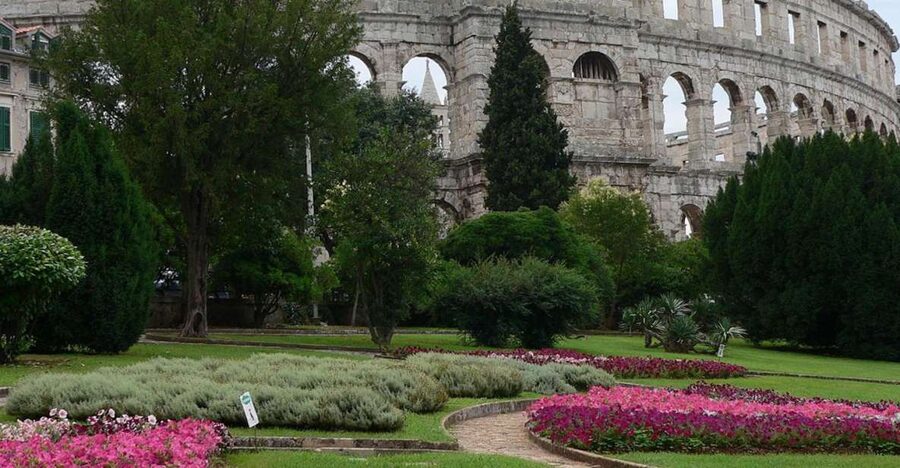
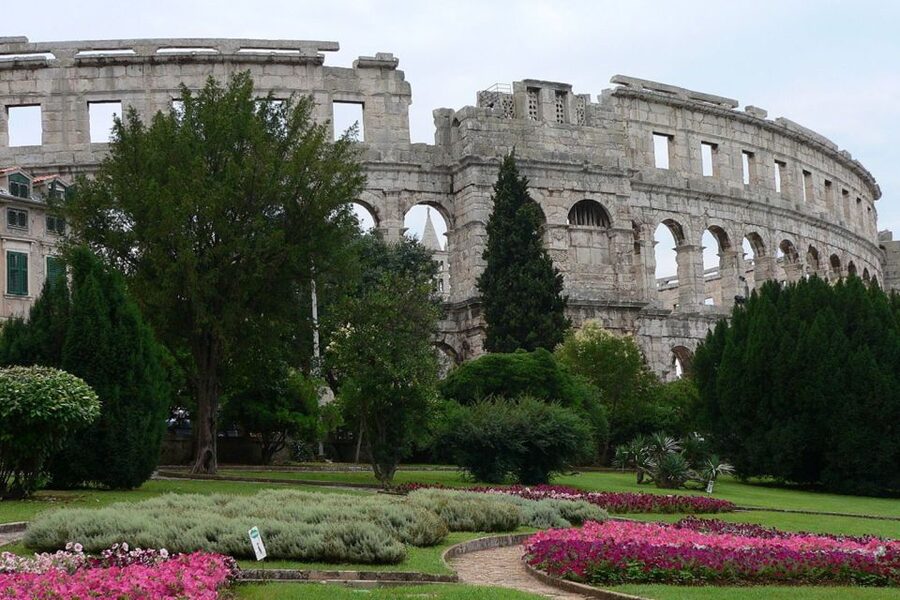
The amphitheatre is where your attention should go first. Marina meets you at the start of the experience and explains what the Arena was built and used for, and that framing goes beyond the usual gladiator-only headlines.
Here is why that approach is valuable: when you understand the purpose of a place, the details stop being decorative. You start reading the building like a system. Even if you only look from outside, you can connect what you see to how crowds, events, and civic life would have worked.
Can you go inside? Yes, and this is one of the most useful flex points. The experience can include a choice to visit the amphitheatre, and entrance fees are not included. That means you decide based on your interests and your budget. If you want pure context and photos without extra tickets, you can still get a lot. If you want the full look inside, you can add it.
Twin, Hercules, and Sergii gates: real stone stories, not textbook names
After the amphitheatre, the route naturally leads you into older parts of the city. A standout stop is the set of Roman gates that are still standing today: Twin, Hercules, and Sergii.
These names might sound like trivia, but Marina treats them like entry points into how the city organized power, movement, and identity. She points out beautifully preserved details, then explains the story behind them. That combination is what makes this part work. You are not just reading signs. You are learning how to look.
Why gates matter on a walking tour: they are practical. You can feel how a city funnelled people through specific points. It is also an easy way to break up the walk with architecture you can compare, because each gate gives a different angle and different visual cues.
If you like photography, these are good spots. Even without planning shots, you will naturally get better compositions by pausing at each gate, since the streets and lines of sight change as you move.
A few more Pula trips to weigh up
- Olive Oil Guided Tasting and History in Pula
★ 4.5 · 34 reviews - Dubrovnik Old Town History Walking Tour
★ 5.0 · 1,684 reviews - Zagreb: City & History Walking Tour & WW2 Tunnels
★ 4.9 · 1,202 reviews - Walking Tour of Split with a ‘Magister’ of History
★ 5.0 · 1,122 reviews
Forum square: from Roman civic center to today’s market rhythm
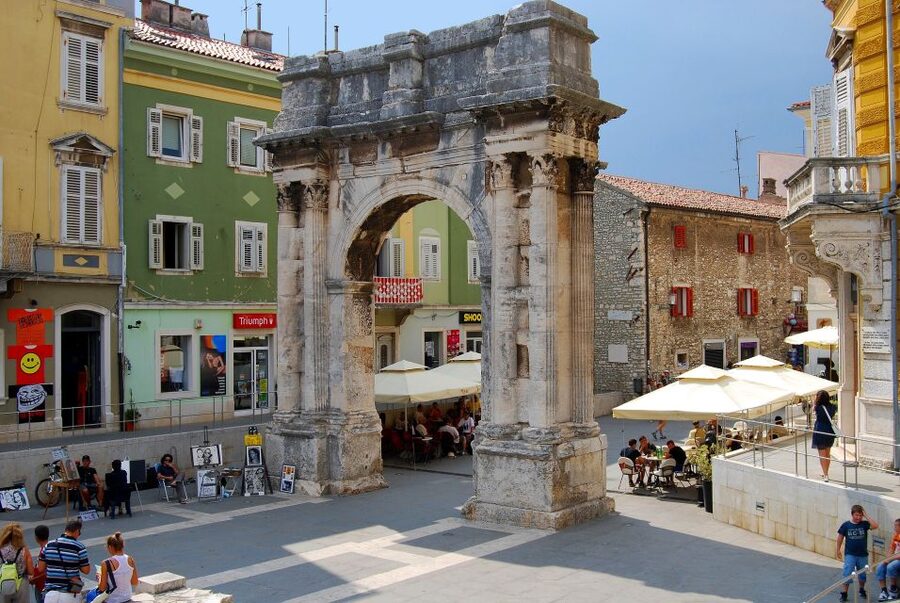
Then you head to Forum square, and this is where the tour quietly becomes more than Roman sightseeing.
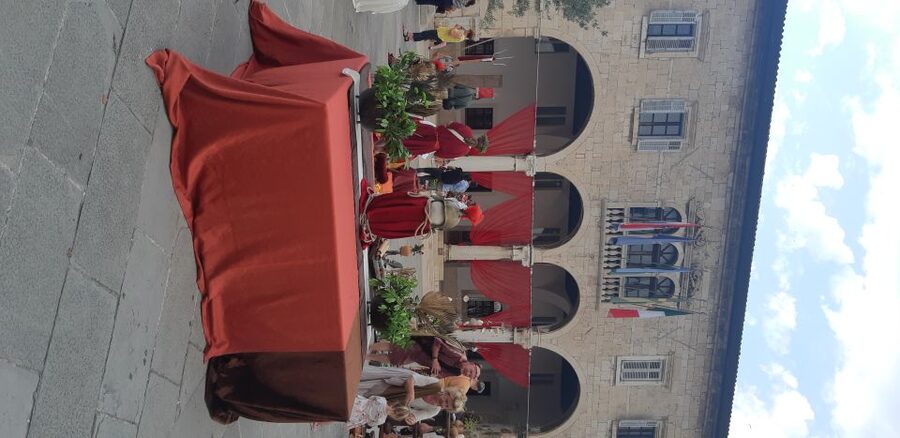
Marina explains that this square was the Roman version of what you recognize today as a market. That matters because it connects time periods through daily life. The Forum was not just symbolism. It was the heart of Roman civic energy, where commerce and public life overlapped.
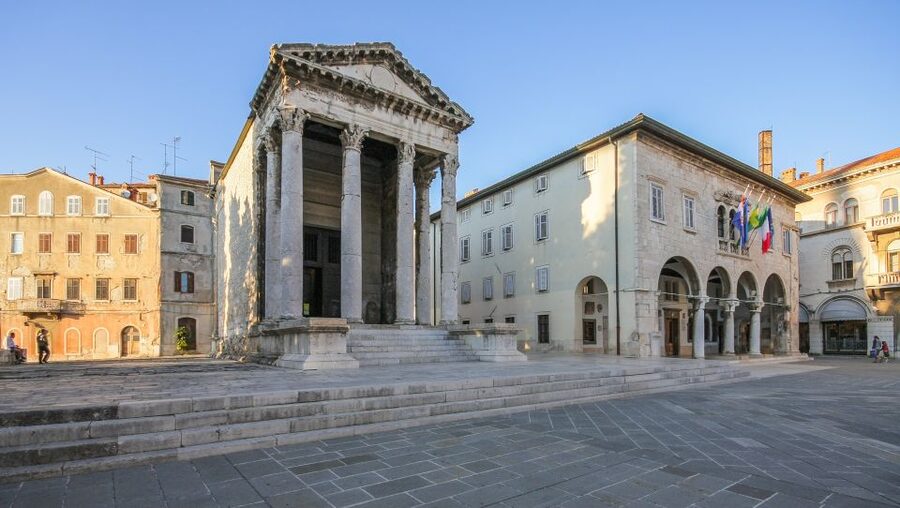
And you will also see remains tied to key eras. The tour includes the August temple remains and also the Venetian city hall, which gives you a clear signal that Pula did not stop being important after the Romans.
One of the most fun details comes right here. Marina explains why there is a goat on the regional flag. You do not need to know local symbolism ahead of time. This kind of story is exactly what turns a quick glance at a flag into something you remember.
The farmer’s market stop: local culture you can actually point to
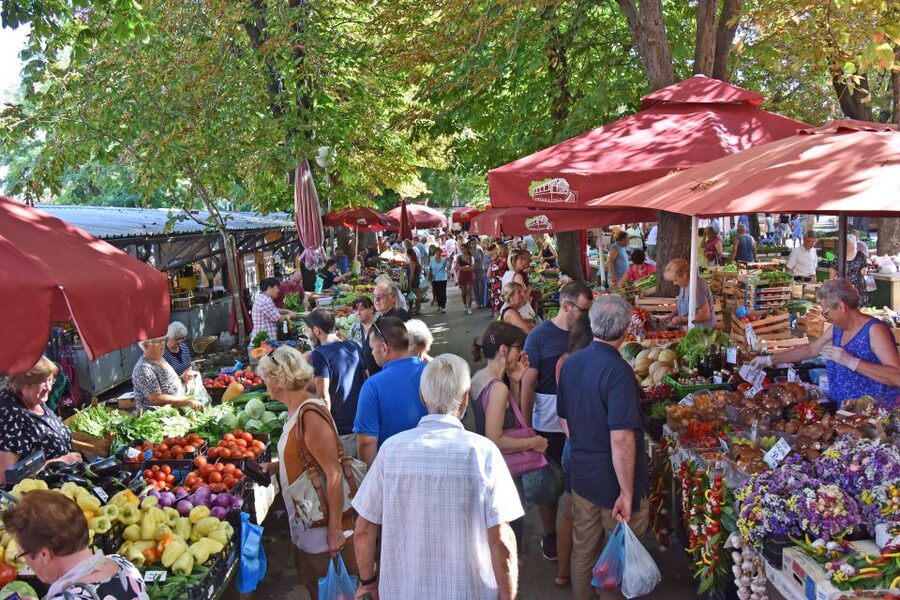
Foodies and culture lovers should pay attention here. The tour includes a stop at the Pula farmer’s market, described as the place where locals buy and sell products native to Istrian soil.
Even if you do not plan to shop heavily, you still get value from watching how people interact with ingredients and sellers. A market is a living classroom. It shows what a region grows, values, and treats as part of daily normal life.
Marina is a foodie and a passionate cook, so this part of the walk is not just a quick photo stop. She can connect what you see in the market with broader Istrian culture and the idea of tradition meeting modern city life.
If you tend to rush through markets on your own, a guided visit helps because you learn what to notice. If you like asking questions, this is also a natural place to do it.
How the route stays “only” 90 minutes to 2 hours
This is a short walking tour. That sounds limiting until you realize it is also protective of your trip energy.
The duration is 90 minutes to 2 hours, so you can fit it into an afternoon without losing half your day. It also helps you combine it with other Pula plans. Since you start at the amphitheatre and then move through central historic areas, you will likely be well positioned for further exploring afterward.
Pace notes that matter:
- The route is designed around monuments you can cover on foot without constant transit time
- There is an option to include the amphitheatre visit, which can affect timing
- Small details matter here, so you will pause often enough to learn, not just pass by
If you prefer a very slow walk where you linger for 30 minutes at one spot, you might still enjoy it, but you will likely move at a guided rhythm. This is a guided overview, not a full day excavation.
Group size, questions, and a guide who can adapt
What makes the experience feel worth the price is the guide’s flexibility. Marina can tailor what you focus on, whether that is local lifestyle, culture, nature, or food.
It also helps that she is open for questions. On a city tour, questions are half the fun. If you want to ask about everyday life in Istria, how symbols work, or what you are seeing in the Roman stones, this format encourages that back-and-forth.
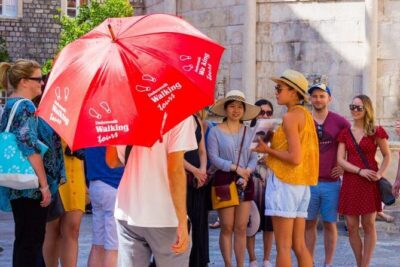
The tour can work well in small groups. One example from recent bookings included a small group size (7 people) and even a friendly child along for the walk. That tells you the tour does not require a strict, stiff museum vibe to run smoothly.
And because it is German-language, you avoid the classic problem where you stand there listening to a language you half understand. Clarity keeps the stories fun.
Price value: $29 for a focused, story-led walk
At $29 per person for about 1.5 hours, this tour is positioned as a value option for travelers who want structure without expensive add-ons.
Here is how I think about it:
- You are paying for a licensed guide and a curated walking route
- You are getting a blend of Roman landmarks and lived-in local culture
- Entrance fees are separate, but the guide still gives you context so you are not left guessing
If you plan to visit the amphitheatre interior, budget a little extra for tickets. If you do not, you still get a solid sweep and enough explanation to make the streets feel less random.
Given that the experience has an average rating of 4.8 from 214 reviews, it is also a reasonable bet for first-time Pula visitors who want a dependable guide-led introduction.
Wheelchair accessible and private group options
The tour is listed as wheelchair accessible, which is a big deal for a historic walking route. You should still expect some cobblestones or uneven paving common in older city areas, but the activity is positioned as usable for wheelchair travelers.
If you want more control over the pacing and topics, a private group option is available. That is especially handy if you travel as a family, as a couple who wants extra time at a specific stop, or as a small group with shared interests (food, photography, architecture, or symbolism).
Should you book Marina’s Pula walking tour?
I would book this if you want an easy, guided way to understand Pula fast. The route hits the big Roman moments you came for, but it also adds everyday Istrian flavor through a farmer’s market stop. Marina’s strength is connecting details to meaning, not reciting dates.
You might skip it or reconsider if:
- You already have a deep Roman archaeology focus and want longer, more museum-heavy time
- You plan to see only a couple of sites and would rather go fully on your own
For most visitors, especially first-time travelers to Pula, this is a smart use of time. It is short, flexible, German-led, and designed to make you look at the city with better questions in your head.
FAQ
Where does the tour meet?
You meet at the amphitheatre entrance, Am Eingang in Arena, unter dem Holzdach.
How long is the walking tour?
It runs for about 90 minutes to 2 hours.
What language is the guide?
The live tour guide speaks German.
Are entrance fees included for the amphitheatre?
No. Entrance fees are not included.
Is the tour wheelchair accessible?
Yes, the tour is listed as wheelchair accessible.
Can I pay later or cancel for a refund?
Yes. You can reserve and pay later, and you can cancel up to 24 hours in advance for a full refund.
Newest Pula reviews on the site
- SUP Yoga in Stunning Stoja Bay: Balance, Breath & Connect★ 5.0 · 14 reviews
- From Fažana: snorkeling at sea cave and Brijuni Island★ 4.8 · 49 reviews
- Rent a boat up to 6 person on Cape Kamenjak Nature Park★ 4.8 · 76 reviews
- Fažana: Guided Buggy Tour in the Heart of Istria★ 4.8 · 109 reviews
- Pula:Sunset Tour By Clear Kayak,Cave,Swim & Cliff Jumping★ 4.9 · 35 reviews
- Pula: Swimming & snorkeling Boat Tour★ 3.4 · 7 reviews
- Pula: Sunset/Night Illuminated Transparent Kayak Tour★ 4.9 · 126 reviews
- Pula: Your Custom Private Half-Day Sailing Adventure★ 5.0 · 4 reviews
Historical Tours, compared.
Walking Tour of Split with a ‘Magister’ of History
Read our review →
Split History and Gastro Small-Group Tour with Food and Drinks
Read our review →Browse the lists this tour appears in