
Review · HISTORICAL TOURS
Pula: Historic Sites Private Walking Tour
Pula’s layers are right under your feet. This private walking tour stitches together the Arena, Venetian-era castle viewpoints, and the Roman Forum sites so you understand what you are seeing instead of just passing by. I especially like the way the guide focuses on the big set pieces, and the small Roman traces you would otherwise miss. One consideration: the route includes some steep sections, so it may be a lot if you are sensitive to hills or stairs.
You also get a real logic to the walk, from major monuments to calmer spots like the market, then back to classic city gates. I like the fact that you can start right at the Amphitheater and choose whether to go inside, with entry tickets handled separately. The potential drawback is that entry is not included, so you will need to budget a little extra if you want to see the Arena interior.
Good news for planning: this tour runs rain or shine, and it is priced per group, which can make it a strong value if you travel with others who want expert context. Final note, there is a wording conflict on mobility, so if that is a concern, you should check before booking.
In This Review
- Key highlights worth caring about
- Starting at the Pula Arena, where the story actually begins
- What I’d watch for at the Arena
- From Venetian walls to real city views at Pula Castle
- A practical tip for the climb
- Cathedral to Roman Forum: turning landmarks into meaning
- Why the Cathedral stop matters
- Augustus Temple and City Hall: the Forum’s core trio
- Arch of Sergii: a quick stop with big payoff
- Roman mosaics, hidden traces, and how the guide keeps you moving
- The bathroom factor, handled like a real pro
- Pula Market: early-1900s local life in the middle of Roman power
- Gate of Hercules and the Twin Gate finish: wrapping the city with context
- Drop-off locations near Carrarina Street
- Price and group value, without the usual tourist math
- Who this tour is ideal for
- How to get the most from your 2-hour walk
- Should you book this Pula Historic Sites Private Walking Tour?
- FAQ
- How long is the Pula historic sites private walking tour?
- Where do I meet the guide?
- Are entry tickets included for the Amphitheater?
- What languages is the tour offered in?
- Is the tour wheelchair accessible?
- Does the tour run in bad weather?
Key highlights worth caring about
- Skip-the-line entry option at the Pula Amphitheater, if you want to go inside
- Panoramic views from Pula Castle, built in the 17th century by the Venetians
- Roman Forum focus with stops at the Augustus Temple and City Hall
- Real 2,000-year-old temple moment, the kind you can actually picture after the guide explains it
- Arch of Sergii and other Roman remnants that link the whole area together
- Pula Market with local flavor, established in the early 1900s
Starting at the Pula Arena, where the story actually begins
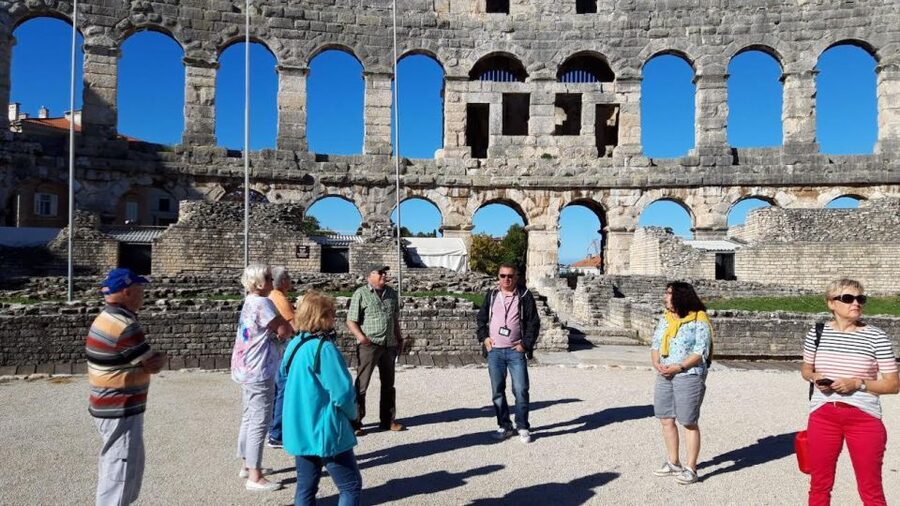
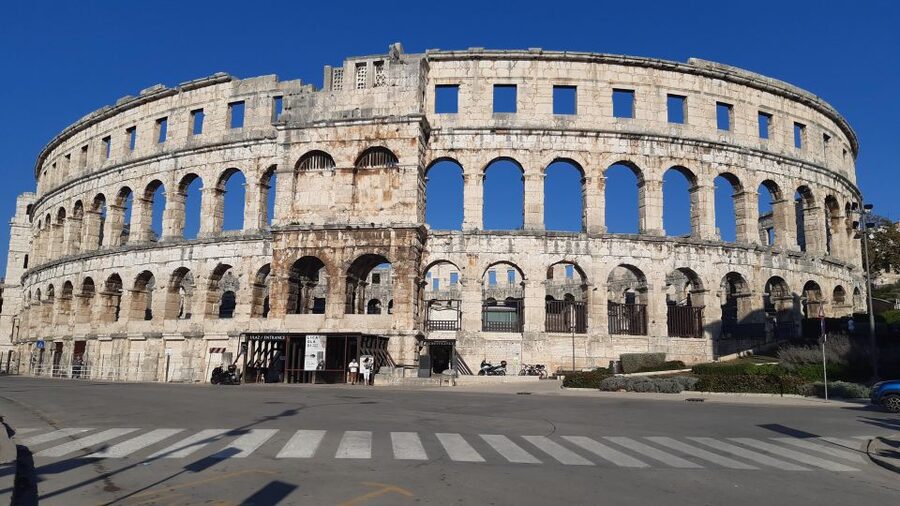
Your tour starts in front of the Amphitheater entrance, at Istarska ul. 50. Look for your guide with a blue card around their neck and an umbrella, which is handy because this runs rain or shine. Right away, you get the kind of orientation that makes the rest of Pula click: what the Arena was built for, how it worked in Roman times, and why it is still such a powerful landmark.
If you want to go inside, you can. The entry tickets are not included, so you pay on the spot, and the tour includes the benefit of skipping the ticket line. That matters here because big monuments can turn into time sinks. With a guide leading, you spend your limited time understanding what you are looking at, not queuing.
A few more Croatia trips to weigh up
- Dubrovnik Old Town History Walking Tour
★ 5.0 · 1,684 reviews - Zagreb: City & History Walking Tour & WW2 Tunnels
★ 4.9 · 1,202 reviews - Walking Tour of Split with a ‘Magister’ of History
★ 5.0 · 1,122 reviews
What I’d watch for at the Arena
The Arena is more than a photo stop. After the first explanation, you will likely notice how the building dominates the space around it and how it sets the tone for everything else you will see, from nearby Roman structures to later layers that used the same urban “stage.”
From Venetian walls to real city views at Pula Castle
After the Arena, you move toward Pula Castle. This is where you trade dense Roman detail for a bigger perspective. The castle dates to the 17th century and was built by the Venetians, so it is a reminder that Pula’s story did not end with Rome. Your guide connects that dot for you, including who lived here before and how the site evolved.
Expect viewpoint time. Castle areas are not just about standing still and taking pictures. They help you understand distance and layout. You can see how the old core of town relates to where people built later, and why certain buildings were placed where they were.
A practical tip for the climb
Some parts of this walk can be steep, and one of the best points from a recent guest experience is that the guide pays close attention to who can handle the incline and suggests alternatives when needed. If you know hills are an issue for you, tell the guide at the start. This is exactly the kind of situation where a human guide can improve your day.
More walking tours in Croatia:
- Dubrovnik: Old Town Walking Tour
★ 4.8 · 5,174 reviews - Split: Old Town and Diocletian Palace Walking Tour
★ 4.9 · 4,727 reviews - Dubrovnik Discovery Old Town Walking Tour
★ 5.0 · 4,458 reviews - Walking Tour of Split and Diocletian’s Palace
★ 5.0 · 2,588 reviews
Cathedral to Roman Forum: turning landmarks into meaning
From Pula Castle, the tour continues to the Cathedral and then into the Roman Forum area. This is the section where you go from “Wow, old buildings” to “Now I know what each building was doing.” The Forum stops are not random. They form a tight set of civic and religious signals from Roman life.
Your guide also points out Roman mosaics along the way. That is one of those details you can easily walk past without context, so I love that the tour builds in time to notice them rather than rushing forward.
Why the Cathedral stop matters
The Cathedral stop works as a bridge. You go from Venetian-era and medieval layers back into Roman civic space. It helps you read Pula like a timeline, not like separate sightseeing errands.
Augustus Temple and City Hall: the Forum’s core trio
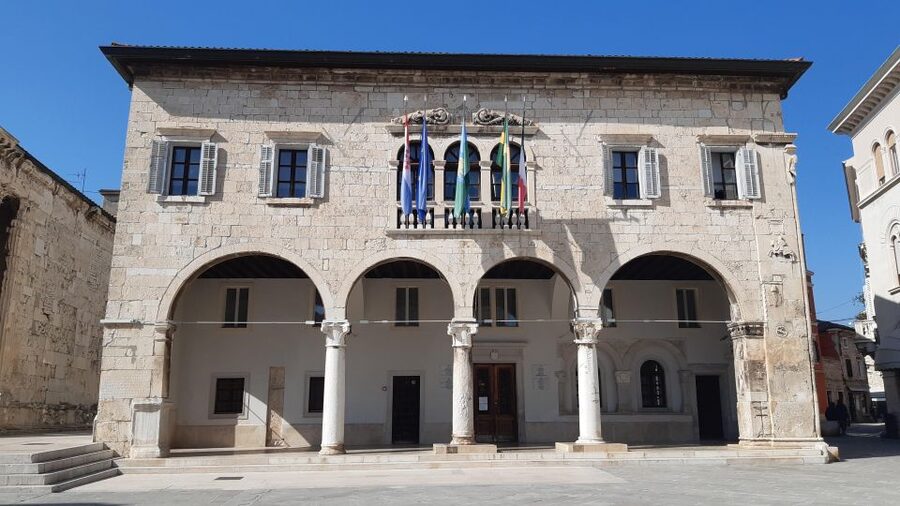
The Roman Forum portion includes the Augustus Temple and City Hall. These are the names people remember, but the value of a guided walk is what happens around the names: you learn what the space represented, why Augustus mattered so much in Roman public life, and how civic authority was displayed in architecture.
One of the listed highlights is a 2,000-year-old temple, and this is where that age becomes real. After your guide’s explanation, you can look at the stones with a stronger mental image of what the Romans expected people to feel in that setting.
Arch of Sergii: a quick stop with big payoff
You also visit the Arch of Sergii. It can be tempting to treat arches as background, since you can glance at them quickly. Instead, the guide connects the arch to the broader Roman plan so you understand where it fits in the “walkable stage” of the Forum.
Roman mosaics, hidden traces, and how the guide keeps you moving
Pula’s Roman footprint is not just the obvious monuments. The tour is designed around uncovering hidden Roman traces, and that is one of the most satisfying aspects of the experience. You are not only ticking off major sights. You are learning how the Roman layout shows up again and again, even in smaller features.
The walking pace is planned around a total duration of about 2 hours. That time pressure can work for you if you like efficient tours. You get a lot of interpretation without getting stuck on any one stop for too long.
The bathroom factor, handled like a real pro
A small detail that made a big impression in guest feedback: the guide was attentive to the group, including pointing out where you could use the bathroom when possible. On a short tour, that kind of planning reduces stress. You stay focused on the sights instead of managing discomfort on your own.
Pula Market: early-1900s local life in the middle of Roman power
Next up is the Pula Market, established in the early 1900s. This is a smart pivot point. The Roman sites are impressive, but a city feels real when you connect the past to everyday life. The market stop gives you that connection.
Here, you are not expected to do a shopping sprint. Think of it as a chance to reset your brain. You have been surrounded by architecture for a while, now you see how people actually use the space today.
If you like to understand how old cities function, a market stop is a good sign. It hints at the continuity of urban life, even when the monuments are the headline.
Gate of Hercules and the Twin Gate finish: wrapping the city with context
The tour continues to the Gate of Hercules, then finishes at the Twin Gate. City gates are more than entrances. They tell you how a place controlled movement, shaped neighborhood identity, and framed what the city expected visitors and locals to experience.
With the guide’s context, these gates feel like the last chapter of the walk, not just an ending point. You can look back and connect the Roman civic core to the later way Pula organized itself around key passages.
Drop-off locations near Carrarina Street
You end with drop-off at two locations on Carrarina ul. 8 in Pula. That is useful if you are continuing on foot, grabbing lunch nearby, or heading to your next plan without needing to find a meeting point again.
Price and group value, without the usual tourist math
The tour is $136 per group, for a group size up to 49, and it lasts about 2 hours. Because it is priced per group rather than strictly per person, the value can be strong if you travel with others who want a guided walkthrough of multiple key monuments.
Entry tickets are not included, so you should treat the Amphitheater interior as optional extra cost. The “skip the ticket line” benefit helps protect your time, which is a big deal on a short tour.
Bottom line: if you want a guided, interpretation-heavy loop across the Arena, Forum, castle viewpoints, and gates, this format is built for efficiency. If you prefer to wander slowly without structured stops, then a private guide might feel like too much structure for you.
Who this tour is ideal for
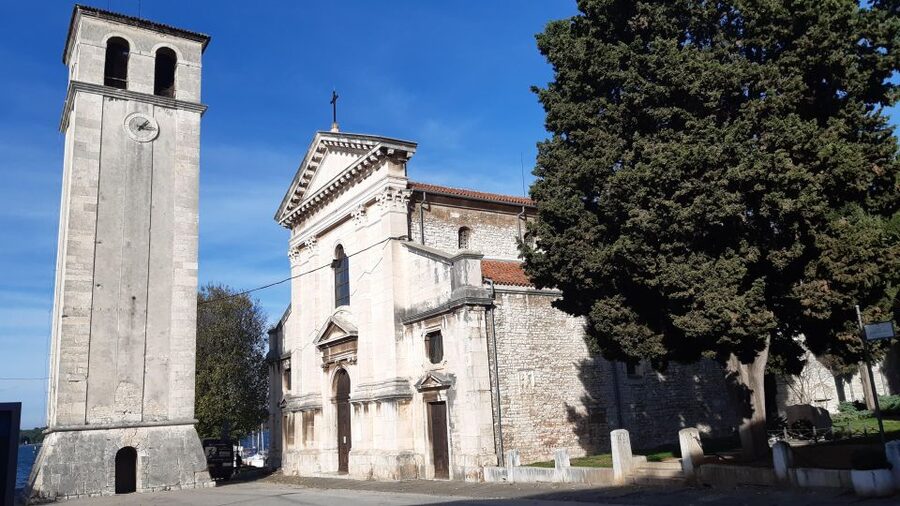
This tour is a great fit if you:
- Want expert context across Roman and later layers, without hiring multiple guides
- Like a structured walk that hits major monuments plus Roman details like mosaics and smaller traces
- Travel with friends or family who appreciate a guide checking on comfort and pacing
It can be a weaker fit if:
- You know you struggle with steep walking sections
- You have significant mobility needs, because the tour is listed as both wheelchair accessible and not suitable for people with mobility impairments. That contradiction is your cue to confirm specifics with the provider before you book.
How to get the most from your 2-hour walk
Because the duration is short, prep matters. Wear comfortable shoes for a walking route with some slopes. Bring water if you run hot easily, especially on non-rain days. If you have any concerns about steps or stamina, tell your guide early so they can suggest practical alternatives.
Also, decide at the start whether you want to go inside the Arena. With the skip-the-line advantage, you are less likely to lose time, but it still may add a bit of cost, since tickets are extra.
Should you book this Pula Historic Sites Private Walking Tour?
Book it if you want the highest return on a tight schedule: Arena, castle viewpoints, Cathedral, the Roman Forum with the Augustus Temple and City Hall, mosaics, Arch of Sergii, Pula Market, Gate of Hercules, and the Twin Gate, all guided with explanations that help you see connections instead of isolated sights.
Skip it or confirm first if mobility is a concern for you, since the tour is flagged both as wheelchair accessible and as not suitable for people with mobility impairments. And if you are the type who enjoys quiet self-guided wandering, you may prefer a less structured approach.
FAQ
How long is the Pula historic sites private walking tour?
It lasts about 2 hours.
Where do I meet the guide?
Meet in front of the Amphitheater entrance. The guide will have a blue card around their neck and hold an umbrella.
Are entry tickets included for the Amphitheater?
No, entry tickets are not included. You can pay for tickets on the spot if you want to go inside, and the tour can help you skip the ticket line.
What languages is the tour offered in?
The live tour guide is available in English and German.
Is the tour wheelchair accessible?
The activity notes it is wheelchair accessible, but it also states it is not suitable for people with mobility impairments. If you have mobility needs, confirm details with the provider before booking.
Does the tour run in bad weather?
Yes, it takes place rain or shine.
Newest Croatia reviews on the site
- Krka National Park – Private Excursion from Dubrovnik with Mercedes Vehicle★ 5.0 · 4 reviews
- Private Boat Tours Dubrovnik to island Korcula★ 5.0 · 4 reviews
- Korcula, Ston, Wine Tasting and Lunch – Tour from Dubrovnik★ 5.0 · 3 reviews
- Montenegro Kotor Bay with Boat Ride to The Lady of the Rock★ 4.5 · 46 reviews
- Korčula & Ston: Island Charms, Pelješac Delights & Wine Tasting★ 4.0 · 6 reviews
- Korcula Private Tour★ 5.0 · 4 reviews
- Korcula Private Tour from Dubrovnik★ 5.0 · 9 reviews
- Korcula & Peljesac Full Day Private Tour from Dubrovnik★ 5.0 · 15 reviews
Historical Tours, compared.
Walking Tour of Split with a ‘Magister’ of History
Read our review →

Split History and Gastro Small-Group Tour with Food and Drinks
Read our review →Browse the lists this tour appears in