
Review · HISTORICAL TOURS
Walking Tour of Split with a ‘Magister’ of History
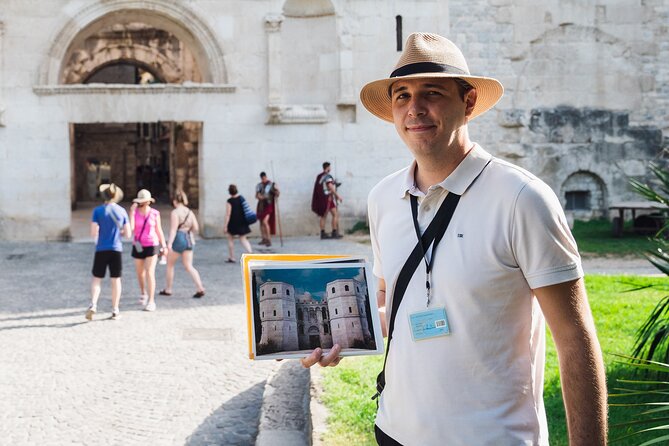
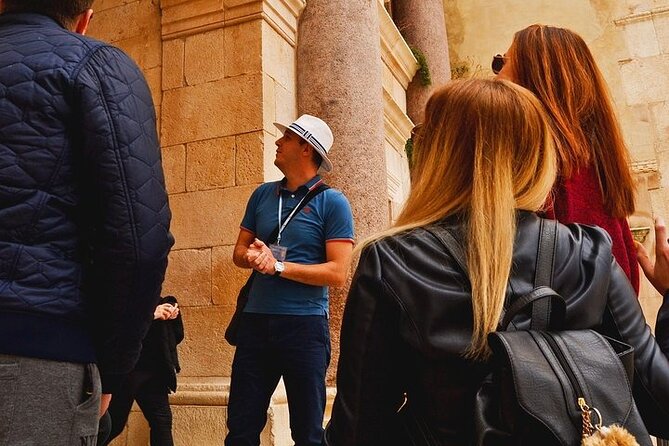
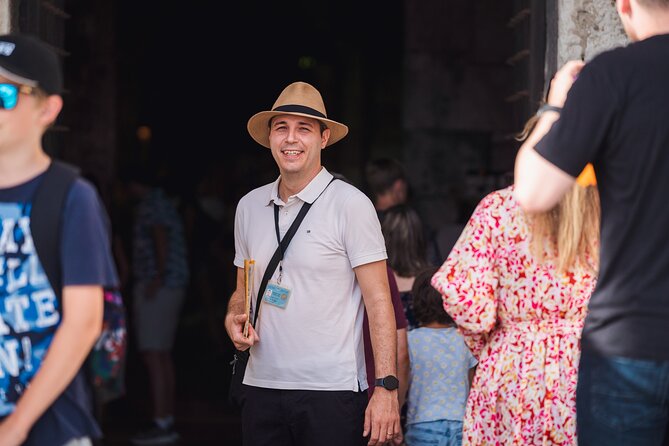
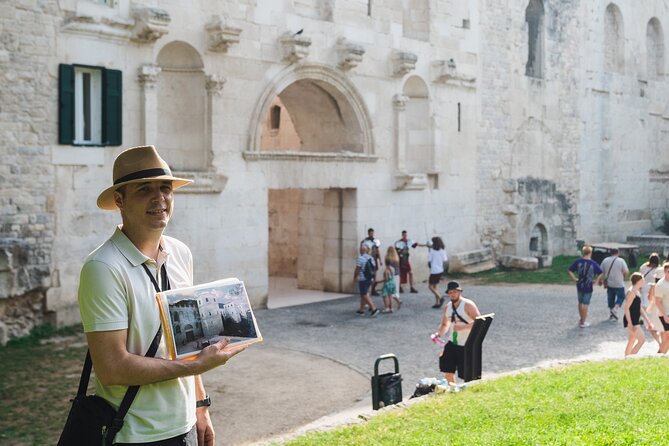
Split makes history feel close. In 1 hour 40 minutes to 1 hour 50 minutes, Toni Šare (owner of DiocleSpot Tours) leads a small group through the living shell of Diocletian’s Palace, using 3D reconstructions so you can actually picture what you are looking at. You also get the payoff of seeing how today’s city life sits right on top of Roman stone, not behind it.
I love two things most: the 3D reconstructions that turn scattered remains into a clear timeline, and the way Toni threads local culture through architecture, including a chance to catch traditional singing when the timing works out. A group max of 18 keeps it interactive, so you can ask follow-up questions without losing the thread.
One fair heads-up: this is an outdoor, sites-from-the-street style tour. You won’t enter museums or paid attractions, so if you want indoor exhibits and long ticket lines, you’ll need to plan extra stops on your own or choose a different add-on.
In This Review
- Key highlights in plain language
- Why Toni Šare’s Split walk is worth your time
- Price and value for a 1.5-hour history-focused tour
- Your best mental game plan before you meet at Brass Gate
- Stop 1: Riva Harbor sets the stage with Palace walls in view
- Stop 2: Peristyle of Diocletian’s Palace, where the ruins become a square
- Stop 3: Cathedral of Saint Domnius (Mausoleum) without going inside
- Stop 4: Temple of Jupiter, best preserved late-Roman views
- Stop 5: Eastern (Silver) Gate gives you the palace in a single frame
- Stop 6: Grgur Ninski Statue, language and identity in stone
- Stop 7: Vestibulum of Diocletian’s Palace and the private-residence remains
- Palaces on the route, plus Game of Thrones filming places if you want them
- Stop 8: Golden Gate, the palace’s most decorated entrance
- City Museum courtyard and the Venetian palaces connection
- Stop 9: Old Town Hall on Piazza (Narodni trg), where your exploration can start
- What to bring, and how to get the most out of the walking pace
- Best fit: who will love this tour most
- Should you book this Split walk with Toni Šare?
Key highlights in plain language
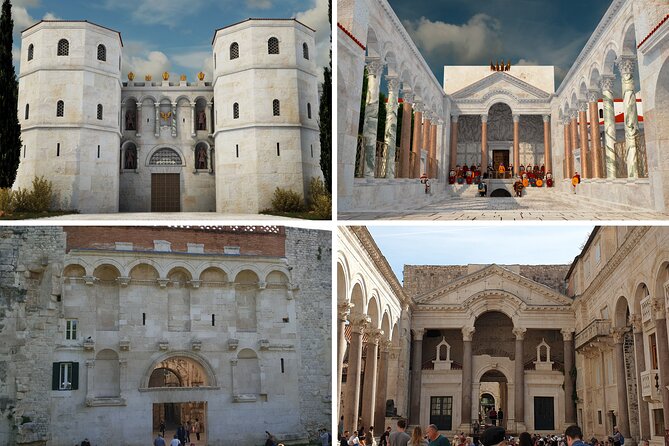
- 3D reconstructions that help you see what Diocletian’s Palace looked like at its height
- Small group size (max 18) for better questions and less rushing
- Roman to Renaissance route without needing to buy museum tickets
- Cathedral and late-Roman temple views explained from the outside
- Game of Thrones filming locations in Split, plus a pass by a fan shop if you want it
- Easy finish at Narodni trg (Pjaca) so you can branch out fast
Why Toni Šare’s Split walk is worth your time
Split has a special problem for visitors: the city looks old, but most guidebooks can’t explain how the layers fit together. Toni Šare’s approach fixes that by showing you what is original, what got reused, and what changed as power and faith shifted over centuries.
This works because you walk the palace like a map in your feet. You start at the outside edge, then move through the palace’s main spaces, key gates, and standout monuments, with context at every step. The pacing also makes it easier to notice fine details you might otherwise miss, like how Roman structure becomes medieval defense.
More History Tours in Split
- Split Walking Tour with Professor of History
★ 5.0 · 926 reviews - Split: History and Heritage Walking Tour
★ 4.9 · 650 reviews - Split History and Gastro Small-Group Tour with Food and Drinks
★ 5.0 · 375 reviews
Price and value for a 1.5-hour history-focused tour
At about $34.83 per person for roughly 1 hour 40 minutes to 1 hour 50 minutes, the cost can feel high until you think about what you get. You are paying for guided interpretation of multiple major sites in one hit, plus the included 3D reconstructions that help you understand the palace beyond what your eyes can infer.
You are also not paying for lots of admissions during the walk. Most stops are marked as free, and you are intentionally not entering museums or paid sites, which keeps the experience moving. If you plan to spend time figuring out things on your own anyway, the guide time is often the best use of your limited days in Split.
Your best mental game plan before you meet at Brass Gate
You start at Brass Gate (Porta Aenea), right on the harbor side, and you end at Narodni trg (Pjaca), Split’s main square. That start-to-finish flow matters because it lines up with how you will naturally explore afterward, instead of sending you back to where you began.
I recommend you arrive a few minutes early and set expectations: this is a walking architecture and interpretation tour. Wear comfortable shoes, keep an eye on weather, and plan to take in details, not just pose for photos.
Also, the tour runs in English, and the group size max is 18, which is a sweet spot for asking questions. If you are traveling with family, or you just want to get oriented without a long day, this format tends to work.
Stop 1: Riva Harbor sets the stage with Palace walls in view
Your walk begins at Riva Harbor, the local Riviera. It is a smart first stop because it frames the biggest idea of the whole experience: Diocletian’s Palace is not an isolated ruin, it is the foundation of Split’s city center.
From here, you get a clear look at the southern wall of the palace. Toni also uses graphic and model representations to introduce what you will see inside the palace complex, which means the rest of the walk starts with a mental picture instead of a blank slate.
This stop is about 15 minutes and listed as free. The downside is simple: if you hate waterfront walks, you might have preferred to start deeper in the palace, but the harbor view makes the palace make sense fast.
More Walking Tours in Split
- Split: Old Town and Diocletian Palace Walking Tour
★ 4.9 · 4,727 reviews - Walking Tour of Split and Diocletian’s Palace
★ 5.0 · 2,588 reviews - Krka Waterfalls tour with Trogir Walking tour and Krka panoramic boat cruise
★ 5.0 · 1,659 reviews - Split & Diocletian’s Palace Walking Tour
★ 5.0 · 1,125 reviews
Stop 2: Peristyle of Diocletian’s Palace, where the ruins become a square
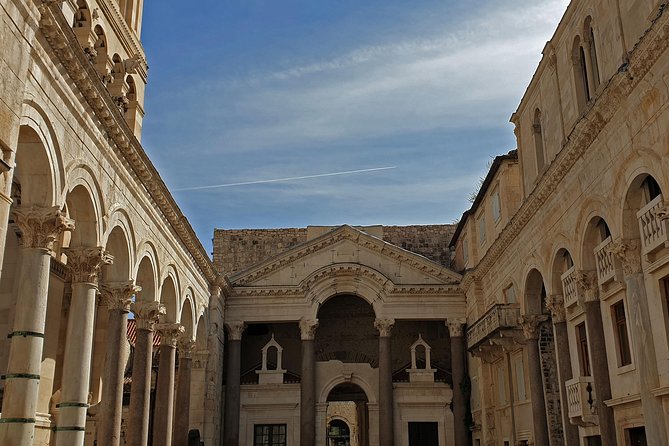
Next comes the Peristyle, the central square of Diocletian’s Palace and one of Split’s key public spaces. If you only know Split for the obvious Roman stars, this stop helps you see the palace as a designed environment, not just a collection of stones.
You will see Roman structures that are remarkably preserved, and Toni brings in 3D reconstructions to show how the decorations and buildings looked when more of the complex was intact. That is the “click” moment for many visitors, because the present-day layout suddenly becomes a timeline you can follow.
This is around 10 minutes, and admission is free. The main consideration is that you are standing in an open square, so in strong sun you will want to keep moving and not get stuck waiting for the group to catch up.
Stop 3: Cathedral of Saint Domnius (Mausoleum) without going inside
The Cathedral of Saint Domnius is one of the best-preserved Roman structures in Split, and it is still in active use today. Toni explains how the emperor Diocletian’s mausoleum was adapted into a Christian cathedral, including how the bell tower fits into the story.
Even though you will not enter inside, you still get the essential meaning. This is exactly the kind of stop that rewards attentive viewing: you are looking at the architecture while the guide narrates the conversion of purpose over time.
This stop is about 10 minutes. Admission for the site is listed as not included, but the tour plan is to explain what you need to know without entering. If you personally love interior details, you may want to add a cathedral visit later.
Stop 4: Temple of Jupiter, best preserved late-Roman views
The so-called Temple of Jupiter is among the best-preserved late-Roman temples in the world, at least by the standards of what remains around the globe. Toni keeps you outside and uses the exterior to point out anomalies and what he calls construction mistakes the Romans made.
That angle is refreshing. Instead of treating the building like a flawless textbook, you learn to notice the human side of construction and design choices. This helps you read the building more intelligently, even after you leave the tour.
Expect around 15 minutes, with admission listed as not included. Practically, you should keep your expectations on the view and explanation from outside, not a full interior walkthrough.
Stop 5: Eastern (Silver) Gate gives you the palace in a single frame
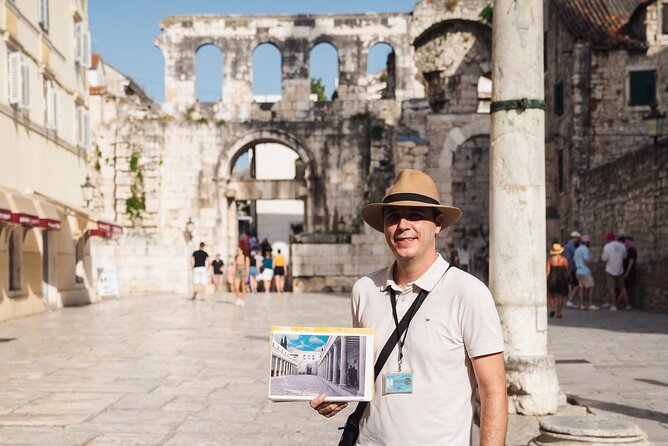
At the Eastern (Silver) Gate, you get one of the strongest “wraparound” perspectives of Diocletian’s Palace. You can see the cathedral area on one side, the Silver Gate on the other, and below you, the only preserved part of the original road.
This is where I like to slow down, because the visuals teach you the geometry of the place. Once you understand the gates and lines, the rest of the alleyway maze becomes less confusing.
The stop is short, about 5 minutes, and admission is free. The only drawback is that it’s quick, so if you are the type who loves lingering in photos, you will have to balance that with the group pace.
Stop 6: Grgur Ninski Statue, language and identity in stone
The Grgur Ninski Statue is one of Split’s most recognizable landmarks, and Toni uses it as a cultural pivot point. You learn what the statue represents and why it matters for Croatian language and early medieval culture.
It is a reminder that history in Split is not only Roman masonry. It also includes identity, language, and political shifts that shaped who people were trying to be.
This is about 5 minutes with free admission. The consideration here is that if you are tired from earlier walking, it is still quick, but you will want to take it in fully because Toni ties it to what you will see next.
Stop 7: Vestibulum of Diocletian’s Palace and the private-residence remains
Now you move into the Vestibulum of Diocletian’s Palace, the ancient entrance to the emperor’s private residence. Toni then takes you around the remains of Diocletian’s personal spaces, giving you the difference between grand public-looking areas and the more controlled, private side of the palace.
This is around 10 minutes and admission is free. The benefit is that it breaks the pattern of only seeing big monuments. You start to understand how the palace was organized, not just what its highlights were.
If you enjoy architecture cues, look for how entrances and transitions work in the layout. Those clues help you “read” the palace long after the tour ends.
Palaces on the route, plus Game of Thrones filming places if you want them
As you walk through the palace complex, you pass the various palaces of noble families. You get explanations for how the Roman framework was reused, and how later periods brought their own style and priorities to the space.
Toni also likes to add connections to Venetian history, since those types of noble palaces showed up during Venetian influence in the region. Even if you do not know Venetian history well, the way the building style changes makes the idea easy to grasp.
If your group is interested, Toni can point out Game of Thrones filming locations in Split, and you will pass by a fan shop. This is a great option if you want pop culture as a hook, then use it to stay curious about the real places behind the scenes. Just remember it is still a history-first walk, so don’t expect a full entertainment tour.
Stop 8: Golden Gate, the palace’s most decorated entrance
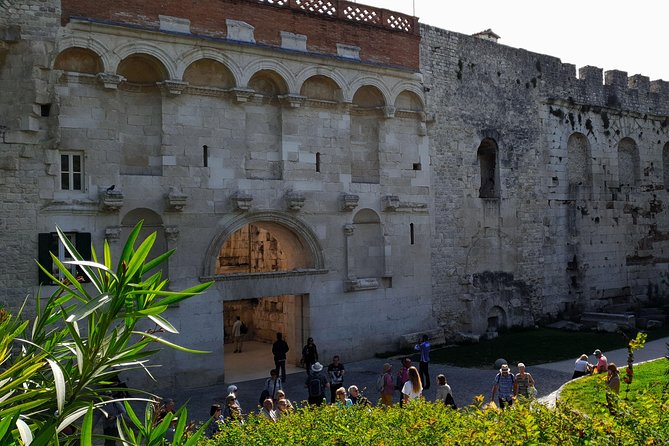
The Golden Gate is the main entrance to the palace and the most preserved of the four entrances. It is also the most decorated, and you will feel the difference instantly when you see it in person.
Toni connects the gate to defense logic too. From this spot, you can see the northern wall and understand how the medieval city used Roman-made structures for protection, then removed what it no longer needed. That reuse story is one of Split’s defining themes, and this stop sums it up well.
This part takes about 15 minutes and is free. If you are traveling in high season, you may share the space with other visitors, but the explanation keeps you from getting swept into the “photo only” crowd mode.
City Museum courtyard and the Venetian palaces connection
Right near the end, the tour touches the City Museum of Split setting, located in a well-preserved renaissance noble palace. You do not enter the museum itself, but you do go into its courtyard to see the renaissance palace setting from inside the walls.
This stop is valuable because it gives you a contrast. Up to now, the palace framework has been the main stage. Here, you see how later wealthy occupants shaped the look and feel of the space, with Venetian influence woven into the story.
It is shorter, part of the final approach, and admission is handled as not included since you are not doing a museum entry.
Stop 9: Old Town Hall on Piazza (Narodni trg), where your exploration can start
You finish at Narodni trg (Pjaca), Split’s main square since medieval times. Toni ends here for a good reason: it is easy to orient yourself, and you can reach plenty of other spots from the square without needing a whole reset of direction.
You can see the 14th century Town Hall and other structures around the square. This is a practical ending point, not just a dramatic one, and it helps you turn the tour into the first step of your own day plan.
The final stop is about 5 minutes. It gives you a clean landing instead of leaving you in a confusing pocket of alleys.
What to bring, and how to get the most out of the walking pace
You’ll get more from this tour if you treat it like a guided architecture sketch session. Stand where Toni directs you before taking photos, because the angle is often the lesson.
For comfort, wear shoes with good grip and bring water. In summer, consider planning for sun and heat, since this is outdoors and you will spend time at open squares and harbor views.
If you are a detail person, you are in luck. Toni points out small tells that help you understand what you are looking at, like why certain structures are unusually preserved and how later periods adapted them.
Best fit: who will love this tour most
This is a strong choice if you want:
- A fast way to understand Diocletian’s Palace without museum tickets
- A guide who can explain Roman, early medieval, and later layers with clear connections
- A walk that keeps you moving, while still making time for questions
- A chance to see the main sights plus cultural context tied to Croatian identity
It is not the best fit if you only want indoor museum time or you hate walking through historic areas in the open air. In that case, you may want to use this tour as an orientation, then switch to museum-heavy options after.
Should you book this Split walk with Toni Šare?
If you want the quickest path to making Split’s old stones feel meaningful, book it. The included 3D reconstructions plus Toni’s local perspective give you an explanation that sticks, and the pacing is tight enough that you still have energy left to explore on your own afterward.
I’d say skip it only if you are set on museum entry and long indoor stays. Otherwise, this is excellent value for a guided overview that turns confusing ruins into a place you can actually read.
More Historical Tours in Split
- SPLIT-PREMIUM Emperor’s Walking Tour for History Lovers + Museum
★ 5.0 · 333 reviews - Split: Local History and Culture 90-Minute Walking Tour
★ 5.0 · 194 reviews - Split: Historical & Gastro Treasures Tour with Green Market
★ 4.9 · 144 reviews - Split: Walking tour of Split with a ‘Magister’ of History
★ 5.0 · 110 reviews
Newest Split reviews on the site
- Split: Blue Lagoon Boat Trip with Lunch, Wine and Snorkeling★ 5.0 · 3 reviews
- Split: Guided Sunset Sea Kayaking & Snorkeling Tour★ 4.8 · 185 reviews
- Split: Sunset Guided Kayaking Tour★ 4.8 · 71 reviews
- Sunset Cruise With Music and Views of Split Riviera★ 3.6 · 10 reviews
- Step into History: Private Guided Walking Tour of Split★ 5.0 · 3 reviews
- Stand Up Paddle Tour in Split★ 4.7 · 17 reviews
- Split&Sip: Educational wine tasting★ 4.9 · 52 reviews
- Split Walking Tour with History Professor★ 5.0 · 23 reviews
Historical Tours, compared.

Split History and Gastro Small-Group Tour with Food and Drinks
Read our review →
PREMIUM Emperor’s Walking Tour for History Lovers + Museum
Read our review →Browse the lists this tour appears in