
Review · OLD TOWN WALKING TOURS
Split: History Walking Tour of the Old Town
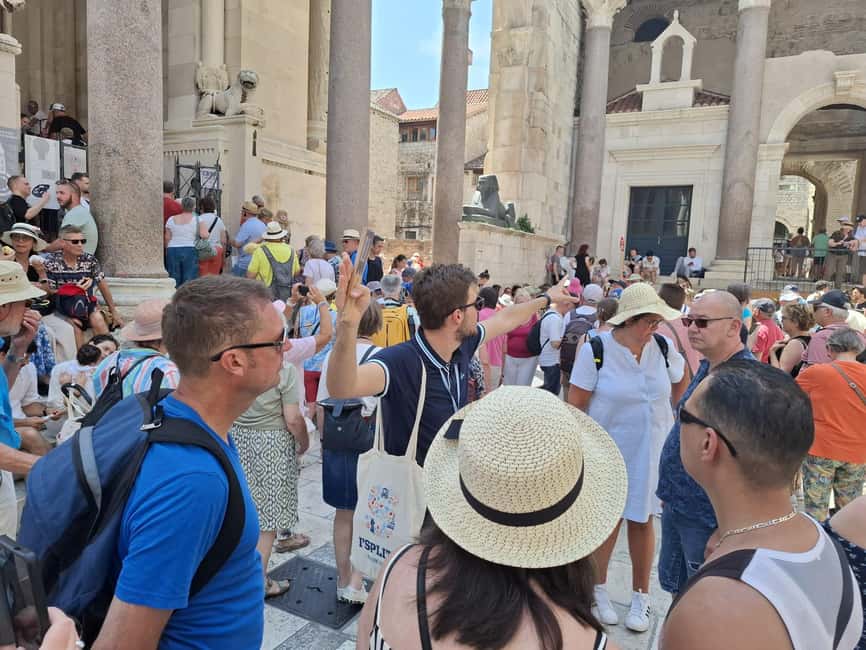
Split’s old stones tell stories. This Old Town history walk turns the UNESCO Diocletian’s Palace into a clear, step-by-step lesson you can follow on foot. You start at the Golden Gate and work your way through major ruins, then cool off in the palace cellars with tales that go far beyond Roman facts.
What I like most is the way the guide makes you look differently. The stop-and-explain pacing around the Peristyle and Jupiter’s Temple makes the architecture feel personal, not textbook. The second win is the storytelling in the cellars, where fun details like the Daenerys-style dragon chains and the human mousetrap keep your attention even in the darker spaces.
One thing to consider is the heat and walking. It is a 90-minute stroll through uneven old-town streets, so comfortable shoes, water, and sun protection matter, especially in summer.
In This Review
- Key highlights you should care about
- Entering Split’s UNESCO Layer Cake: From Roman Palace to Today
- Golden Gate and the First Stops: Getting Oriented Fast
- Peristyle, Mausoleum, and Jupiter’s Temple: Power Explained in Plain Terms
- Vestibule and Diocletian’s Cellars: The Dark Part of the Story
- Pjaca and Fruit Square: The Palace Meets the Street
- Ending at the Riva: Palm Trees, Seafood Energy, and Island Advice
- What You Learn, Beyond the Stops (Roman Facts and Story Logic)
- Price and Value for 90 Minutes in Split Old Town
- Logistics That Affect Your Comfort (So You Don’t Waste the Tour)
- Who This Tour Is Best For (and Who Might Skip It)
- Should You Book Split’s Old Town History Walking Tour?
- FAQ
- How long is the Split Old Town history walking tour?
- What sights do I see during the tour?
- Is there a live guide, and what languages are offered?
- Does the tour include Diocletian’s Cellars?
- Where does the tour start and where does it end?
- How much does the tour cost?
- Is pickup available?
- What should I bring for the walk?
Key highlights you should care about
- A licensed local guide who connects Roman Split to everyday local life
- Diocletian’s Palace landmarks like the Peristyle, Mausoleum, Jupiter’s Temple, and Vestibule
- Palace cellars with dramatic stories, including the Daenerys dragon chains idea
- A guided route through key squares such as Pjaca and Fruit Square
- A finish at the Riva with practical ideas for beaches and nearby islands
- Local food and habits tips, including Dalmatian specialties and where to find them
Entering Split’s UNESCO Layer Cake: From Roman Palace to Today
Split is rare because the city did not just sit next to ancient ruins. It grew on top of one of the most important Roman projects on the Adriatic: Diocletian’s Palace. On this tour, you get the map in your head, so the streets and stone doors stop looking random.
The tour’s value is that it gives you structure. Instead of bouncing between photos, you follow a logical loop: Golden Gate, the heart of the palace, then the cellars, then the public squares, and finally the seafront at the Riva. By the time you reach palm trees and sea air, you understand why this city looks like it does.
I also like the guide energy. In past tours, names like Nina, Maya, Marc, and Marko show up, and the pattern is consistent: humor, quick explanations, and a habit of asking you questions or using light riddles. That keeps the walk from turning into a lecture.
More History Tours in Split
- Walking Tour of Split with a ‘Magister’ of History
★ 5.0 · 1,122 reviews - Split Walking Tour with Professor of History
★ 5.0 · 926 reviews - Split: History and Heritage Walking Tour
★ 4.9 · 650 reviews
Golden Gate and the First Stops: Getting Oriented Fast
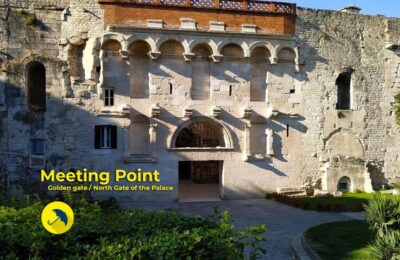
Your tour begins at the Golden Gate area, where the guide sets the stage for what you are about to see. This is a smart start because the gate anchors everything that follows. Once you understand the palace’s layout, every next doorway makes more sense.
From there, you head toward the palace interior spaces that people often miss when they are just sightseeing on their own. The early segment includes time at Peristyle, where you can see the scale of the palace court and understand how the Roman world organized power and daily movement. Even if you have seen a few Roman sites before, Split’s mix of palace walls and living streets makes it feel different.
What to watch for here is not just what the stones look like, but how the guide explains their purpose. This is where you learn to spot the difference between Roman monumental space and the later layers of everyday city life.
Potential drawback: if you do not like guided storytelling, this section might feel like it moves quickly. The upside is that you get momentum, and you are not stuck wandering alone in the first 30 minutes.
Peristyle, Mausoleum, and Jupiter’s Temple: Power Explained in Plain Terms
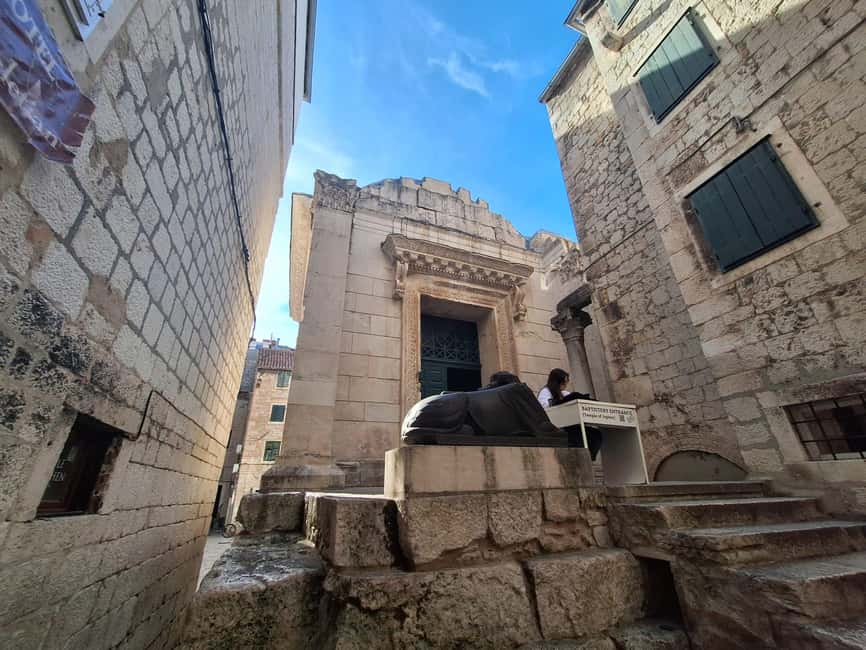
The tour highlights the core palace zones, including the Mausoleum and Temple of Jupiter. These stops matter because they show you what Diocletian’s world valued: authority, ritual, and permanence. The guide does the heavy lifting by pointing out the features you might otherwise gloss over.
At Jupiter’s Temple, the tour leans into symbols and myths that explain how the site has been interpreted over time. You even get the kind of detail that makes people stop walking and start looking, like the idea of a headless sphinx guarding the entrance. Whether you treat that as literal or symbolic in context, it sparks curiosity and helps you remember what you are seeing.
I like how brief stops stay meaningful. For example, the temple segment is shorter than the cellars, but it is packed with context. That is useful if you are also planning to hit beaches or dinner afterward. You leave with understanding, not just photos.
Vestibule and Diocletian’s Cellars: The Dark Part of the Story
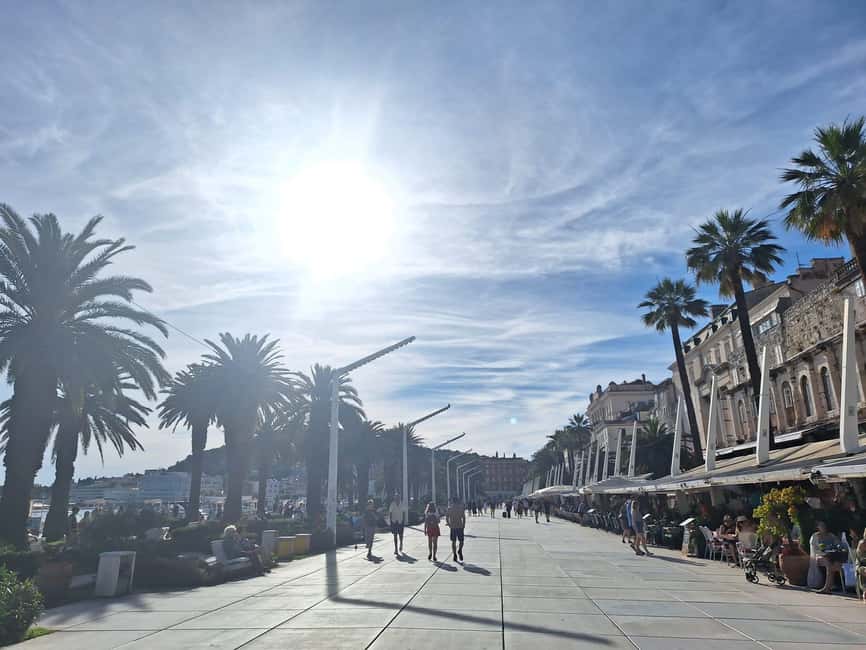
Then comes the part most people remember: the Diocletian’s Cellars. This is where the palace stops being pretty and starts being dramatic. The air feels different down there, and the tour uses that mood to bring the story into focus.
The guide explains how cellars connected to the palace’s function, and then layer by layer you get the more playful pop-culture references that keep the tour lively. In the cellars, the tour references the dragons chained in a Daenerys Targaryen-style scenario, as well as the Unsullied fighting the Sons of the Harpy idea. Even if you are not a TV watcher, you get the point: the cellars become a stage for the kind of tension people love to imagine in history’s shadow.
One more detail I really liked from the guide approach is the “human mousetrap” concept. It is the kind of phrase that makes you pay attention to movement and layout. Instead of you just being in a room, you understand why certain passages feel tight, why some steps seem choreographed, and how stone can guide behavior.
Also, the tour’s pace helps with comfort. In reviews, guides like Marko and others mention moving through areas with shade or managing crowds so you do not feel crushed by the heat. That matters in Split, where summer sun is no joke.
More Old Town Walking Tours in Split
- Split: Old Town and Diocletian Palace Walking Tour
★ 4.9 · 4,727 reviews - Split: Diocletian Palace & Old Town Guided Walking Tour
★ 4.7 · 882 reviews - Split Old Town and Diocletian’s Palace Tour
★ 4.8 · 716 reviews - Diocletian’s Palace and Old Town SMALL GROUP Walking Tour
★ 5.0 · 502 reviews
Pjaca and Fruit Square: The Palace Meets the Street
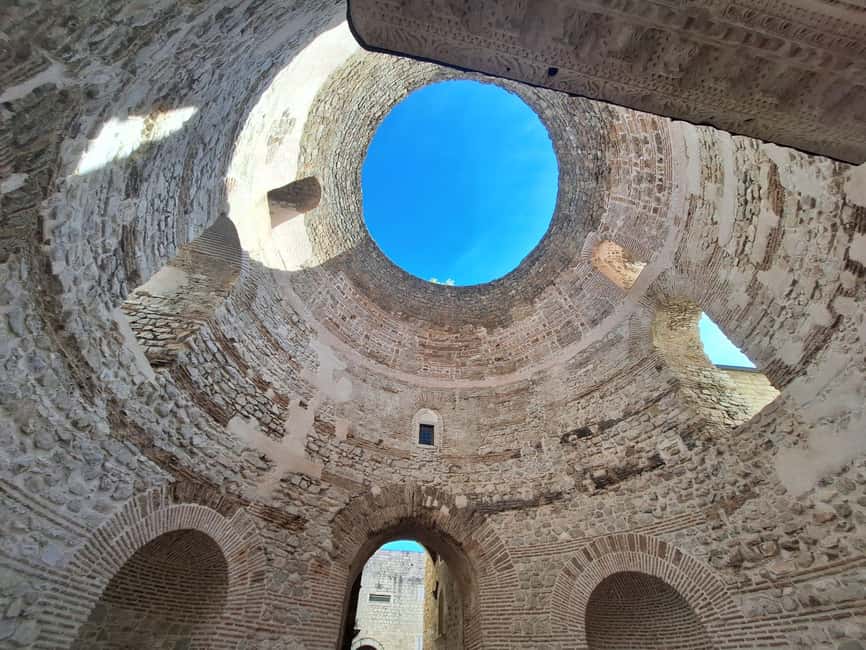
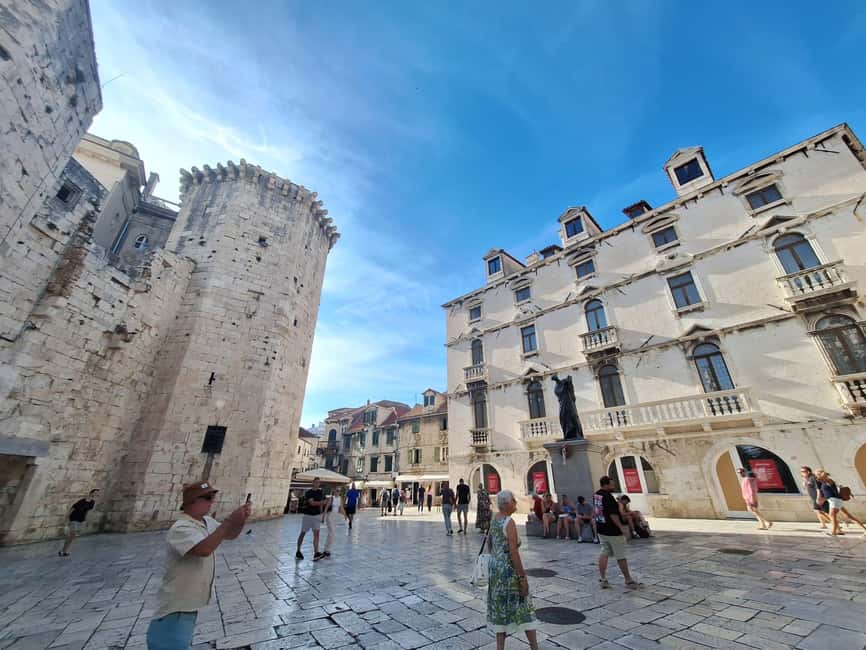
After the heavy history, the tour shifts into the city’s public rhythm with stops at People’s Square (Pjaca) and Fruit Square (Voćni trg). This is where you see how Split does not separate “heritage” from daily life. People shop, gather, and pass through the same zones where centuries of stories unfolded.
These squares help you connect the palace to the city’s social side. The palace might be the main monument, but the squares show you how the wider community lived around it. The guide fills in the story, including bits like why the Venetians paid for Split. That detail gives you a sense of how power shifted across the centuries, even when the stones stayed.
If you like your history threaded through real locations, this part works. You can stand in Pjaca and Fruit Square and feel like you are watching a city function, not just touring artifacts.
Ending at the Riva: Palm Trees, Seafood Energy, and Island Advice
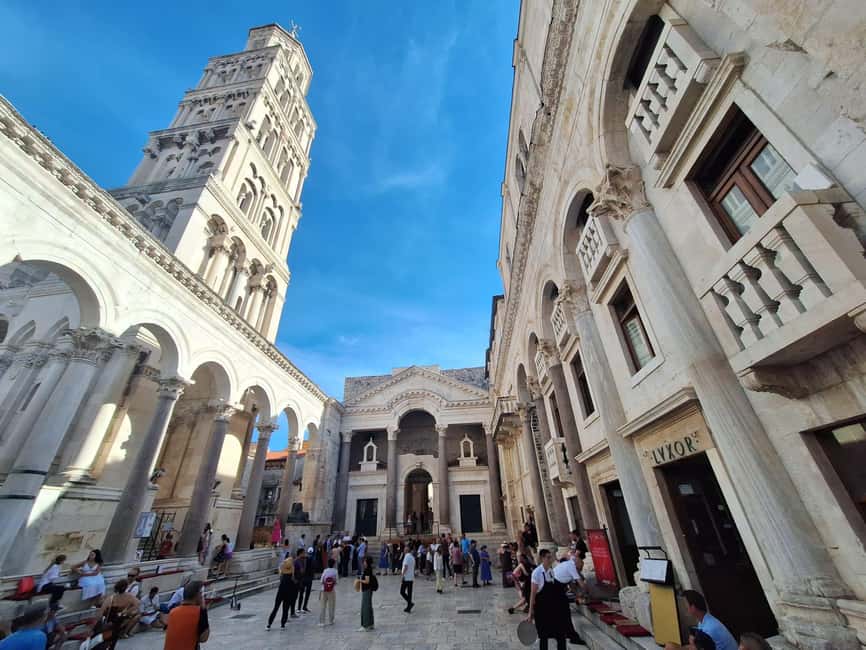
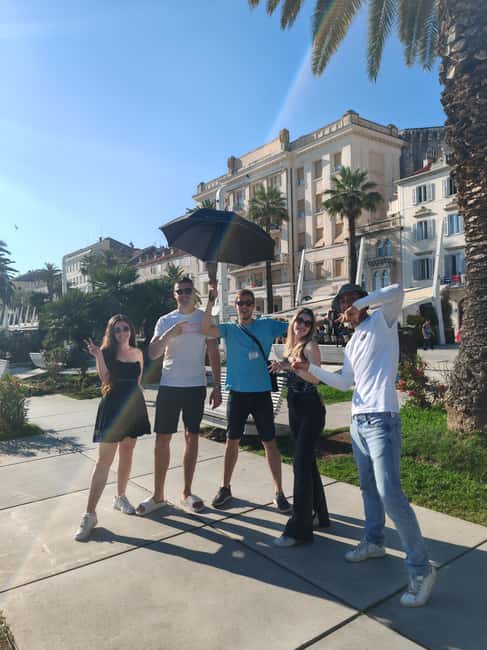
The tour ends at the Riva, Split’s seafront promenade lined with tall palm trees. This is a great finish because it transitions you from stone corridors to sea views. You also get a practical payoff: recommendations for how to spend the rest of your day.
You will receive suggestions for nearby islands, plus advice on what to eat and where to find Dalmatian specialties. I think this ending is underrated. A good history tour should help you keep your momentum, and the Riva finish gives you that natural next step.
The guide’s food angle is especially useful if you are only in Split briefly. Instead of guessing at menus, you can ask for what locals actually aim for, then match it to your day plan. Even small hints like “go for this type of Dalmatian dish” can save you from expensive tourist misfires.
What You Learn, Beyond the Stops (Roman Facts and Story Logic)
This tour sells “history,” but the real skill is interpretation. You are not just hearing dates. You are learning why these places feel the way they do and how different eras left their marks.
For example, the tour includes stories about Emperor Diocletian, even the unusual bits. You learn about him as a persecutor of Christians, and yes, you also get the humorous side tale about why he vomited after dinner. That kind of detail is not meant to be a medical report, it is meant to make a complicated figure feel human and memorable.
You also get myth-flavored explanations that help you understand how people have talked about these sites over time. The sphinx detail near Jupiter’s Temple is a good example. The point is not whether you take it literally. The point is that symbols shaped how people entered and experienced spaces.
Finally, you get at least a taste of how the Roman world managed water and infrastructure. One standout comment from a guide style is the mention of a hidden fresh-water fountain connected to an aqueduct from 2000 years ago. If your guide points something like that out, it is a reminder that “ancient ruins” are often living systems in disguise.
Price and Value for 90 Minutes in Split Old Town

At $41 per person for about 90 minutes, this tour is priced like a solid, guided “orientation + highlights” experience. In practical terms, that means you are paying for two things you cannot easily buy on your own: a licensed guide and a structured route that saves time.
If you are visiting in a short window, that time saving is real value. Split’s Old Town can be maze-like, and cellars and palace interiors are exactly the type of place where a guided explanation makes the difference between looking and understanding. Here, you get multiple major landmarks plus the cellars, ending at the Riva with planning help.
I also think the value improves if your group is small. In some cases, the tour can run as a solo tour, which usually makes questions and pacing smoother. Even with a normal small group, a local guide can manage crowds and keep you in shaded spots where possible.
Logistics That Affect Your Comfort (So You Don’t Waste the Tour)
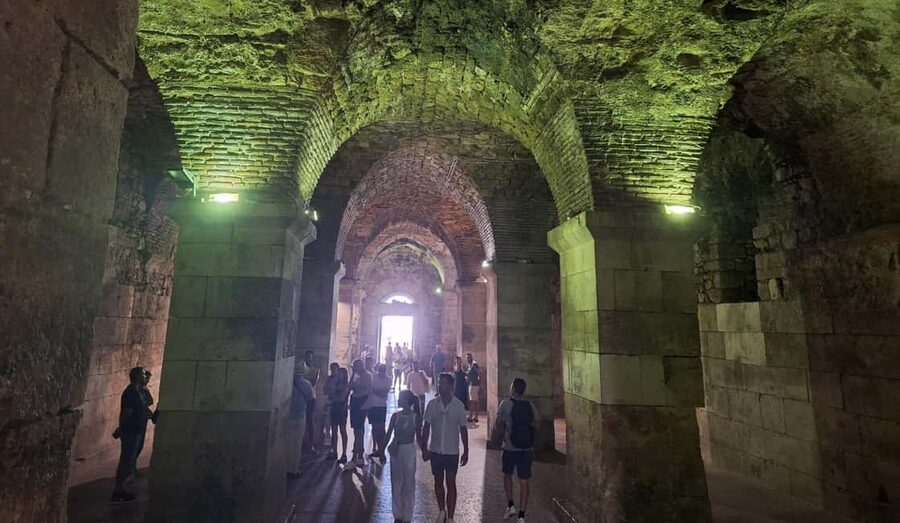
This is an easy walking experience on paper, but your body decides the experience in August. The tour includes uneven stone, and the heat makes every decision feel bigger. Bring the basics: comfortable shoes, hat, sunscreen, and water.
Meeting details can vary depending on the option you book. Pickup is optional, and if you want it, you can share a hotel name and street, or mention a ship/cruise context if relevant. Either way, the goal is simple: start on time so you can enjoy the whole loop.
The guide runs in English and Spanish, which is a big plus if you want the stories in a language you actually think in. Past tours also show guides who explain clearly with tools like folders of maps and photos, which can help you connect what you saw after the walk.
Who This Tour Is Best For (and Who Might Skip It)
This tour is a great fit if you want an organized first look at Split’s old layers. If you like UNESCO sites but find them hard to decode alone, a guide that ties the palace layout to the city’s later life will help a lot.
It is also ideal if you enjoy history that does not feel stiff. The mix of Roman architecture with playful modern storytelling references keeps the walk from dragging. If you are traveling with someone who gets bored by lectures, this structure tends to keep both people engaged.
You might want a different approach if you already know the Roman palace well and you are mostly there for quiet wandering. In that case, you could spend your time exploring the Riva, choosing a beach, or doing another focused museum stop. This tour is strongest as a guided “first map of the city” experience.
Should You Book Split’s Old Town History Walking Tour?
If you are coming to Split for a day or two, I think this is a smart booking. For $41 and 90 minutes, you get the palace highlights, the cellars, key squares, and a clean finish at the Riva with food and island ideas. That is a lot of payoff per hour.
I would book it especially if you want someone local to explain the stones in a way that feels fun and clear. The combination of licensed guidance, well-chosen landmarks, and cellars storytelling gives you both understanding and entertainment.
FAQ
How long is the Split Old Town history walking tour?
The tour lasts about 90 minutes.
What sights do I see during the tour?
You visit Golden Gate, Peristyle, Mausoleum, Temple of Jupiter, Vestibule, Diocletian’s Cellars, People’s Square (Pjaca), and Fruit Square. The tour ends at the Riva seafront promenade.
Is there a live guide, and what languages are offered?
Yes, it is a live guided tour. The guide works in English and Spanish.
Does the tour include Diocletian’s Cellars?
Yes. A guided visit includes Diocletian’s Cellars as one of the main stops.
Where does the tour start and where does it end?
The starting location depends on the option you select. The tour ends at the Riva, Split’s seafront promenade.
How much does the tour cost?
The price is listed as $41 per person.
Is pickup available?
Pickup is optional. You can share your hotel and street, or if you are arriving by boat/cruise, you can write that information.
What should I bring for the walk?
Bring comfortable shoes, a hat, sunscreen, and water.
More Old-Town Walks in Split
- SPLIT-PRIVATE Walking Tour of Diocletian’s Palace & Old Town
★ 5.0 · 467 reviews - Discover The Old Town Split 1.5h walking Small group tour
★ 4.8 · 93 reviews - From Split: Half-Day Tour of Trogir Old Town in Small Group
★ 4.9 · 77 reviews - Split: Old Town and Marjan Park Bike Tour
★ 4.6 · 51 reviews
More Walking Tours in Split
- Walking Tour of Split and Diocletian’s Palace
★ 5.0 · 2,588 reviews - Krka Waterfalls tour with Trogir Walking tour and Krka panoramic boat cruise
★ 5.0 · 1,659 reviews - Split & Diocletian’s Palace Walking Tour
★ 5.0 · 1,125 reviews - From Split: Krka Waterfalls Cruise & Trogir Walking Tour
★ 4.7 · 681 reviews
Newest Split reviews on the site
- Split: Blue Lagoon Boat Trip with Lunch, Wine and Snorkeling★ 5.0 · 3 reviews
- Split: Guided Sunset Sea Kayaking & Snorkeling Tour★ 4.8 · 185 reviews
- Split: Sunset Guided Kayaking Tour★ 4.8 · 71 reviews
- Sunset Cruise With Music and Views of Split Riviera★ 3.6 · 10 reviews
- Step into History: Private Guided Walking Tour of Split★ 5.0 · 3 reviews
- Stand Up Paddle Tour in Split★ 4.7 · 17 reviews
- Split&Sip: Educational wine tasting★ 4.9 · 52 reviews
- Split Walking Tour with History Professor★ 5.0 · 23 reviews
Old Town Walking Tours, compared.


Plitvice Lakes with Boat Ride and Zadar Old Town Tour
Read our review →
Plitvice Lakes with Boat Ride & Zadar Old town tour
Read our review →
Dubrovnik Combo: Old Town & Ancient City Walls
Read our review →
City Walls, Old Town Walking Tour & Adriatic View
Read our review →Browse the lists this tour appears in