

Review · HISTORICAL TOURS
Zadar: Virtual Reality Guided History Walking Tour
Zadar history, viewed through a time machine. This VR guided walk drops you into key moments across centuries right where you’re standing.
I really like the assistant-led pacing and the way you are guided to each spot before the VR takes over. I also like the 360-degree reconstructions at big anchors like Roman Forum and St. Chrysogonus’ Church, including the sound effects and 3D objects that make scenes feel more real than guesswork.
One thing to consider: the VR visuals are not cutting-edge, and a few people report the headset can need extra help during the experience, so bring patience if you want everything to run perfectly.
In This Review
- Key Things To Know Before You Go
- Where You Start by Sea Gate, and Why the Old Town Layout Matters
- What the Oculus Go VR Experience Feels Like in Real Life
- Roman Forum Comes Alive, Then the 4th Crusade Takes Over
- St. Chrysogonus’ Church, and the Value of Access
- The City Market Location, and Why “Where” Changes Everything
- Hot-Air Balloon Views, Then WWII Hits From Sea and Air
- The Role of the Assistant and the Audio Guide in Making It Work
- Price, Time, and Value for 2 Hours of “Time Travel”
- Who This Tour Fits Best, and Who Should Skip It
- Should You Book Zadar’s VR Guided History Walking Tour?
- FAQ
- How long is the VR guided history walking tour in Zadar?
- Where is the meeting point?
- What’s included in the $35 per person price?
- Is there an audio guide, and what languages are available?
- Do I need to bring anything?
- Is the tour wheelchair accessible?
Key Things To Know Before You Go
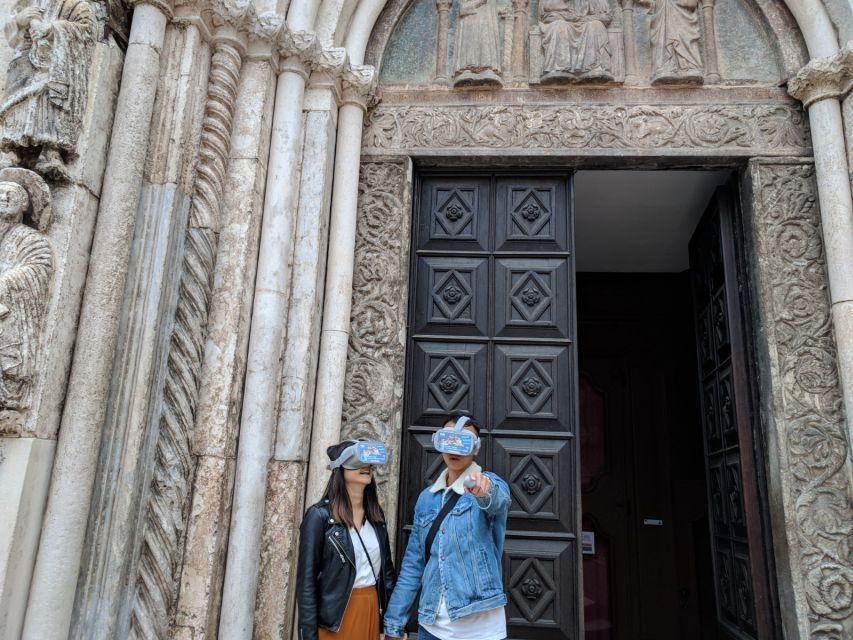
- Easy controls: you can choose when to move to the next point, no tech skills required
- Top historical set-pieces: Roman Forum, the 4th Crusade, and a WWII sea and air attack sequence
- Closed-to-public access: St. Chrysogonus’ Church is included even though it’s usually not open
- Big “space” views: you get an aerial look at Zadar’s peninsula from a hot-air balloon perspective
- VR breaks on the move: the assistant helps you pause comfortably during VR stops (some tours even use quieter, shaded spots)
Where You Start by Sea Gate, and Why the Old Town Layout Matters
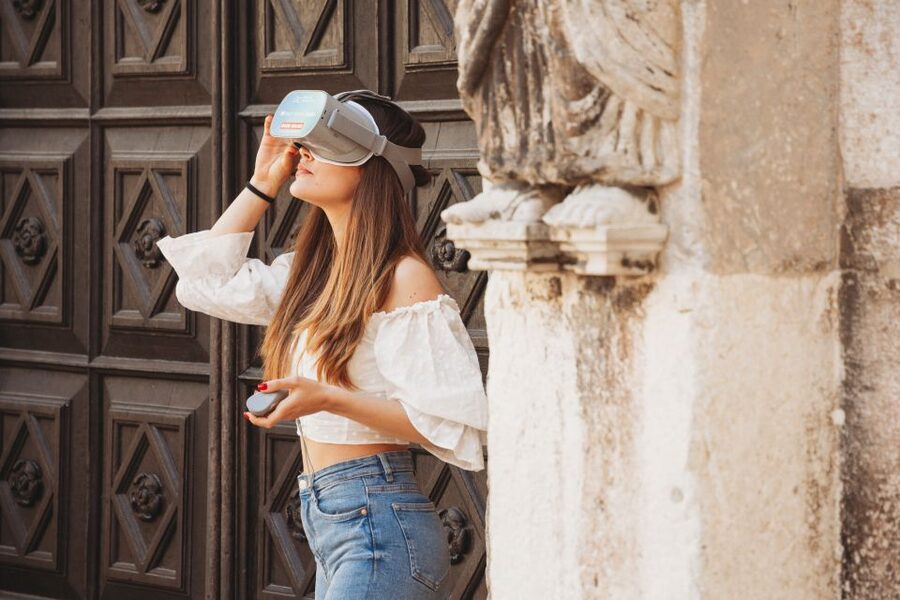
You begin at a souvenir shop in a red building next to the Sea Gate, on Poljana Pape Aleksandra III 7, in the 23000 area of Zadar. It’s a convenient start point because Sea Gate puts you in the thick of Zadar’s old town streets. From there, the tour is designed to use short walking segments, then switch into VR at the most meaningful locations.
This matters because Zadar is best understood in layers. The old stone you see around you is only one period. The VR portion acts like a switch that overlays earlier city life on the same streets. If you like history that you can map to real geography, this format is a good fit.
Also, the experience is built around an assistant who stays with you the whole time. That means you’re not on your own trying to find tiny viewpoints or figuring out where the next VR scene is triggered. For a 2-hour tour, that kind of support is worth a lot.
More History Tours in Zadar
- Zadar: Private Walking Tour Through 3,000 Years of History
★ 4.7 · 71 reviews - Zadar: Private walking tour through history and modern time
★ 5.0 · 19 reviews - Group History Walking Tour in Zadar Old Town
★ 5.0 · 4 reviews
What the Oculus Go VR Experience Feels Like in Real Life
The included VR hardware is an OculusGo All-in-One headset with a controller. The tour also includes the assistant and the walking tour itself, so you are not juggling extra devices or apps on your phone.
The core VR experience is made of 360-degree views plus 3D objects, animations, and sound effects. There is also an audio guide translated into seven languages, and the interface lets you choose when to see the next point. That last part is underrated. When you can control the pace, you can look around longer at a scene, or get ready before you move.
Here’s the practical takeaway: this is not a “sit and watch a video” situation. The design is built for turning your head, scanning the scene around you, and listening as the story moves through different eras. That is exactly what helps when history gets confusing on a normal walk.
The main drawback is the tech itself. Some feedback points to image quality that may feel behind modern expectations, which makes sense for a standalone headset from an earlier generation. If you’re expecting ultra sharp, photo-real visuals, temper your expectations. Still, the storytelling and the 360 staging can be a big part of the fun, especially when the assistant keeps things smooth.
Roman Forum Comes Alive, Then the 4th Crusade Takes Over
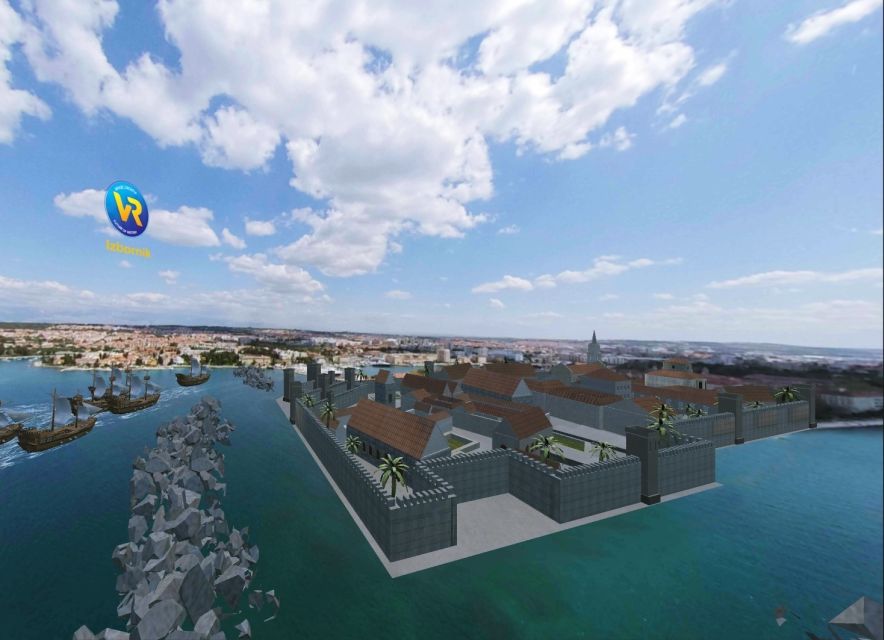
One of the tour’s biggest strengths is how it anchors you in the center of ancient Zadar. You actually stand at the location tied to the former Roman Forum, described as the social and economic heart of ancient Zadar. Instead of only hearing about it, you get a recreated view that helps your brain connect the dots between the street in front of you and what that space meant long ago.
From there, the VR story moves into major historical turning points. You’ll see the 4th Crusade, and you get a sequence connected to the invasion coming from the sea in 1202. The key here is the way VR can represent movement and scale. Watching an invasion approach, even in recreated form, is easier to understand when you can turn your head and see the directionality.
A normal walking tour can explain dates and cause and effect. This tour also does that, but the benefit is in the spatial understanding. When you can stand in the same area and then “see” what was happening during different periods, the city stops being a backdrop and becomes the subject.
One more nice detail: the tour uses a super friendly assistant to walk you to the right places before each major VR moment. That reduces the annoying part of VR tours, where half the time you spend hunting for the correct spot or trying to sync tech with the real-world route.
St. Chrysogonus’ Church, and the Value of Access
St. Chrysogonus’ Church is part of the experience, and you also hear that it’s otherwise closed to the public. That alone is a strong reason to consider booking, because access to interiors can be a real differentiator in old towns where many key sites have limited visiting hours.
In this particular VR format, the “closed” aspect becomes less of a barrier. Instead of simply saying the church is off limits, the experience brings you inside through the VR component. In one set of feedback, people highlighted that VR let them see the church interior anyway, which is exactly how this tour adds value beyond a standard exterior-only stroll.
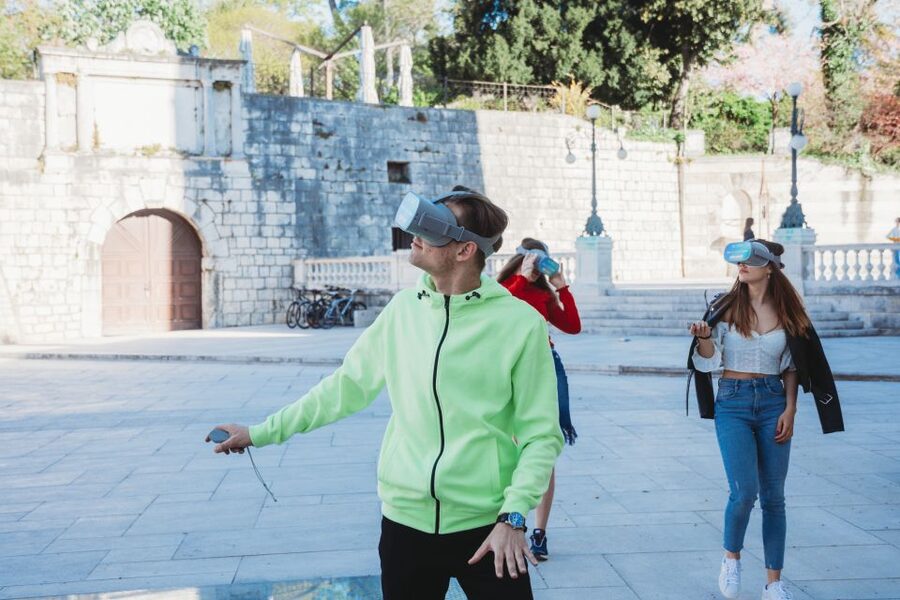
The practical angle is comfort and pacing. VR can make your body feel a little disconnected from the world outside the headset, so having an assistant to manage the flow helps you stay oriented. If you get a VR stop, you don’t feel like you’re just standing there waiting for something to happen.
More Walking Tours in Zadar
- Zadar Walking Tour sponsored by Gligora Cheese and deli
★ 4.9 · 716 reviews - Zadar: Food Tasting & Old Town Walking Tour
★ 5.0 · 94 reviews - Private Zadar Walking Tour: German
★ 5.0 · 41 reviews - Zadar: Evening Walking Tour of the Old Town
★ 4.8 · 25 reviews
The City Market Location, and Why “Where” Changes Everything
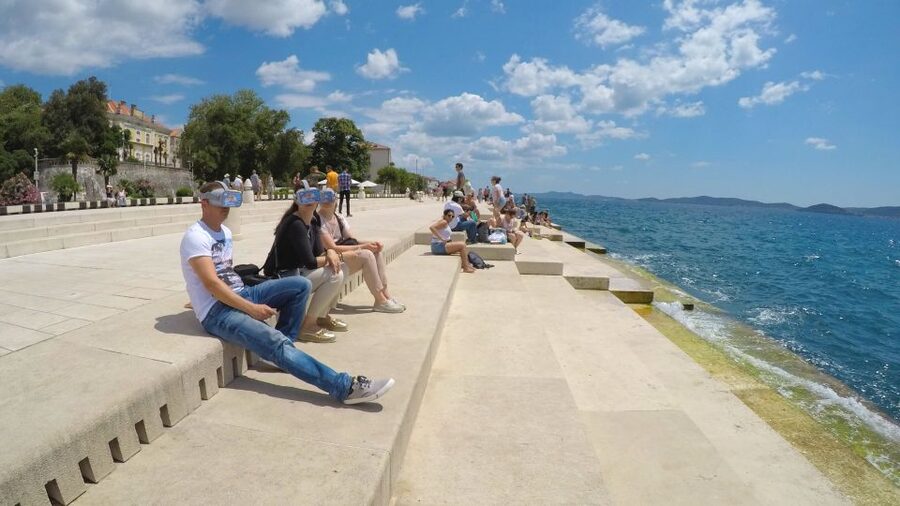
Another important stop is the location of the former city market. The tour explains that, compared with today, it was on the other side of town. That kind of detail changes how you read Zadar. On a normal visit, it’s easy to assume the center of commerce was always where it is now. Here, the VR narrative prompts you to question that assumption.
Why this matters: markets are not just economic points, they are social gravity. They shape how streets connect. They also influence where buildings go up and where people gather. When you understand that the market was effectively elsewhere, it makes the old town layout start to feel logical, not random.
If you enjoy learning through “stand here, see what was here,” you will likely appreciate this part. It’s one thing to read about ancient city planning. It’s another thing to stand where the market used to be and see how the area functioned.
Hot-Air Balloon Views, Then WWII Hits From Sea and Air
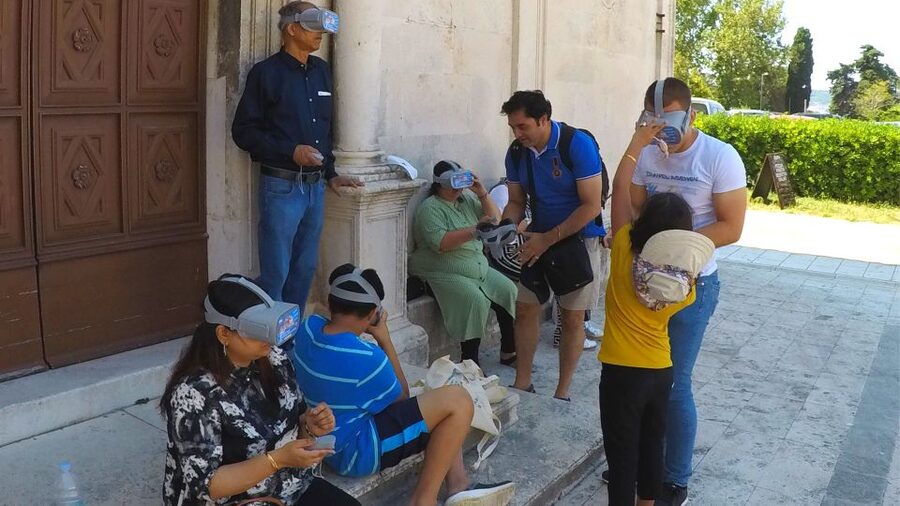
The tour doesn’t stay at street level. It includes an areal view of Zadar’s peninsula from a hot-air balloon perspective. That aerial segment is useful because it gives you scale. Old towns can look complicated from the ground, but from above the geography clicks. You can start to see how the peninsula and surrounding areas relate to the routes and waterfront.
Then the story takes a hard turn into World War II. You’ll see attacks coming from the air and sea, and you also learn how Zadar looked after World War II. This part is where VR can do something traditional narration struggles with: it can show you the feeling of threat and impact through recreated sightlines and sound effects.
A balanced note here. The WWII segment is heavy subject matter, even in a recreated form. If you prefer lighter, more casual sightseeing content, this is still part of the deal. But if you want context for how modern Zadar came to be, it’s an important piece.
This is also where the audio guide helps. When the visuals show large-scale moments, the narration keeps the timeline from feeling like random images. You can follow the story instead of just watching spectacle.
The Role of the Assistant and the Audio Guide in Making It Work
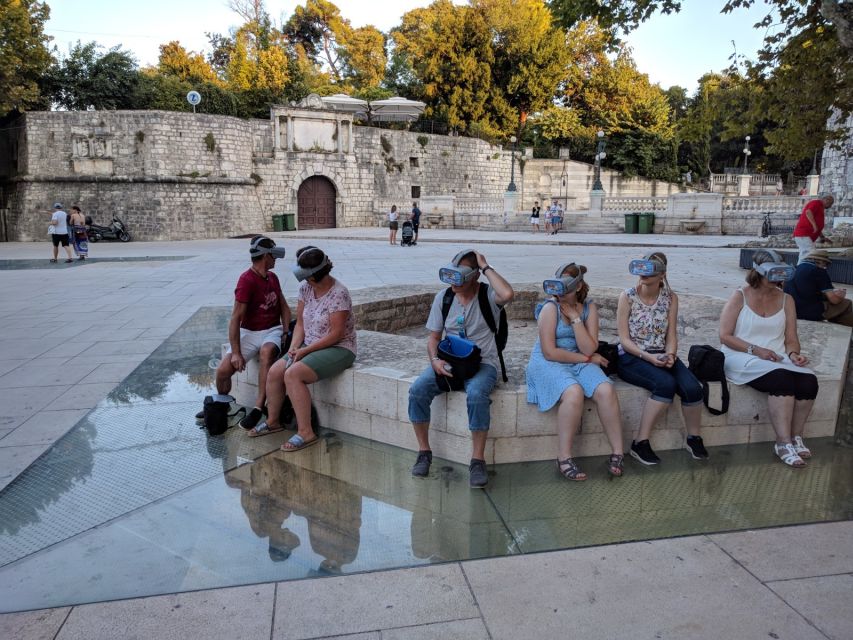
You get a tour assistant who stays with you throughout and helps with the flow. That includes guiding you to the right places, and assisting when VR stops happen. Some feedback specifically praised the assistant stepping in to answer questions and keep the experience going smoothly.
One name that shows up in feedback is Veronica, described as very friendly and focused on giving enough information without burying you in details. That kind of pacing is exactly what a 2-hour tour needs. You want to leave feeling like you learned something real, not like you got a textbook dump.
The audio guide translation into Croatian, English, Esperanto, French, German, Italian, and Spanish is another plus. Even if you only understand English, translations matter because they let you choose your preferred language reliably. It also helps if you’re traveling with someone who wants to hear their own language. The instructor is English, so you should expect an English-led context, but the audio layer is built for multiple languages.
The bottom line: good VR tours are part tech, part teaching. This one clearly leans into the teaching side by pairing the VR scenes with an assistant and a structured audio narrative.
Price, Time, and Value for 2 Hours of “Time Travel”
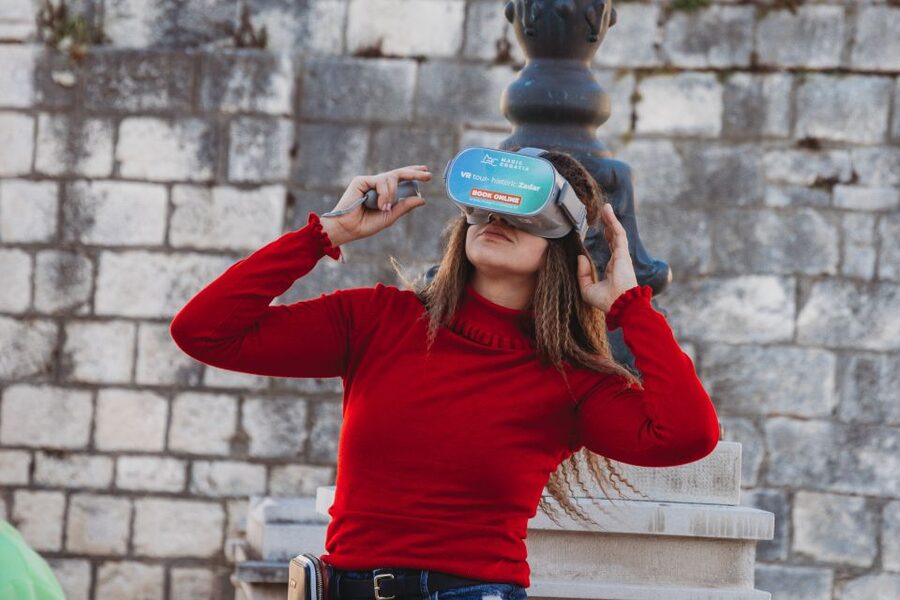
The price is $35 per person for a 2-hour experience. VR tours can swing from overpriced to very fair depending on what’s included. Here, you’re paying for several concrete things: VR glasses, the guided walk, a tour assistant, 360-degree content, animations and 3D objects, sound effects, and an audio guide translated into seven languages.
For value, the question is not just whether VR is cool. It’s whether the experience replaces something you would otherwise pay for, or whether it adds access you cannot easily get on your own. This tour includes an otherwise closed interior (St. Chrysogonus’ Church) and multiple historical moments tied to specific locations around the old town. That location-based storytelling is harder to replicate freely.
You also get a built-in structure, because you are not stitching together multiple sites and paying separate entrances. If you want a history-focused experience without spending most of your day on logistics, 2 hours at this price can make sense.
Still, balance matters. If you are picky about visual quality, the OculusGo hardware and the feedback about dated image sharpness may impact how much you enjoy the VR segments. And if you hate any chance of tech hiccups, you should go in with a patient mindset.
Who This Tour Fits Best, and Who Should Skip It
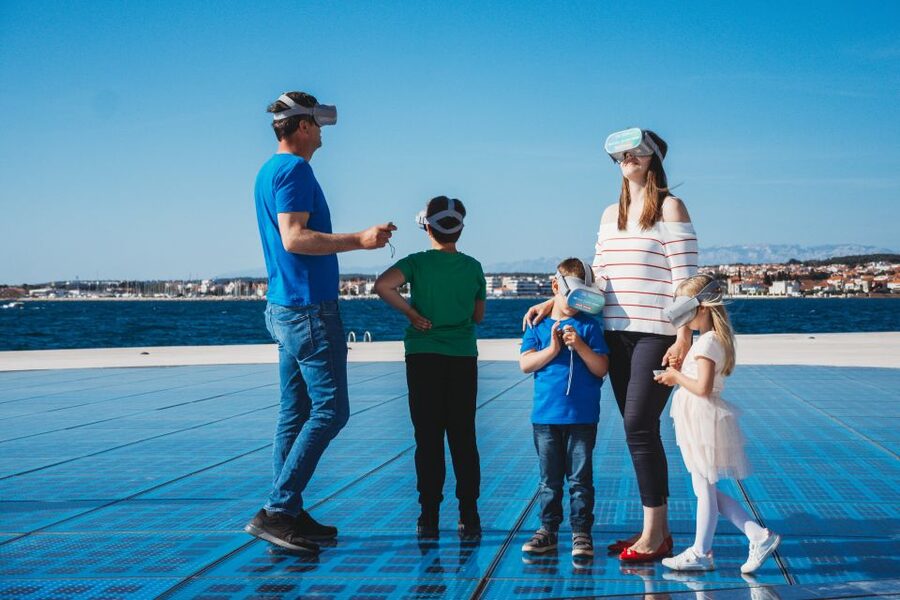
This experience is a strong match if you want history that is guided, location-based, and visual. It’s especially good if you like moments tied to specific places like Roman Forum, the city market site, and WWII scenes. The hot-air balloon and 360 views also help if you learn better by seeing spatial context.
It can also work well for families, since the VR angle adds play. That said, the same tech limitations that matter to adults still exist, like headset quality and occasional assistance needed during the flow.
You might want to skip or reconsider if:
- You only enjoy traditional guided walking without VR components
- You are sensitive to outdated visuals and want modern, high-resolution imagery
- You are planning a trip where you cannot tolerate even small tech delays
If you’re flexible and curious, this tour is a fun way to make Zadar’s layers feel connected.
Should You Book Zadar’s VR Guided History Walking Tour?
I’d book it if your goal is “see the past in place” in a short window of time. The combination of Roman Forum, Crusade-era scenes, WWII sequences, and the bonus of seeing St. Chrysogonus’ Church through VR makes the $35 price feel more like a bundled experience than a gimmick.
I’d hesitate if your top priority is ultra-modern VR visuals or if you really dislike any chance of tech troubleshooting. The headset can need help, and the image quality may not match newer expectations.
If you do book, come with comfy expectations. Treat it like a guided story with VR staging, not like a cinematic video. And bring your ID or passport, since that’s required.
FAQ
How long is the VR guided history walking tour in Zadar?
The duration is 2 hours.
Where is the meeting point?
Meet at the souvenir shop in a red building next to the Sea Gate at Poljana Pape Aleksandra III 7, 23000 Zadar, Croatia.
What’s included in the $35 per person price?
The tour includes the VR glasses (OculusGo All-in-One VR headset and a controller), a tour assistant, and the walking tour.
Is there an audio guide, and what languages are available?
Yes. The audio guide is included and translated into Croatian, English, Esperanto, French, German, Italian, and Spanish.
Do I need to bring anything?
Bring your passport or ID card.
Is the tour wheelchair accessible?
Yes, the tour is wheelchair accessible.
More Historical Tours in Zadar
- History Walking Group Tour in Old Center of Zadar
★ 3.3 · 3 reviews - Zadar: Guided Old Town History Walking Tour
★ 3.8 · 3 reviews - Dubrovnik Old Town History Walking Tour
★ 5.0 · 1,684 reviews - Zagreb: City & History Walking Tour & WW2 Tunnels
★ 4.9 · 1,202 reviews
Newest Zadar reviews on the site
- SURPRISE TOUR KORNATI & TELASCICA Boat Tour(po Polsku)★ 4.4 · 21 reviews
- Zadar: Sunset Fishing Half-Day Guided Boat Trip★ 5.0 · 14 reviews
- Romantic Sunset Cruise from Zadar by Speedboat★ 4.9 · 60 reviews
- Private Zadar Walking Tour: German★ 5.0 · 41 reviews
- Plitvice Lakes National Park: Private Tour from Zadar★ 5.0 · 11 reviews
- Zadar Islands: Private Hidden Treasures Speedboat Tour★ 4.9 · 27 reviews
- Zadar: Dugi Otok Day Trip to Sakarun & Golubinka Cave★ 4.8 · 20 reviews
- Private Island Hopping Boat tour around Zadar with Drinks★ 5.0 · 6 reviews
Historical Tours, compared.
Walking Tour of Split with a ‘Magister’ of History
Read our review →


Split History and Gastro Small-Group Tour with Food and Drinks
Read our review →Browse the lists this tour appears in