
Review · HISTORICAL TOURS
Split: Walking tour of Split with a ‘Magister’ of History
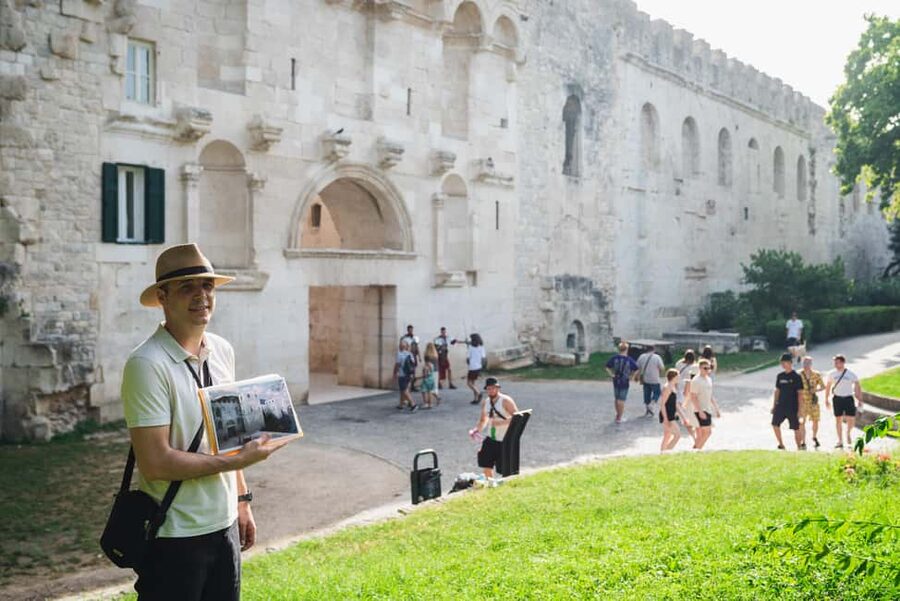
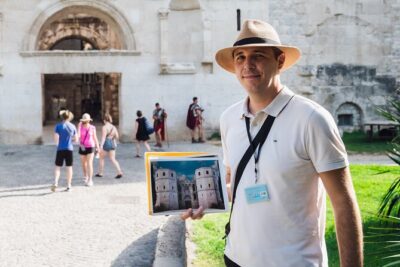
Split’s ruins come with a teacher. This walk in Split’s old core is led by Toni Šare, a local historian with a Master’s degree and an ex teacher, and the big win is how 3D reconstructions make Diocletian’s Palace readable, not just impressive. I also like the way the tour flows from Roman roots to medieval and Venetian layers, with questions welcomed as you go.
The main catch is simple: it is a lot of walking on uneven, historic stone. It is not suitable for wheelchair users, and it is not for people over 95.
In This Review
- Key things I’d plan around
- Entering Diocletian’s Palace from the Bronze Gate
- Bronze Gate and the first palace clues
- Diocletian’s Cellars, basement halls, and why underground matters
- The Peristyle square: the palace’s public heart
- Mausoleum, Temple of Jupiter, and the “picture it” method
- The Vestibule and Triklinij: ceremonial rooms with daily implications
- Cathedral of Saint Domnius: the Roman-to-medieval handoff
- Silver Gate and Golden Gate: exiting the palace story
- The pacing and tone: teacher energy, not lecture overload
- What exactly is included for $33, and why it feels fair
- Best fit: who will love this tour most
- Quick practical tips before you go
- Should you book this Split history walk?
- FAQ
- Where does the tour meet?
- How long is the Split walking tour?
- How much does it cost?
- Is the tour in English?
- What is included in the ticket price?
- Do you enter paid museums or paid attractions?
- Is the tour only about Roman history?
- Does the tour run in bad weather?
- What should I bring?
- Is it suitable for wheelchair users?
- What ages is it not suitable for?
Key things I’d plan around
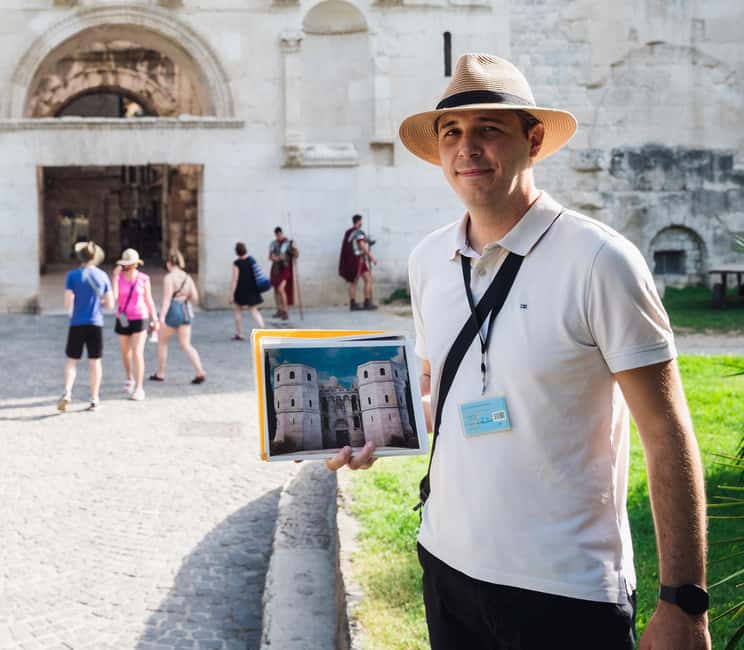
- 3D reconstructions on the spot so you can picture what you are standing in front of, not just read plaques
- A real local educator (Toni Šare) who grew up in Split and explains with a teacher’s rhythm
- A route that moves through time from Roman palace streets to medieval and Venetian Split, ending in the present
- Plenty of built-in stops for Q and A including brief pauses in the cellars to clear up anything that is confusing
- Crowd-smart pacing with time in quieter spots and attention to shade when possible
Entering Diocletian’s Palace from the Bronze Gate
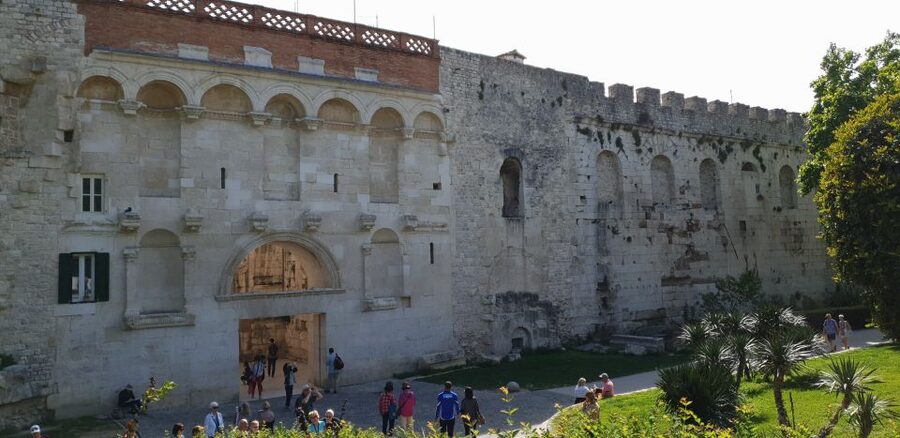
You start at the Bronze Gate of Diocletian’s Palace, also called the Brass Gate, right by the seafront promenade (Riva). The meeting address is Obala hrvatskog narodnog preporoda 22, and the easiest way to find it is to get to the Riva first, then head toward the palace gates.
From the first minutes, the tone is very “classroom, but outdoors.” Toni sets the scene by explaining how Split’s old town grows directly out of the palace complex. That matters because Diocletian’s Palace is not a museum building sitting by itself. It is a framework that people kept living inside. Streets, corners, and major landmarks all connect back to the Roman plan.
I like that you do not begin with the most famous photo spot and stop there. You begin at the palace entry and work inward, which is the fastest way to understand why Split feels like a maze even when you think you have a map.
More History Tours in Split
- Walking Tour of Split with a ‘Magister’ of History
★ 5.0 · 1,122 reviews - Split Walking Tour with Professor of History
★ 5.0 · 926 reviews - Split: History and Heritage Walking Tour
★ 4.9 · 650 reviews
Bronze Gate and the first palace clues
Your walk begins at the gate itself for a short orientation, about 5 minutes, before you move through the palace zone. This is where you learn what the gate meant in the Roman layout and why later centuries kept reusing and reshaping the same space.
Even if you have seen pictures of the palace before, the gate area helps you get your bearings. You start to spot the logic of the walls and entrances, and you begin connecting later stops, like the cathedral and temple sites, to the palace core.
Diocletian’s Cellars, basement halls, and why underground matters
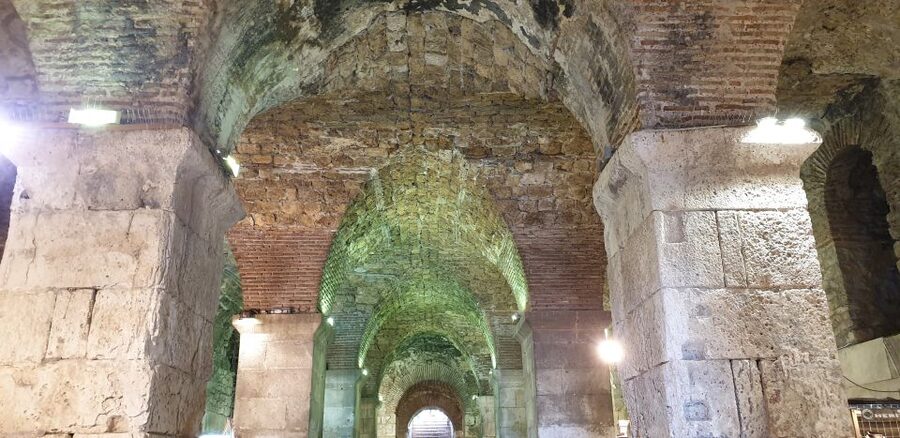
Next you pass the Diocletian’s Cellars and then go into the basement halls area for a brief stop. The tour includes time here for questions, which is a smart move, because cellars can feel like dead ends if you do not know what they were for.
Toni uses this stop to show that the palace was never only about emperors and temples. It was also about storage, daily operations, and practical life. When you understand the basement function, the “wow” factor shifts from architecture appreciation to real-life understanding.
One practical tip: if it feels warm outside, the cellar pause can be a welcome break. Bring water since you are walking rain or shine, and you’ll likely want it after a warm stretch by the water.
The Peristyle square: the palace’s public heart
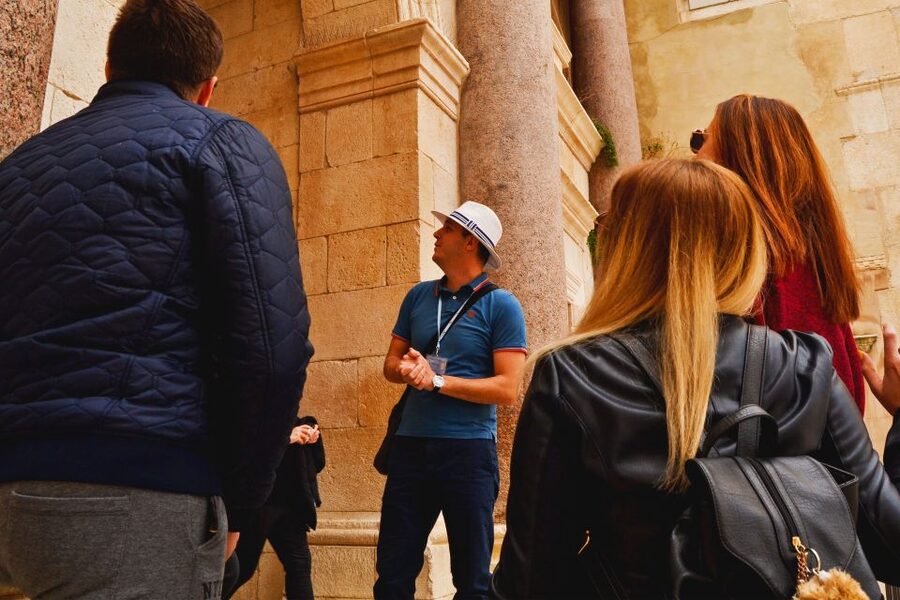
The tour then focuses on the Diocletian’s Palace interior, about 1 hour in this main palace section, including sightseeing and guided walking. This is where the palace stops being abstract and becomes a place you can navigate in your head.
A key highlight is the Peristyle, the preserved Roman-made square. This is one of the most important spaces in the palace because it is both ceremonial and functional. Toni points out major structures you can see from the square area, including:
- the Mausoleum of Diocletian
- the Temple of Jupiter
- the Vestibule
What I like here is the way Toni connects the stones to stories you can actually track. Instead of treating each ruin like a separate attraction, you see how the palace plan creates a sequence of movement and power.
More Walking Tours in Split
- Split: Old Town and Diocletian Palace Walking Tour
★ 4.9 · 4,727 reviews - Walking Tour of Split and Diocletian’s Palace
★ 5.0 · 2,588 reviews - Krka Waterfalls tour with Trogir Walking tour and Krka panoramic boat cruise
★ 5.0 · 1,659 reviews - Split & Diocletian’s Palace Walking Tour
★ 5.0 · 1,125 reviews
Mausoleum, Temple of Jupiter, and the “picture it” method
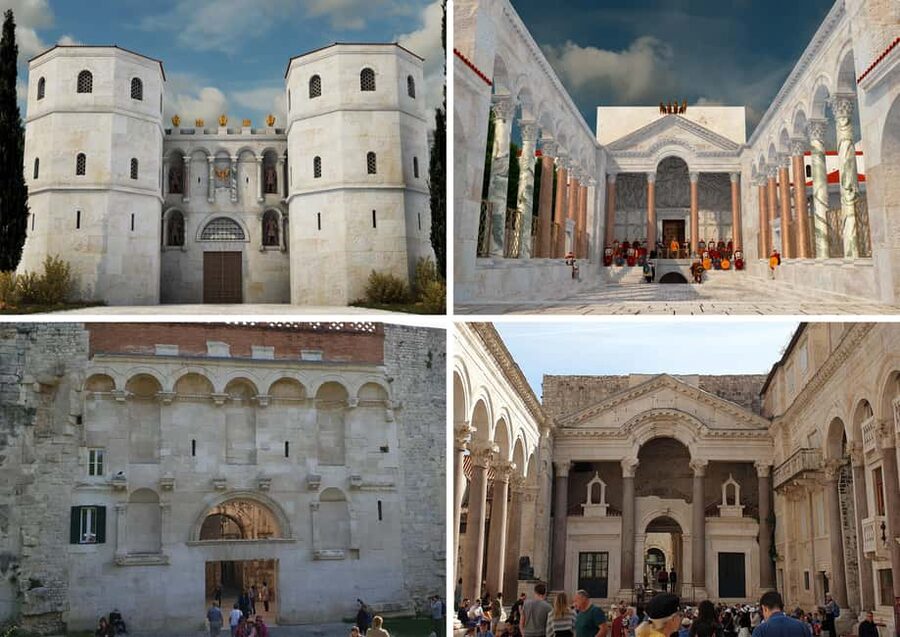
This is where the tour’s 3D reconstructions become more than a gimmick. Toni shows reconstructions of iconic structures so you can visualize the palace as it originally looked. It is the difference between thinking, “I see columns,” and thinking, “I know how this space worked.”
The other subtle benefit is accuracy. You get the explanation with context, and Toni is careful about what is known versus what is inferred. That tone helps if you like history but hate shaky storytelling.
If you want the quickest path to enjoyment here, look up as much as you look around. With the 3D visuals in your mind, details like entrances, alignments, and room-to-room connections become easier to spot.
The Vestibule and Triklinij: ceremonial rooms with daily implications
After the Peristyle, you move through smaller stops that matter because they show the palace’s “in-between” spaces. The Vestibule gets a guided moment, around 5 minutes, and the Triklinij is also covered for about 5 minutes.
These are the kind of areas that many walking tours skip because they are not postcard-famous. But they help you understand how formal and private spaces were arranged. Toni uses them to show how people would have moved, met, and used rooms.
This is also a good stretch to ask questions. Toni encourages dialogue, and you can usually get answers that make the next stop clearer.
Cathedral of Saint Domnius: the Roman-to-medieval handoff
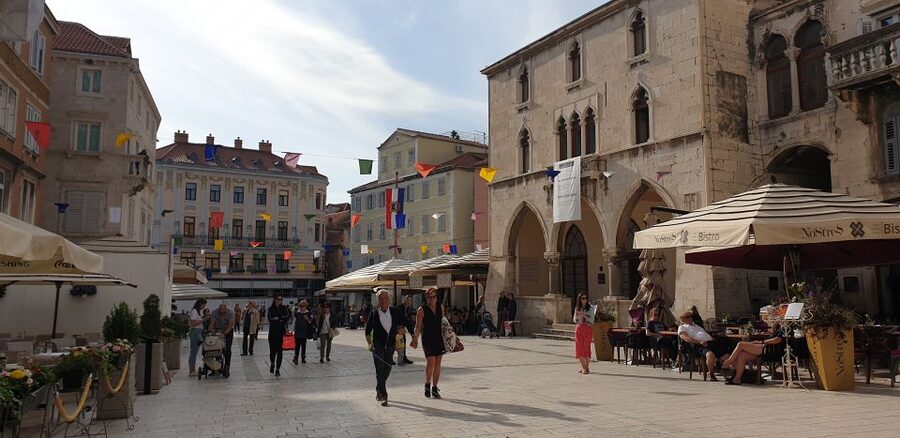
A big milestone in the route is a pass-by of the Cathedral of Saint Domnius. This is one of those moments where Split’s timeline feels physical. You can stand in a space where later generations took over, adapted, and kept the area alive.
This tour’s promise is not just Roman ruins. It moves into medieval and Venetian influence, and Domnius helps you feel that transition. Toni frames these stops so you understand why the palace area stayed important long after Roman rule ended.
Silver Gate and Golden Gate: exiting the palace story
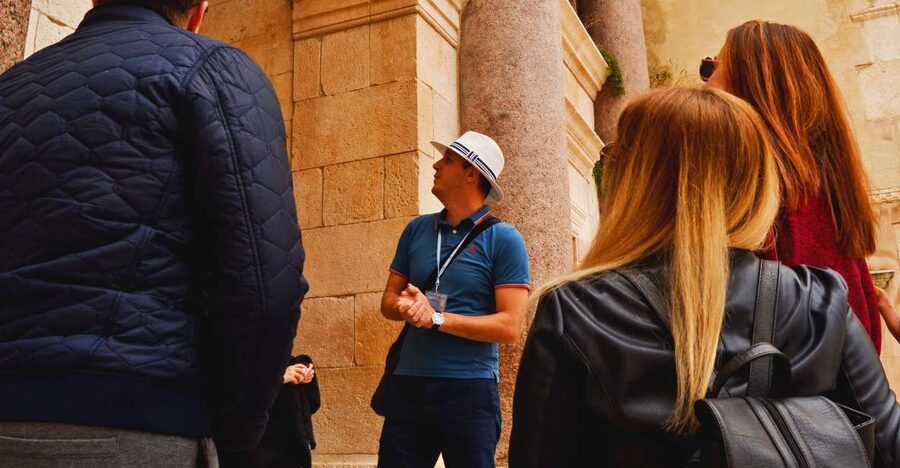
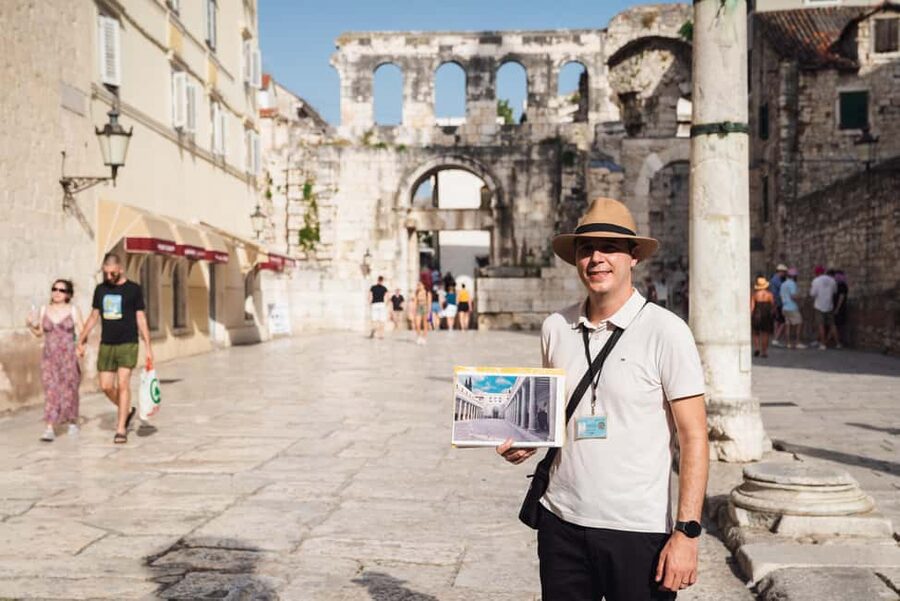
As the tour continues, you pass the Silver Gate for about 3 minutes, then you move through the Golden Gate for a short guided section and finish there.
The Golden Gate is a fitting end point because it does not feel like a dead stop. It puts you back at the edge of palace space, where you can keep exploring on your own. If you plan smart, you can use the final gate as a launchpad into the streets beyond, where medieval and Venetian echoes show up in street patterns and buildings.
In the last stretch, the tour also “brings you into the present.” That is not just a line on a brochure. It means Toni connects how the site is used today to what came before. You leave with a stronger sense of why modern Split looks the way it does, not only how it used to look.
The pacing and tone: teacher energy, not lecture overload
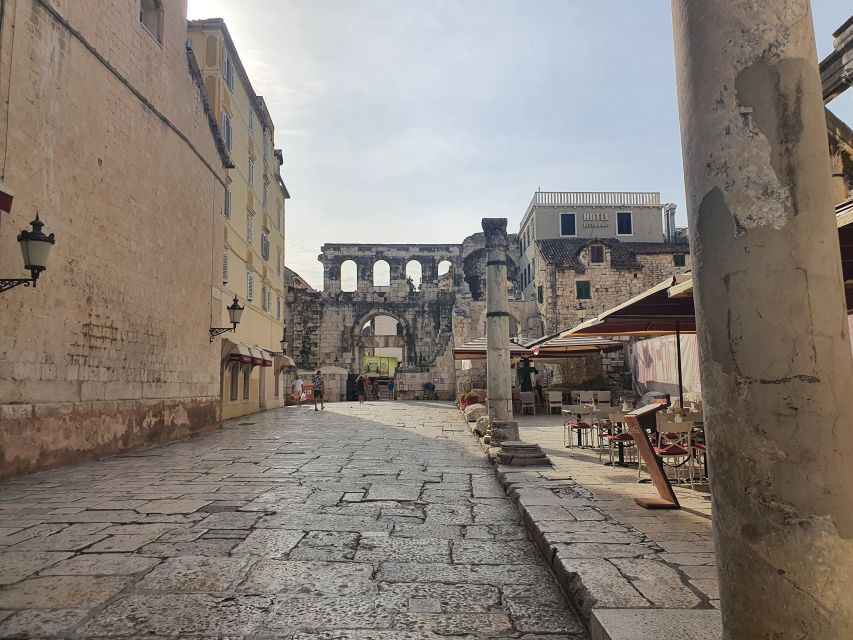
This is a 110-minute, English-language walking tour that runs rain or shine. That duration is important because Diocletian’s Palace can swallow you whole if you try to do it solo with zero structure. Here, the route is planned to keep the key stops connected.
Toni’s teaching background shows in small ways:
- He builds context before you reach the next structure
- He encourages questions, especially during the stops that can be confusing
- He adjusts pacing, including finding shade and quieter areas when possible
From the way people describe the experience, the group energy tends to stay engaged. A lot of comments mention that Toni is animated and that he keeps the pace comfortable.
If you are the type who asks lots of questions, this setup is ideal. If you hate slowing down for dialogue, just know the tour is built to handle it.
What exactly is included for $33, and why it feels fair
The price is $33 per person for a bit over 1 hour and 40 minutes. What you get is:
- the guide (Toni Šare)
- 3D reconstructions of iconic sites
The value is not only the information. It is the added interpretation. Diocletian’s Palace is complex, and the 3D reconstructions turn that complexity into something you can understand in real time. Without visuals, many parts are just stone and walls. With them, you start to “see” what was there and how spaces related.
Also, this tour does not rely on paid-entry buildings. You do not enter paid museums. That keeps the experience focused on what you can see and explain on the spot, rather than squeezing time into ticket lines. You still get meaningful “inside” time in the palace cellars area where the tour pauses for questions.
Is it more than the cheapest walking tours in Split? Yes. If you want a straight sightseeing loop with minimal context, you can find cheaper options. But if you want a teacher-driven explanation that helps you connect the Roman plan to medieval and Venetian layers, the price feels more like paying for clarity.
Best fit: who will love this tour most
This is a great choice if you:
- want real context for what you are looking at in Diocletian’s Palace
- like asking questions and getting direct answers
- prefer visual tools like reconstructions rather than only reading from signs
- want a local perspective from someone born and living his whole life in Split
It also works well for couples and families who are okay with a structured walk through several major palace zones and nearby landmarks.
It is not a fit if you:
- use a wheelchair, since it is not suitable for wheelchair users
- need low-impact mobility for long stretches, since it is on historic stone surfaces
- are over 95, since it is not suitable for people over 95
Quick practical tips before you go
- Bring drinks, since you are walking over 100 minutes, rain or shine
- Wear shoes with solid grip. Palace streets and entrances can be uneven
- If you are heat-sensitive, consider going earlier when the old town is easier to breathe in, because even a shaded route can still feel warm
Should you book this Split history walk?
If your goal is to understand Split’s old town as a living Roman plan that later centuries reused, this tour is a strong yes. The combination of a history master guide, interactive Q and A, and on-the-spot 3D reconstructions gives you a fast, memorable mental map of Diocletian’s Palace and how Split grew from it.
If you only want casual wandering and you dislike structured walking, you might find the pace a bit focused. But for most visitors who want to “get it” quickly, this is one of the best ways to turn an iconic place into something you actually understand.
FAQ
Where does the tour meet?
The meeting spot is at the Bronze Gate (Brass Gate) of Diocletian’s Palace. The listed address is Obala hrvatskog narodnog preporoda 22, and the easiest way to reach it is from the Riva promenade along the seafront.
How long is the Split walking tour?
The tour duration is 110 minutes.
How much does it cost?
The price is $33 per person.
Is the tour in English?
Yes. The tour is English.
What is included in the ticket price?
The experience includes the guide and 3D reconstructions of sites.
Do you enter paid museums or paid attractions?
No. The tour will not enter any paid sites or museums. Entering Diocletian’s Palace does not require admission.
Is the tour only about Roman history?
No. It starts with Roman history in and around Diocletian’s Palace, then moves through medieval and Venetian history, and ends with what you can see about modern Split.
Does the tour run in bad weather?
Yes. The tour takes place rain or shine.
What should I bring?
You should bring drinks.
Is it suitable for wheelchair users?
No. The tour is not suitable for wheelchair users.
What ages is it not suitable for?
It is not suitable for people over 95 years.
More Historical Tours in Split
- Split History and Gastro Small-Group Tour with Food and Drinks
★ 5.0 · 375 reviews - SPLIT-PREMIUM Emperor’s Walking Tour for History Lovers + Museum
★ 5.0 · 333 reviews - Split: Local History and Culture 90-Minute Walking Tour
★ 5.0 · 194 reviews - Split: Historical & Gastro Treasures Tour with Green Market
★ 4.9 · 144 reviews
Newest Split reviews on the site
- Split: Blue Lagoon Boat Trip with Lunch, Wine and Snorkeling★ 5.0 · 3 reviews
- Split: Guided Sunset Sea Kayaking & Snorkeling Tour★ 4.8 · 185 reviews
- Split: Sunset Guided Kayaking Tour★ 4.8 · 71 reviews
- Sunset Cruise With Music and Views of Split Riviera★ 3.6 · 10 reviews
- Step into History: Private Guided Walking Tour of Split★ 5.0 · 3 reviews
- Stand Up Paddle Tour in Split★ 4.7 · 17 reviews
- Split&Sip: Educational wine tasting★ 4.9 · 52 reviews
- Split Walking Tour with History Professor★ 5.0 · 23 reviews
Historical Tours, compared.
Walking Tour of Split with a ‘Magister’ of History
Read our review →


Split History and Gastro Small-Group Tour with Food and Drinks
Read our review →Browse the lists this tour appears in